

European real estate market in 2026 Q1: what the latest data signals for prices, rents, and demand
The European real estate market 2026 Q1 is sending clear signals, even before the full price data lands. This report explains what we can prove today and what we must treat as early clues. First, you’ll see the newest official numbers from Eurostat and why they lag behind the calendar.
Next, we break down ECB lending and mortgage rate trends that shape buyer demand. Then, we add Q1 investment nowcasts and supply pressure notes to show where heat remains. It helps buyers, renters, and owners. Finally, you’ll get a simple watchlist. So you can plan with fewer surprises.
For the global dashboard and links to every region, see:
European real estate market 2026 Q1 official data: what we can use today
The European real estate market 2026 Q1 official data starts with Eurostat, because it tracks many countries in a consistent way. That makes cross-country comparison easier. Still, timing matters. The figures arrive later than the quarter we are in.
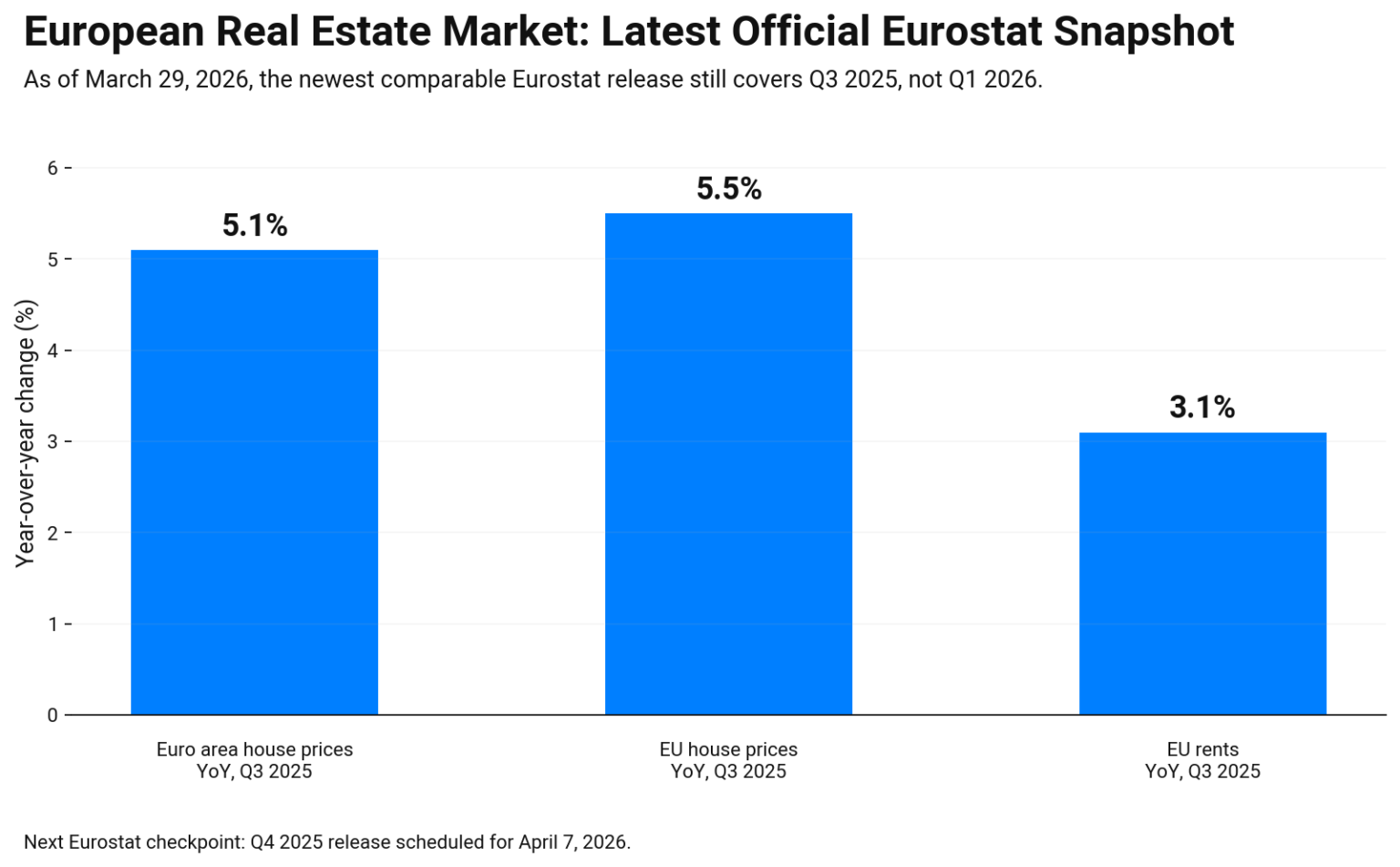
Right now, the newest Eurostat House Price Index release covers Q3 2025, not Q1 2026. In that release, house prices were up 5.1% year over year in the euro area. They were also up 5.5% in the EU. Eurostat also reports EU rents up 3.1% year over year in the same quarter.
So what can you do with this data today? You can track direction. You can compare countries without mixing methods. You can also see if prices are rising faster than rents, which often signals pressure building.
However, you should not treat this as “live” Q1 2026 pricing. Eurostat says the next release, with Q4 2025 data, is scheduled for 7 April 2026. That date is the next big checkpoint for confirming if the trend kept going.
Next, we’ll move from price charts to borrowing conditions, because lending often shifts first and then pulls demand with it.
European real estate market 2026 Q1 mortgage rates and lending: why demand reacts fast
European real estate market 2026 Q1 mortgage rates and lending are the early warning lights, because borrowing costs can change before prices do. In plain terms, when loans get cheaper, more people can try to buy. When they stay high, many households pause. That is why this section matters.
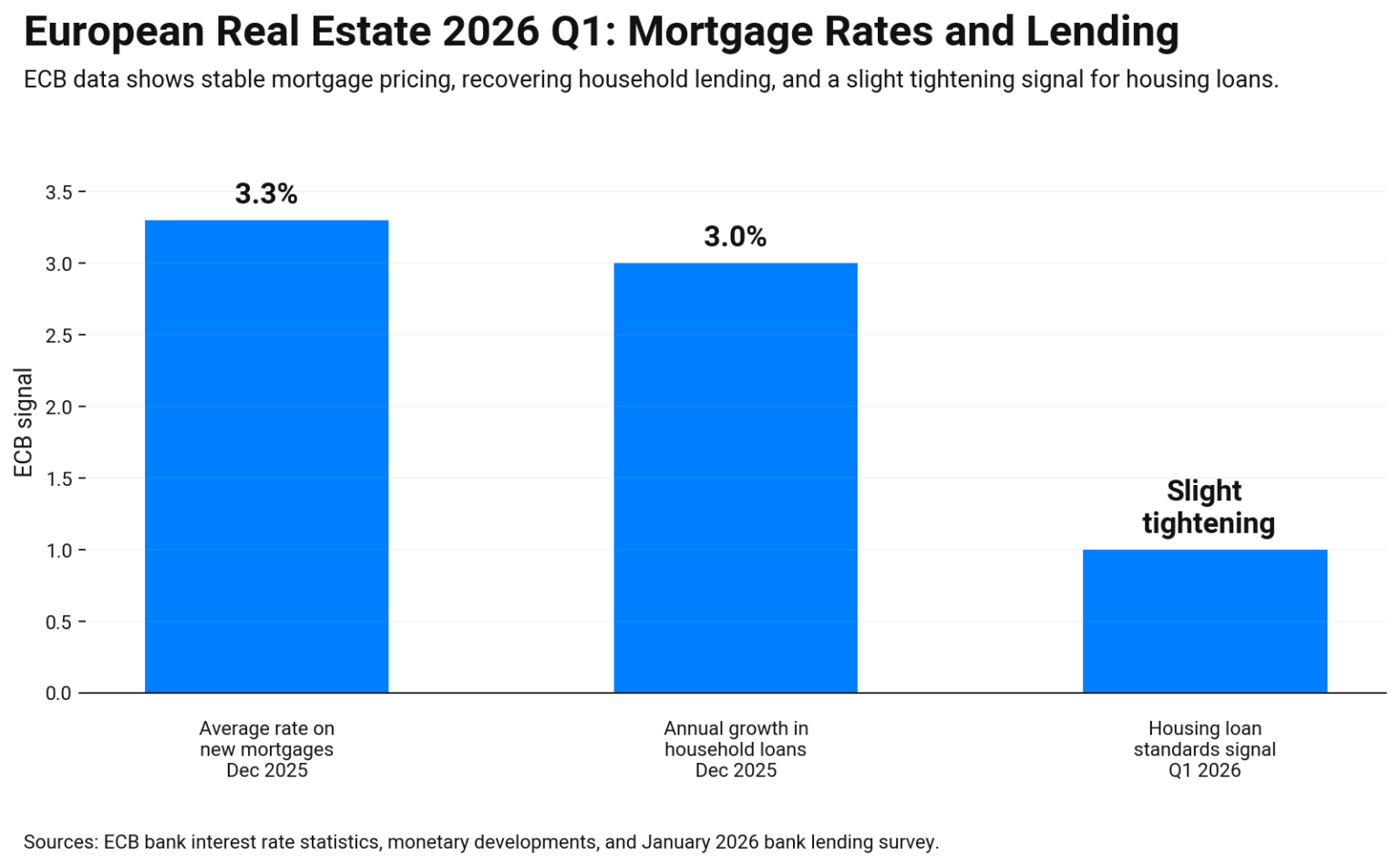
The European Central Bank reported that the average interest rate on new mortgages held steady at 3.3% in December. At the same time, household loans continued to recover, with the annual growth rate rising to 3.0% in December. So demand did not vanish. It shifted. Buyers became more careful, and they searched longer.
Still, a stable average rate does not mean every loan feels the same. The ECB’s bank interest rate stats show many housing loan rates were roughly in the mid-3% range by fixation period, and some moved slightly from month to month. Because of that, small changes can swing monthly budgets. That is why affordability talks stay loud, even when headlines sound calm.
To keep your view clear, track three things as you read market news. First, watch mortgage rates. Next, watch how fast household lending grows. Then, watch whether banks loosen or tighten rules for approving loans. The ECB also notes credit demand and standards in its bulletin, which helps explain why activity rises in one quarter and slows in another.
Now that we have the money side covered, the next section looks at prices and rents, and how supply pressure can keep them firm even when buyers act cautiously.
European real estate market 2026 Q1 prices and rents: what supply pressure keeps doing
European real estate market 2026 Q1 prices and rents still feel tight in many places, and supply is a big reason. When homes are not added fast enough, rents can stay firm. Prices can also hold up, even if buyers move slower.
To ground that pressure, here is the clean EU-level framing most people miss. Rents have climbed for years. Prices have climbed even more.
| EU housing indicator (long-run view) | Time window | Direction | What it often means for daily life |
|---|---|---|---|
| Rent change | 2010 → Q1 2025 | Up ~27.8% | Monthly budgets get tighter over time |
| House price change | 2015 → 2024 | Up ~53% | Buying needs more savings and higher loans |
Supply limits also show up in other segments. In March 2026 reporting, Europe’s new office pipeline was described as very low, alongside record prime rents in top spots. The pattern is simple: when building slows, scarce space holds pricing power.
Next, we’ll look at European real estate investment 2026 Q1, because big capital moves can signal where confidence is returning first.
European real estate market 2026 Q1 investment trends: what big money is signaling
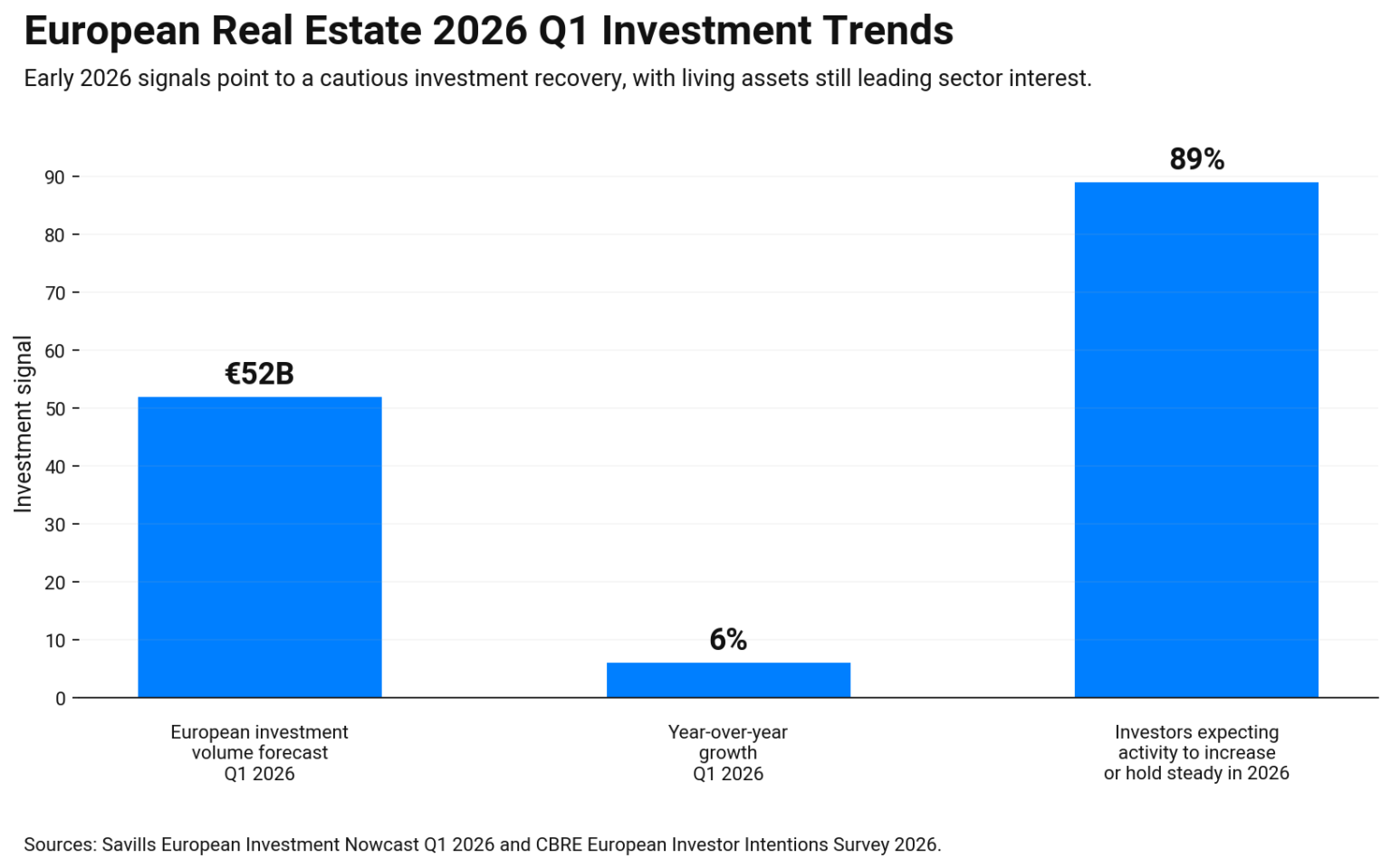
European real estate market 2026 Q1 investment trends matter because big capital often moves before households do. Early numbers suggest activity is waking up again. Savills expects European investment to reach about €52 billion in Q1 2026, about 6% higher year-on-year.
That does not mean every sector wins. Instead, money tends to pick safer income first:
- “Living” assets stay popular where housing is scarce.
- Prime buildings trade faster than older stock.
- Debt terms and lender appetite shape deal speed.
CBRE also describes 2026 returns as income-driven, with living still the largest investment sector in Europe. So, this section is a confidence gauge today, not a price forecast. Next, we’ll check what forum talk reveals about fears behind buying and renting.
European real estate market 2026 Q1 forum discussions: what people feel on the ground
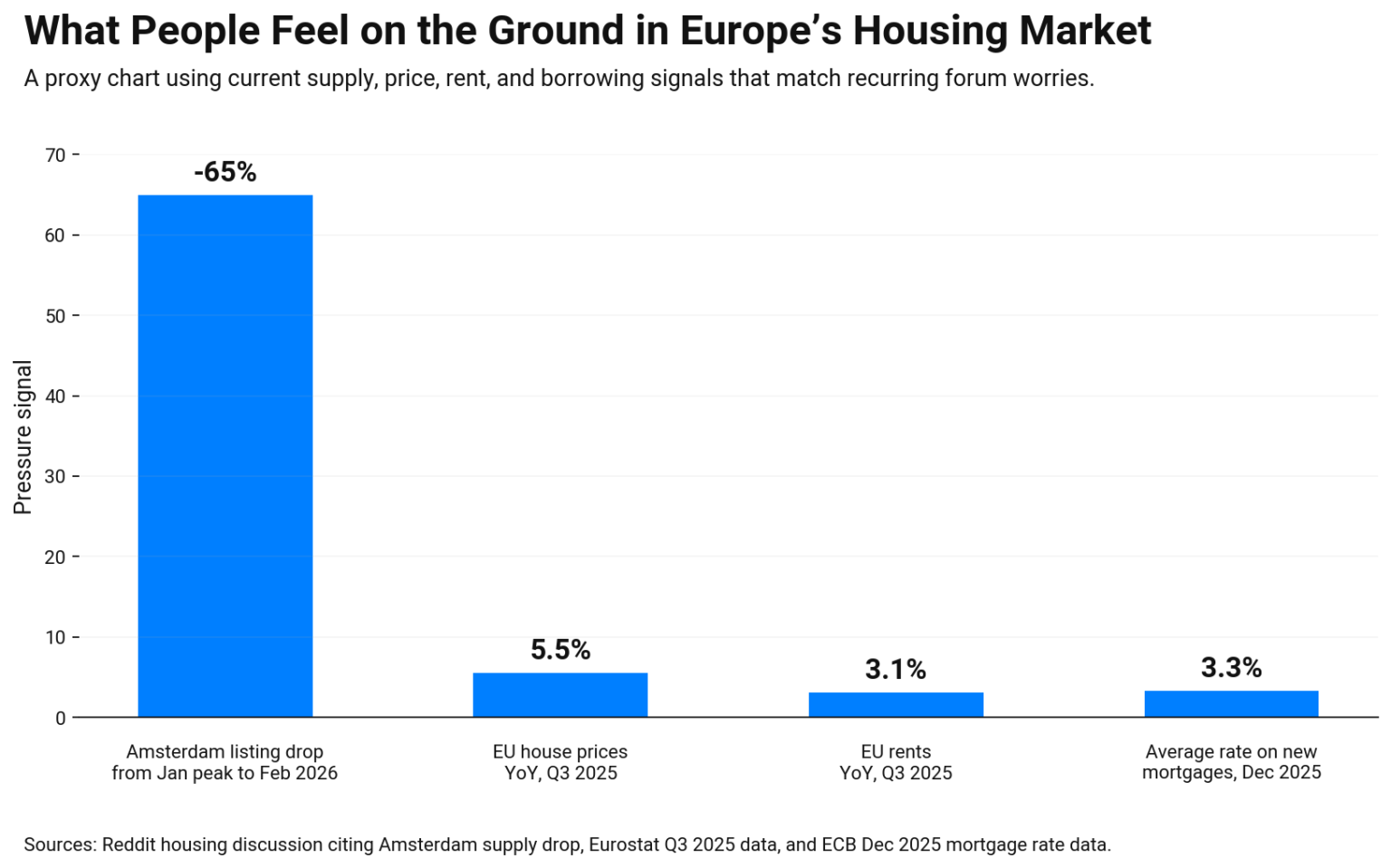
European real estate market 2026 Q1 forum discussions sound less like charts and more like daily stress. Many renters say viewings feel like contests. Some buyers say they wait, hoping rates soften. These posts are not proof, but they show where nerves sit.
Next, many threads focus on rules and supply. People talk about fewer rentals, tougher screening, and fast rent jumps. Others mention that new builds take a long time, so choices stay thin. In several cities, posters warn that “good deals” vanish in hours.
Also, you will see a trust problem. People ask if listings are real, if fees are fair, and if photos hide flaws. They share small checks, like calling the building, asking for utility bills, or reading past tenant reviews. Some share email scripts for landlords and agents today. That caution slows decisions.
So use forums as a theme map, not a scoreboard. After you spot a worry, test it with official data and lender updates. Up next, we’ll turn those signals into a short watchlist for 2026 Q2.
Conclusion: what to track for 2026 Q2
European real estate market 2026 Q1 watchlist for 2026 Q2 is about spotting changes early, before headlines catch up. First, mark April 7, 2026, because Eurostat is set to publish Q4 2025 price data, which helps confirm the trend.
Next, follow mortgage rates and bank lending notes, since demand often shifts there first. Also track transaction pace in your target city, because slow sales can signal softer pricing later. Then watch building permits and new project starts, since supply decides how long rent pressure lasts.
Finally, read local policy updates, because rules can change what is rentable, buildable, or financeable. If you invest, compare yields to bond returns. Next, we’ll answer the most common questions in a short FAQ section.
European real estate market 2026 Q1 frequently asked questions
Before we wrap up, here are quick answers to the questions people ask most about the European real estate market 2026 Q1. Each one is kept simple, so you can use it as a fast guide.
Is the European real estate market rising in 2026 Q1?
Full EU-wide Q1 2026 price data is not published yet. The latest Eurostat release shows prices rising in Q3 2025, so the trend looks up, but it still needs confirmation.
Why is there no official European house price index for 2026 Q1 yet?
Eurostat publishes with a delay. Right now, the newest release covers Q3 2025, and Eurostat lists Q4 2025 as the next release on April 7, 2026.
What signals demand changes fastest in early 2026?
Mortgage rates and lending growth often move first. The ECB reported new mortgage rates around 3.3% in December and household lending growth around 3.0% year on year, which helps explain demand shifts.
Are rents still rising across Europe?
The picture differs by country and city, but EU-level framing shows rents have increased over the long run. That pressure often stays when supply is limited, and demand is steady.
What does Q1 2026 investment activity suggest?
It is a confidence signal, not a promise of price jumps. Savills nowcasts about €52B of European investment in Q1 2026, up around 6% year on year, which points to a gradual recovery.