
Africa property market 2026 Q1: South Africa, Kenya, Morocco, Nigeria, and Ghana snapshot
The Africa property market 2026 Q1 is not one market. There are many local stories shaped by rates, supply, and trust. In this report, we cover South Africa, Kenya, Morocco, Nigeria, and Ghana.
You will see the best public data sources for each country, plus what they suggest about prices and demand. We also flag where data is delayed or thin, so you know what needs extra checks before you decide.
For the global dashboard and links to every region, see:
Africa property market 2026 Q1 background: what carried over from 2025
Africa property market 2026 Q1 sits after a mixed 2025. Inflation cooled in some places, yet borrowing stayed hard in many others. That slowed new builds. It also pushed more people into renting. At the same time, currency swings raised import costs for materials, so budgets broke fast. In several cities, buyers kept to prime areas they trust, while outer zones moved more slowly.
Another theme carried over into Q1: stronger demand for proof, not promises, because scams and unclear titles can ruin deals. Developers wait for clearer rate paths. So Q1 starts cautious, but still active where supply is tight.
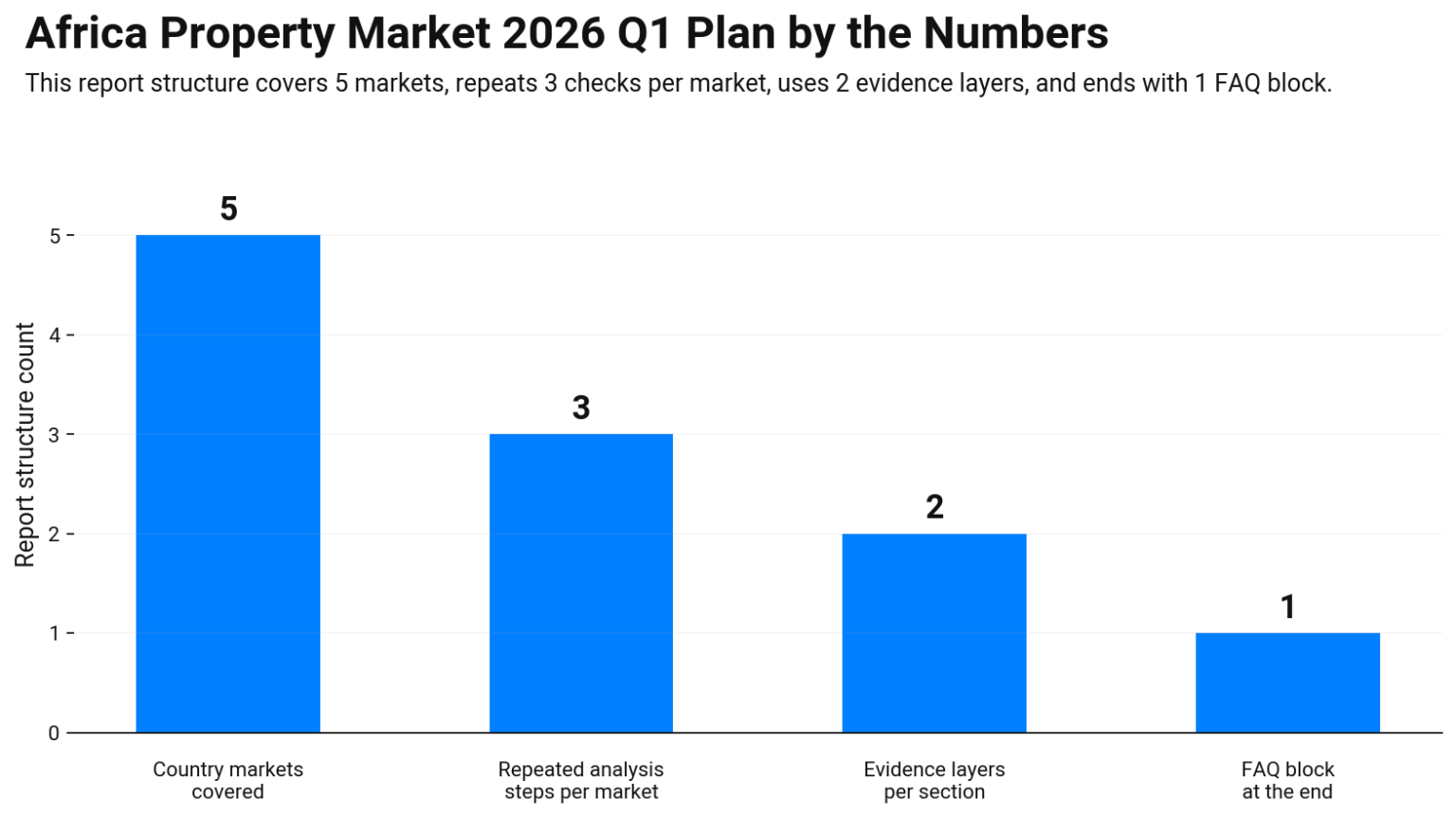
Africa property market 2026 Q1 plan: how this report is built
Africa property market 2026 Q1 plan is simple. We use the best public data that exists for each country. Then we add a short reality check, so numbers do not float alone.
First, we start with South Africa. We look at confidence and credit mood, because they often lead sales. Next, we move to Kenya. The Hass index helps track price direction, city by city. After that, we cover Morocco. Its central bank publishes a clear release calendar, so timing is easier to explain. Then we switch to Nigeria. Here, clean price indexes are harder to find, so we focus on risk, FX, and buyer checks. Finally, we end with Ghana. We use central bank context to frame affordability and housing gaps.
Along the way, each country section follows the same steps: what data we trust, what it shows, and what to watch in Q2. At the end, we add a short FAQ. It keeps the flow clear and helps you compare markets fairly. Each source is linked for proof. Next, we begin with South Africa.
Africa property market 2026 Q1 South Africa: confidence and credit set the tone
Africa property market 2026 Q1 South Africa is shaped by confidence and credit mood. When people feel safer, they search more. When they worry, they wait.
In Q1 2026, a survey reported consumer confidence improved a little, moving from –9 to -7. Higher-income households felt better, helped by lower rates and a firmer rand. Yet the same report warned new global risks could hurt mood in Q2.
FNB’s housing note says the market is entering a new cycle in 2026. It describes a shift from supply-led price resilience toward broader demand improvement. That is a slow change, not a jump.
So keep your checks simple. Watch interest-rate decisions. Track bond approval trends. Compare list prices with final sale prices in your suburb. Days on market helps. Also ask for clear cost items before you sign, because fees add up fast.
Next, we move to Kenya, where a single index is used widely to track prices.
Kenya property market 2026 Q1: what the Hass Property Index can tell you
Africa property market 2026 Q1 Kenya is one of the easier places to track with a public index. HassConsult publishes the Hass Property Index, which is widely used for Nairobi and nearby markets. It gives a steady trend view, not a one-week headline. It also helps you compare segments, like houses versus apartments, consistently.
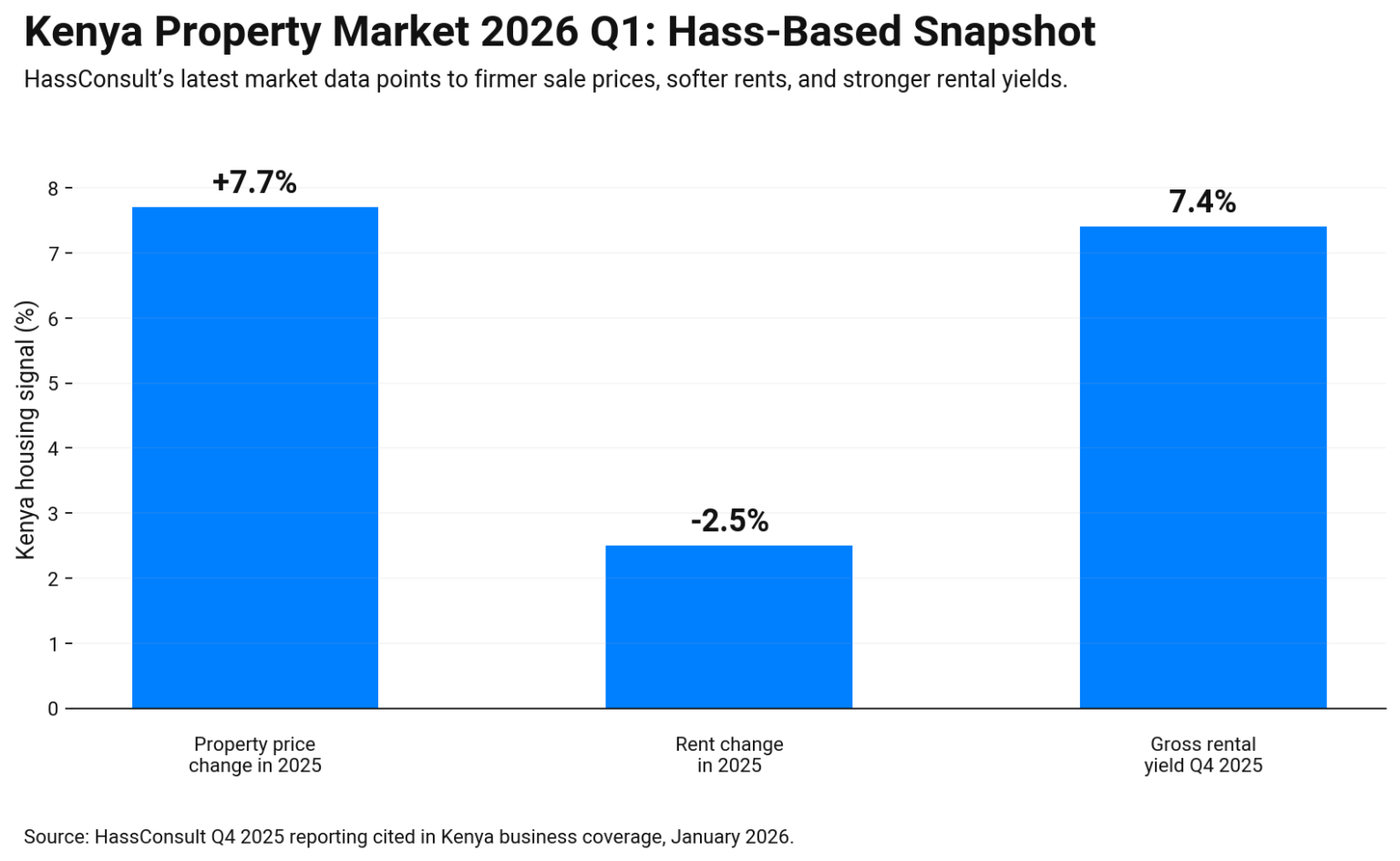
Even with an index, the real market can feel split. Some areas stay strong because they have jobs, services, and good roads. Other areas move more slowly when supply grows, or buyers face tighter budgets. So the best use of the index is “direction,” then local checks.
Use this simple process when you read Kenyan numbers:
- Track the index trend across several quarters, not one print.
- Compare price movement with rent levels and vacancy in your target area.
- Ask how title transfer works for that specific plot or unit.
- Check service access, like water, power, and road quality, before you value land.
If you are buying to build, also test the full cost chain. Materials and contractor pricing can shift fast. If you are buying to rent, focus on tenant demand and payment reliability.
Next, we move to Morocco, where the central bank calendar makes it clear when fresh price data will arrive.
Africa property market 2026 Q1 Morocco: why timing is the main story
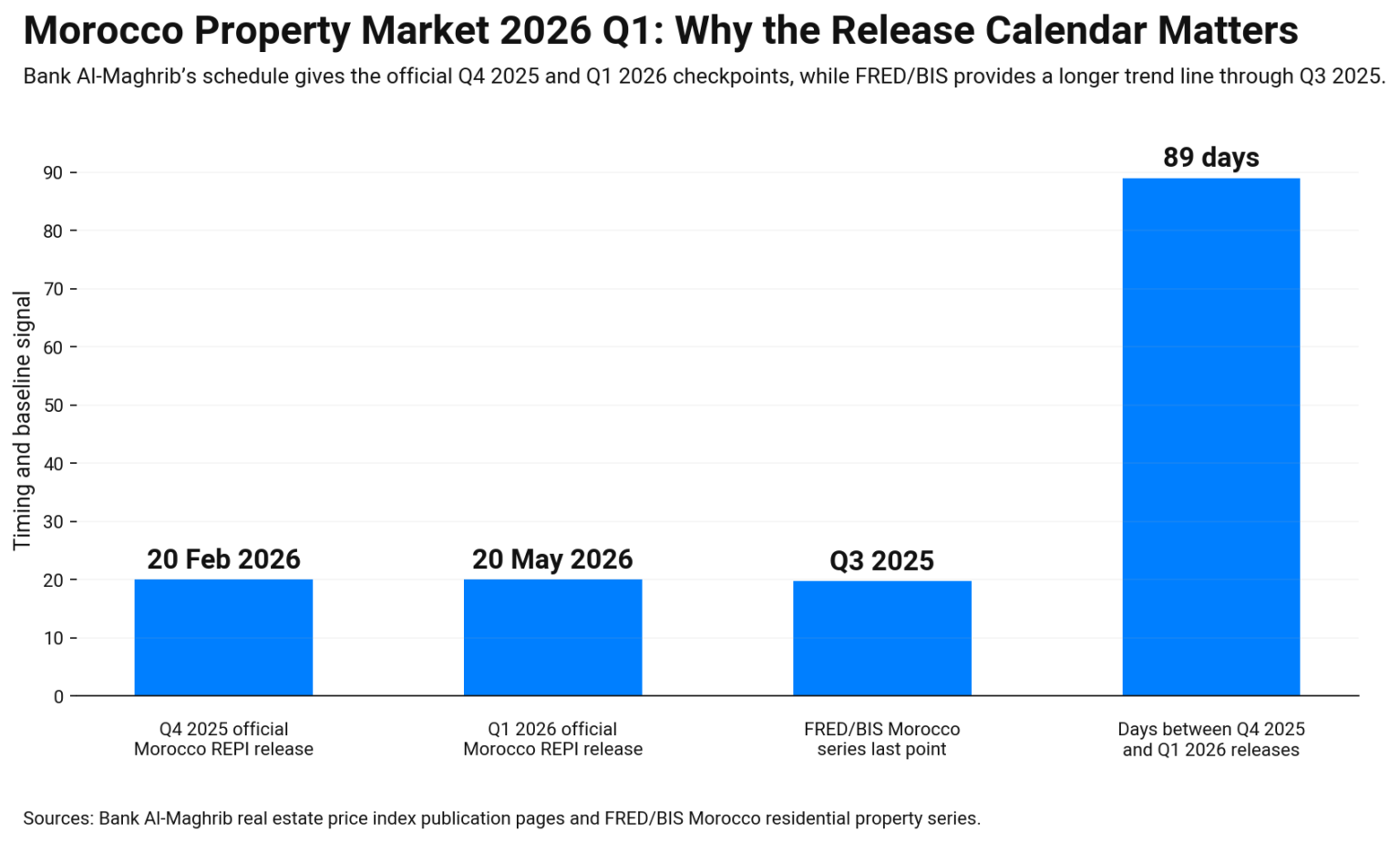
The Morocco property market 2026 Q1 is easier to track when you follow the release calendar first. Bank Al-Maghrib posts clear publication dates for its real estate price index. That helps you avoid guessing. Here is the key timing for this quarter.
| Morocco real estate price index edition | Publication date | What you can do with it |
|---|---|---|
| Q4 2025 | 20 Feb 2026 | Use it as the latest confirmed baseline |
| Q1 2026 | 20 May 2026 | Use it to confirm Q1 direction later |
So, in Q1 2026, you often rely on near-term signals like listings, credit mood, and deal speed. Then you check the index when it lands. For a longer trend line, the BIS series on FRED tracks Morocco’s residential property prices up to Q3 2025. It is not perfect, but it helps with direction across years.
Next, we move to Nigeria, where the biggest issue is not timing. It is the lack of a clean public price index.
Africa property market 2026 Q1 Nigeria: how to read a market with thin price data
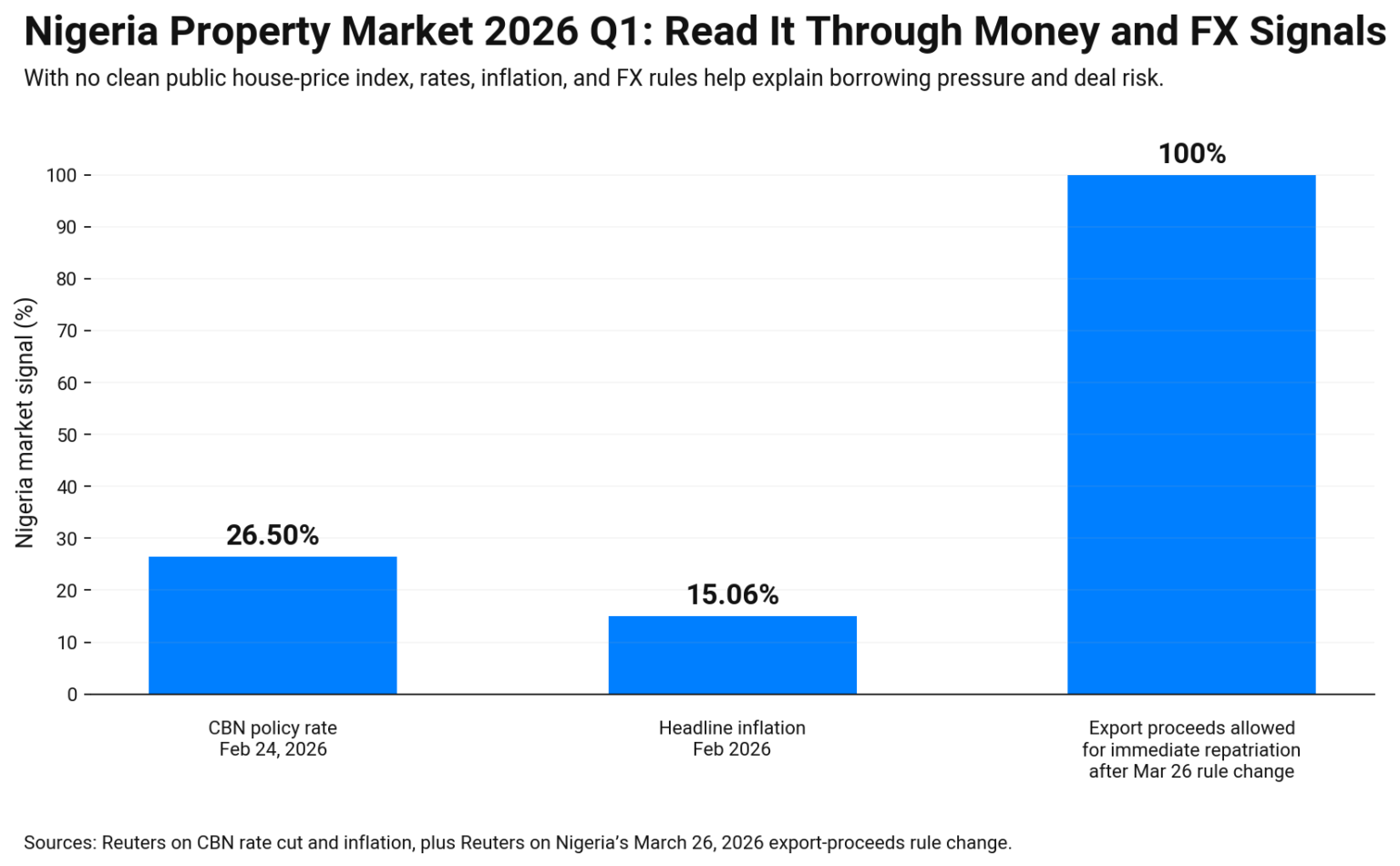
Nigeria’s property market in 2026 Q1 is harder to measure. Because it lacks cohesive data. So you need to read the market through money signals and risk checks. First, rates matter. Nigeria’s central bank cut its key rate to 26.50% on February 24, 2026, after inflation eased for months. That can lower borrowing costs over time, yet credit can stay tight for many buyers.
Next, watch foreign exchange rules. In late March 2026, the central bank eased a rule so oil firms could retain and repatriate export proceeds faster. That aims to boost dollar liquidity and support the naira. When FX stress falls, some build inputs become easier to price, and deals feel less risky.
Also, cash buyers can shape prices. Diaspora demand often targets safer areas and builds.
Because pricing data is patchy, focus on due diligence. Use a simple checklist:
- Verify title and ownership before paying any deposit.
- Confirm all fees in writing, including agent and legal costs.
- Inspect the site, then price repairs with real quotes.
- Plan for slow resale in non-prime areas.
Next, we move to Ghana, where central bank context helps frame demand and housing gaps.
Ghana property market 2026 Q1: affordability, finance, and housing gaps
Africa property market 2026 Q1 Ghana is best read through affordability and finance conditions, because they shape who can buy and build. The Bank of Ghana notes that housing supply has not kept up with demand for many years, and that this gap affects prices, rents, and crowding. It also highlights how long-term finance is limited, which makes formal mortgages harder to access for many households.
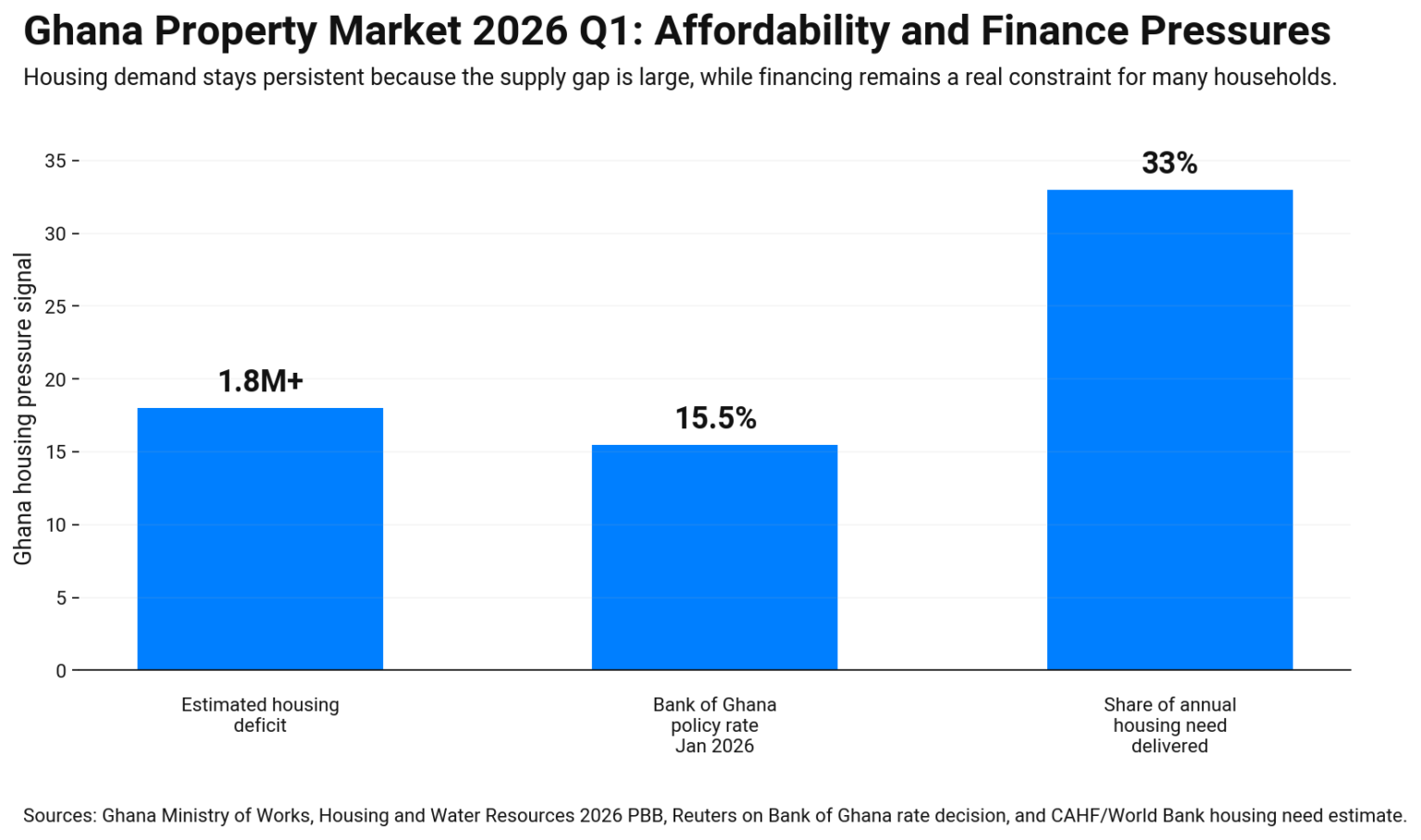
So, in Q1 2026, the market can stay active even when credit is tight. Buyers often rely on savings, family funding, or step-by-step building. That makes demand less smooth, yet still persistent. If you are buying land, confirm title and plot boundaries early, since disputes can destroy timelines. If you are buying a unit, ask for clear service charges and utility setup rules. For rentals, check payment terms and maintenance response history. Next, we’ll pull these five countries into one short Africa summary table, so you can compare them fairly.
How these five countries compare in Africa property market in 2026
The Africa property market 2026 Q1 summary gets clearer when you line up the same basics.
| Country | Best public signal to cite | What it is best for in Q1 | Main thing to watch next |
|---|---|---|---|
| South Africa | Consumer confidence + cycle notes | Early demand mood and credit direction | Rates, approvals, days-on-market |
| Kenya | Hass Property Index | Trend direction with one consistent method | Area-level rent demand and vacancy |
| Morocco | Central bank release calendar + BIS trend line | Knowing what is confirmed now vs later | Next index release date (Q1 print) |
| Nigeria | Rates + FX rule shifts | Risk, affordability, and build-cost pressure | FX liquidity and inflation path |
| Ghana | Central bank housing context | Structural supply gap and finance limits | Mortgage access and build pipeline |
Some countries have a clean price index. Others need proxies like confidence, rates, and FX. Use this table as a guide, then verify locally with listings and legal checks.
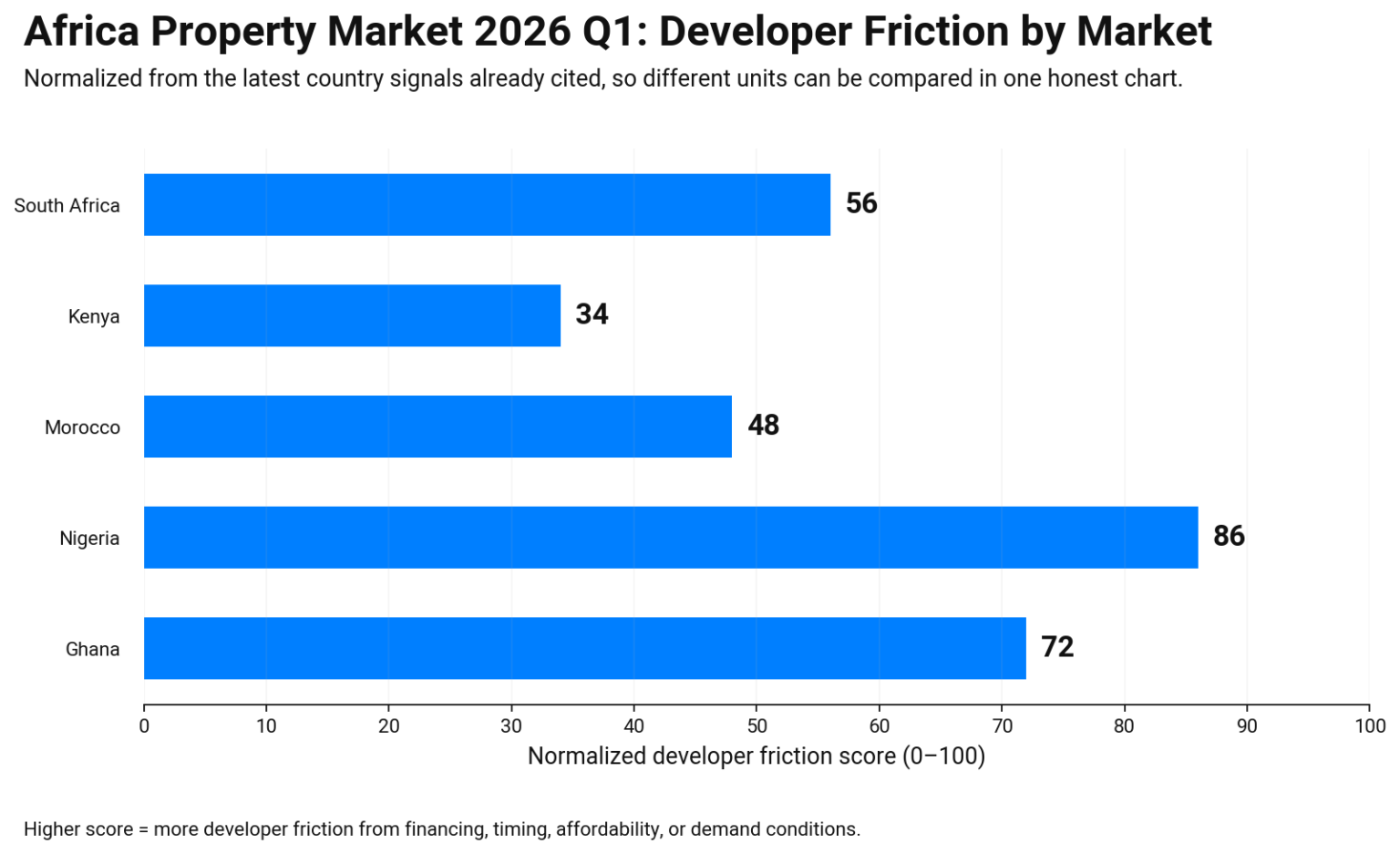
Africa property market 2026 Q1 developer stats: what land buyers should track before building
Africa property market 2026 Q1 developer stats matter because land deals fail on numbers, not ideas. First, track financing cost. Rates and credit rules decide if buyers can take mortgages, which sets your exit speed. In South Africa and Nigeria, rate moves can change demand fast.
Next, measure demand with real liquidity data, not hype. Use days on market, closed-sale discounts, and rental vacancy in your target zone. In Kenya, the Hass index can guide price direction, but you still need suburb-level checks.
Then watch build feasibility. In Morocco, timing matters because the official index lands later, so you lean on local comps until the next release. In Ghana, long-term finance limits change how fast buyers can absorb new units, so phased delivery often fits better.
Use a simple scorecard across all five countries: land title certainty, services capacity, permit timelines, cost inflation, and exit demand. If one box is weak, price the risk in before you sign.
Africa property market 2026 Q2 watchlist: what to track next
Africa property market 2026 Q2 watchlist starts with money signals, because they move demand first. Watch rate decisions in South Africa and Nigeria, since they change loan costs and buyer mood. In Morocco, mark the next real estate price index release date, because it will confirm Q1 direction. In Kenya, follow the next Hass index print for trend clarity.
Next, track local deal speed and risk checks. Compare listings with closed prices, not asking prices. In Nigeria and Ghana, verify title, fees, and utilities early, since paperwork delays can break timelines.
Africa property market 2026 Q1 conclusion: use data, then verify locally
The African property market in 2026 Q1 is moving, but it is uneven. Some countries have clear indexes. Others need proxies like rates, confidence, and FX. Use official sources for direction. Then verify titles, fees, and deal speed in your target area before committing.
Africa property market 2026 Q1 frequently asked questions
These FAQs answer the main questions readers ask after the Africa property market 2026 Q1 report.
Which public sources are most reliable for these five countries?
South Africa: confidence and market-cycle commentary. Kenya: Hass Property Index. Morocco: Bank Al-Maghrib releases calendar and index. Nigeria: rate and FX policy signals when price indexes are thin. Ghana: Bank of Ghana housing market context.
Why is Africa property data uneven across countries?
Some central banks publish regular housing indexes. Others have limited public series, so you use proxies like credit, inflation, FX, and transaction behavior.
What is the fastest “early warning” signal in Q1 for most markets?
Rates and credit rules. When borrowing costs change, demand and deal speed often change before official price reports arrive.
How should developers compare land opportunities across these countries?
Use one scorecard: title certainty, services capacity, permit timelines, build-cost risk, and exit demand. Then price risk into the land bid, not into hope.
What should I watch first in Africa property market 2026 Q2?
Track rate decisions, FX stability in Nigeria, the next Morocco price index release date, and the next Hass index update. Also watch local days-on-market and rental vacancy.