Search and review real estate developers in the United Kingdom by location, project type, service area, and profile status. Use company profiles to compare developers, property firms, builders, and development-related providers before starting contact, requesting documents, or moving into serious project discussions.
- List Date
- Listing Title
- Last Update
- Comments
- Author
- Rank
- Rate
Strathmore Homes Limited
Strathmore Homes Limited appears to be a regional home builder focused on new residential development in and around Consett and County Durham, rather than a ...

Bellway – Falcon Grove
Bellway’s Falcon Grove is a new-build housing development in Lower Callerton, Newcastle upon Tyne, not a general company-wide service on its own. It offers a ...
Barratt Homes
Barratt Homes is one of the UK’s largest mainstream housebuilders and now sits within Barratt Redrow, while continuing to sell homes under the Barratt Homes ...

Ashberry Homes – Stargate Meadows
Ashberry Homes’ Stargate Meadows is not in Shrewsbury; it is a new-build housing development in Ryton, Tyne and Wear, and Ashberry itself is a trading ...
Anvil Homes
Anvil Homes is a family-run North East housebuilder based in Whittonstall near Consett, County Durham, with a long-standing focus on bespoke rural residential developments rather ...
How to review real estate developers in the United Kingdom
Real estate developers in the United Kingdom can differ by role, region, and project type. A developer, builder, estate agency, property manager, and land company may all appear in similar searches, but they do not handle the same work.
Start by checking what the company profile shows. Review its location, website, service area, property focus, public links, and profile status. If the company works across several UK markets, check whether its profile gives enough detail to support that claim.
Users should also compare profile information with official sources where needed. Companies House, HM Land Registry, local planning portals, and approved redress schemes can help users check legal identity, land records, planning history, or agency obligations.
REDH profiles support early research before direct contact begins. Users should still ask for current documents, written terms, project examples, complaint routes, and professional advice before making serious decisions.
Exploring UK companies by real estate focus
Real estate companies in the United Kingdom may work across many property areas, so users should compare them by actual focus, not only by company name.
Residential developers may work with housing estates, apartment buildings, new-build homes, or regeneration projects. Commercial property companies may focus on offices, retail space, warehouses, mixed-use schemes, or income-producing assets.
Some companies provide services around development rather than direct project ownership. These may include builders, planning consultants, property managers, estate agencies, land advisers, or investment-linked firms.
REDH categories help users narrow the search before contact. A clearer match between company focus and project need can save time during early research. Users can review whether a provider works in residential, commercial, mixed-use, land, hospitality, industrial, or development-related services before moving into documents, pricing, or project-specific discussions.
Official sources to check before choosing a UK provider
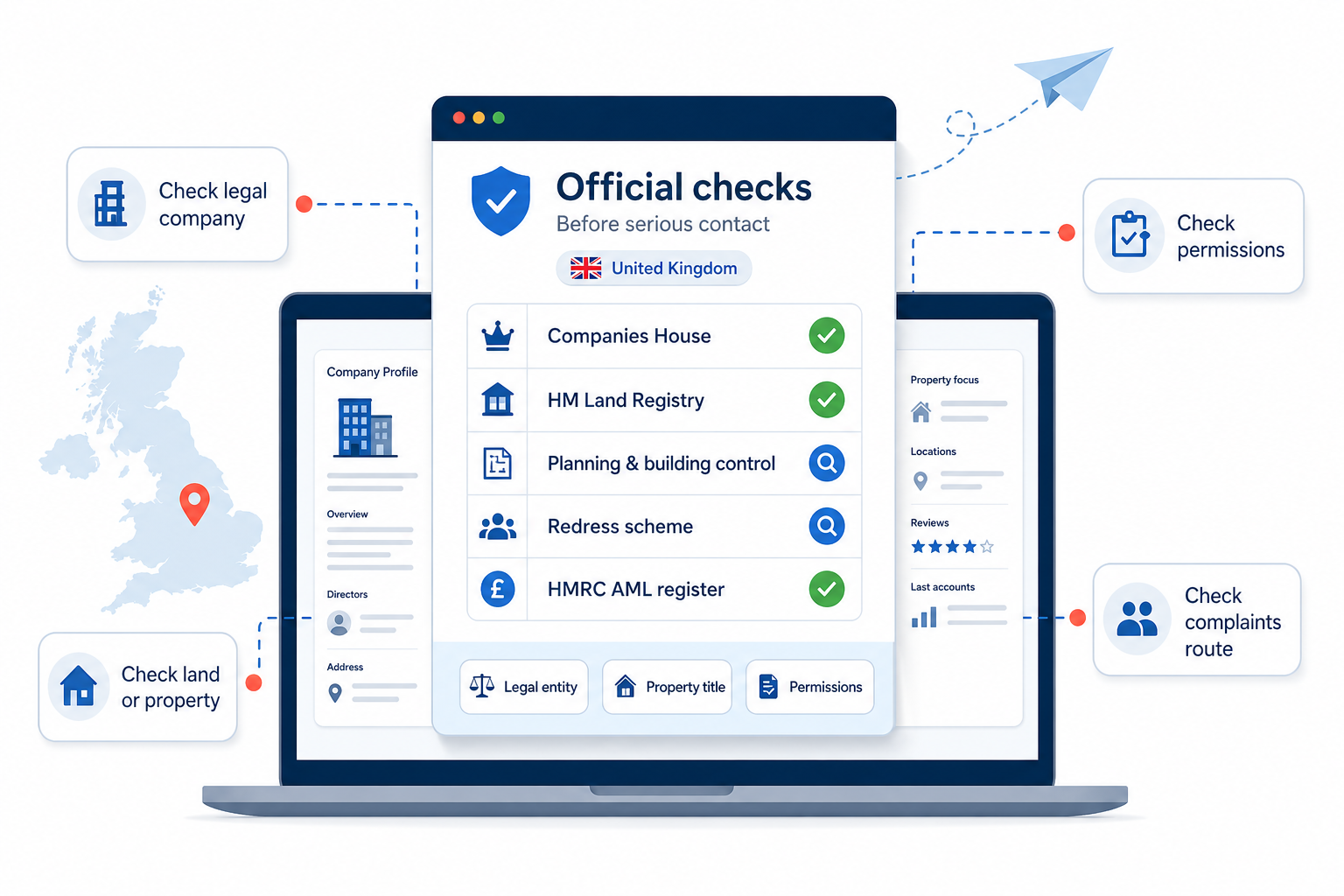
When reviewing real estate companies in the United Kingdom, users should also compare profile details with official public sources. These checks can help confirm legal identity, land records, planning activity, agency duties, or complaint routes before contact becomes serious.
| Source type | What to check | Why it matters |
|---|---|---|
| Companies House | Company status, directors, filings, charges | Helps confirm the legal company behind the profile |
| HM Land Registry | Ownership, title register, title plan, covenants | Helps users review property or land records |
| Local planning portal | Applications, decisions, planning conditions | Helps compare project claims with public planning records |
| Building control records | Approval status, completion certificates | Helps users understand project compliance history |
| Redress scheme | Agency or property management membership | Helps users know where complaints may go |
These sources do not replace legal advice, but they can help users ask better questions. For example, a company name on a website should match the legal entity used in contracts. A project claim should make sense next to planning records. A property agency or management provider should have the right complaint route where rules require it.
REDH profiles help organize early research. Official records help users test key details before making decisions.
New-build checks users should not skip
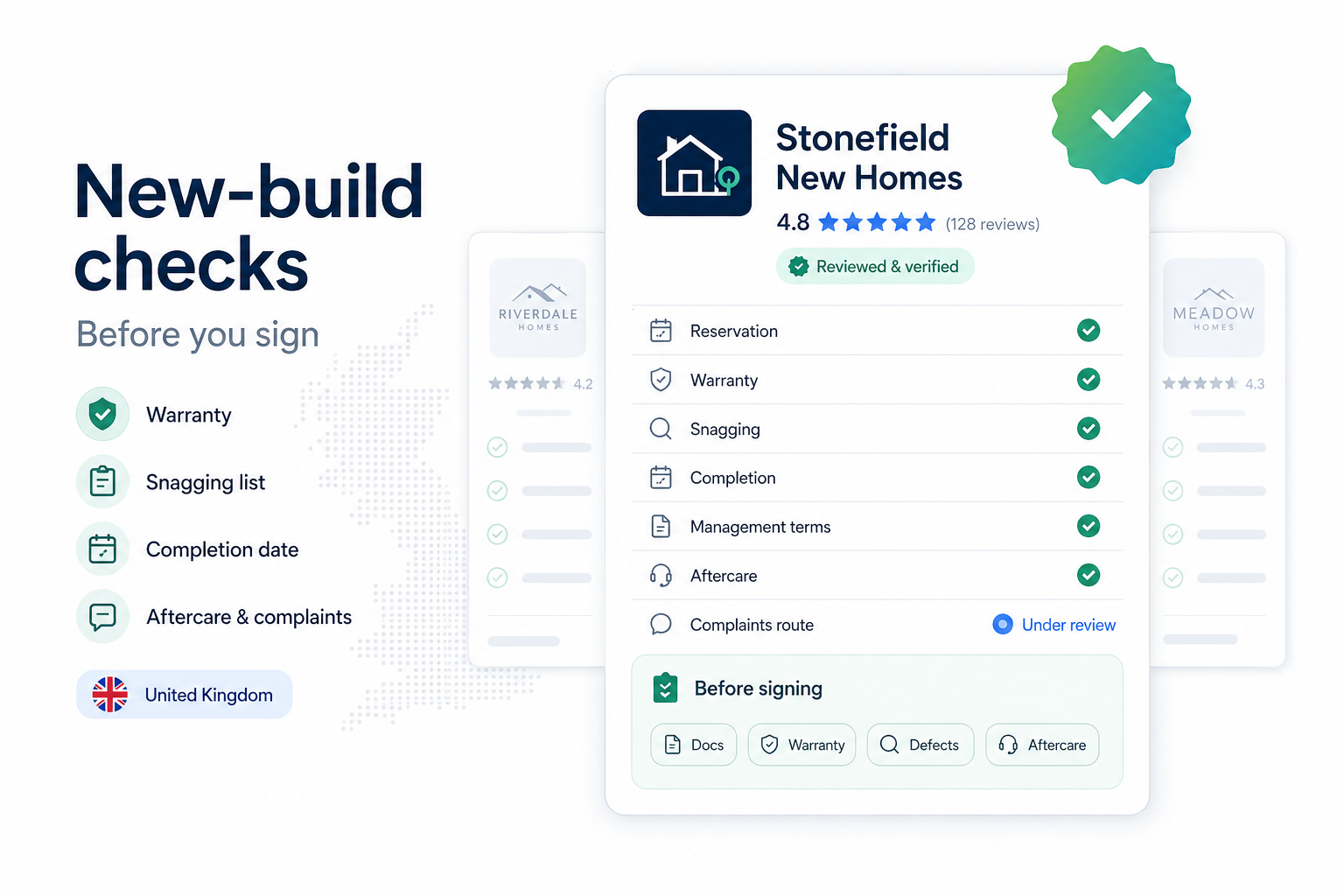
New-build projects in the United Kingdom can involve reservations, warranties, snagging lists, completion dates, management terms, and aftercare duties. Users should ask which warranty applies, what the developer covers after completion, and how defects are reported.
A professional snagging inspection can help identify issues before or soon after moving in. Buyers should also check whether the developer has a clear complaint process and whether the home falls under a recognised new homes code or ombudsman route.
REDH profiles can support early company review, but buyers should still check current documents before signing.
Leasehold, service charge, and management checks
Many UK property decisions involve more than the developer’s name. Buyers may also need to understand leasehold terms, estate charges, ground rent, service charges, building management, and future maintenance duties.
These details can affect long-term costs after the purchase. A home may look suitable at first, but unclear management terms or rising charges can create problems later. Users should ask who manages shared areas, how charges are calculated, what services are included, and whether any major works are expected.
For flats, mixed-use buildings, and managed communities, the management company can shape the owner’s daily experience. REDH profiles help users review the provider first, but lease terms, service charge budgets, management rules, and legal documents should be checked separately before commitment.
Questions to ask to real estate company
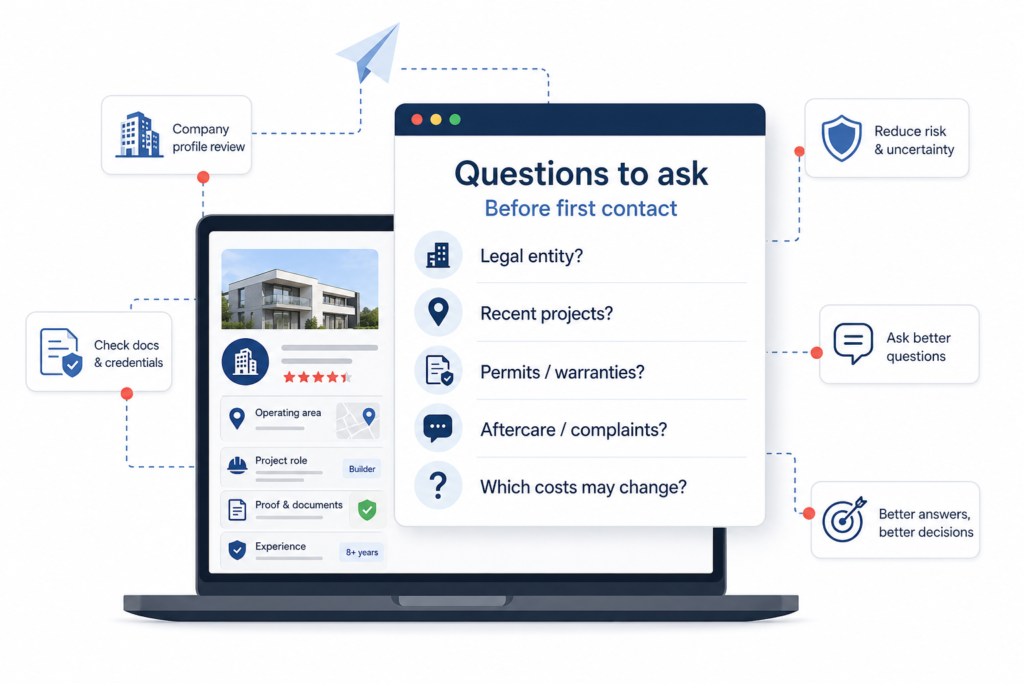
A REDH profile can help users prepare better questions before first contact. Ask about the company’s current operating area, project role, legal entity, relevant experience, and available proof. Useful questions may include:
- Which legal company will sign the agreement?
- Can you share recent project examples?
- What permits, approvals, or warranties apply?
- Who manages aftercare or complaints?
- Which costs may change later?
These questions help users move from profile review to clearer direct contact.Â
How REDH supports a clearer UK shortlist
REDH helps users move from broad search results to a more useful shortlist of real estate companies in the United Kingdom. Instead of comparing companies only by name, users can review location, profile status, property focus, service area, website, public links, and available company details.
This matters because UK providers may have very different roles. Some may develop new homes. Others may manage property, advise on land, support planning, build projects, or handle commercial assets.
After building a shortlist, users can contact stronger matches to request current documents, project examples, warranties, legal details, and complaint routes. REDH supports the first stage of research, while final decisions should depend on direct checks and professional advice.
Get your United Kingdom company profile listed
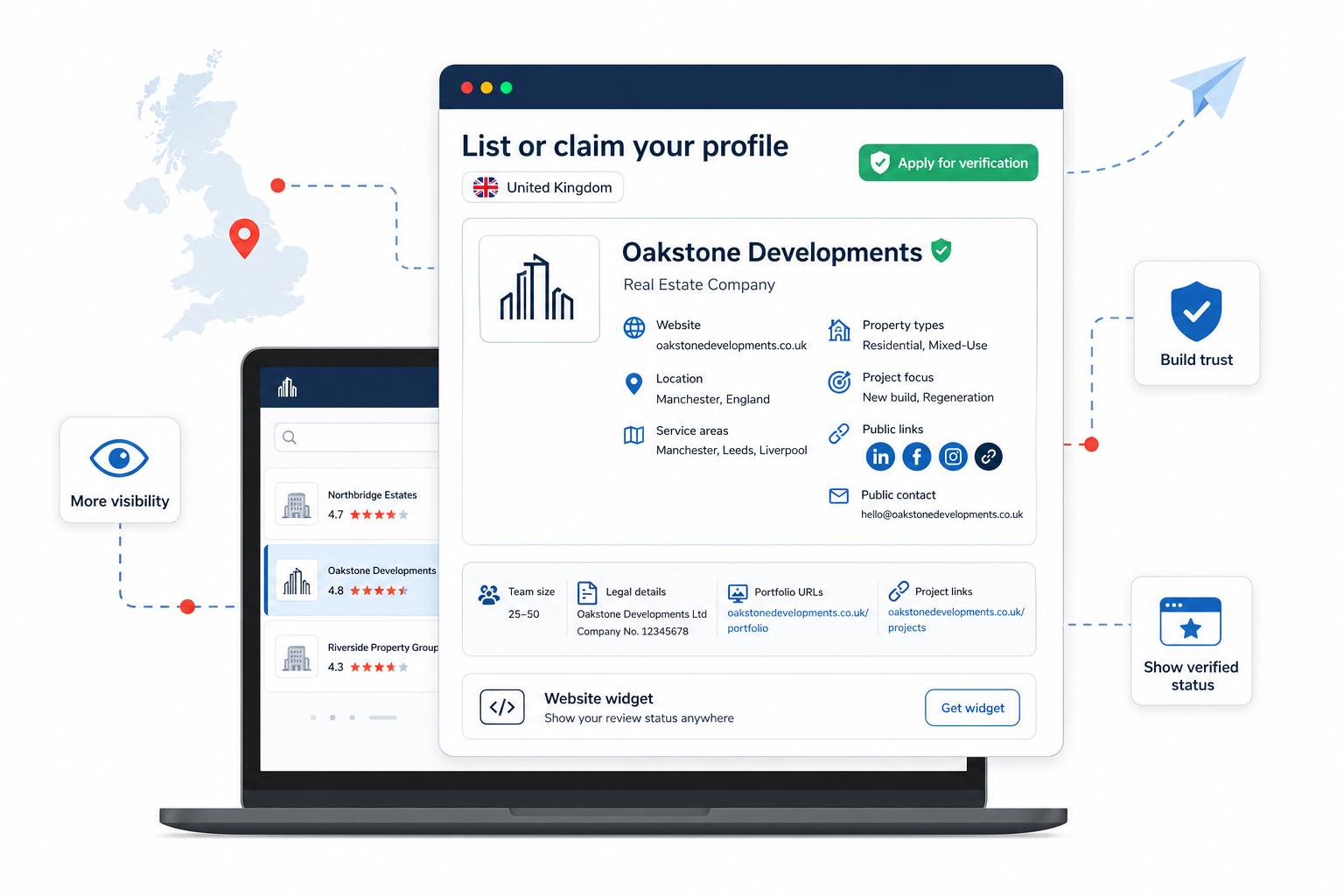
Real estate and development-related companies in the United Kingdom can create or claim a REDH profile to make their business easier to review.
A profile can show your company name, website, location, service areas, property types, project focus, categories, features, public links, and contact details. This helps users understand what your company does before starting direct contact.
Companies that want a deeper profile can choose a premium option with added business information, legal details, team size, portfolio URLs, and project links. This can help buyers, partners, investors, and project teams review your company with more context.
UK companies can also apply for verified status. Verification is a separate review process based on submitted information, public details, company evidence, and available proof at the time of review.
Approved companies may receive a verified badge on REDH and a website widget to show review status outside the platform.
Useful official checks for UK property decisions
Before contacting real estate companies in the United Kingdom, users should compare profile details with official sources where possible. These checks can help confirm whether a company name, property claim, planning detail, or agency role matches public information.
Use Companies House when you want to check the legal company behind a real estate provider. It can show registered address, company officers, filing history, charges, previous company names, and insolvency information. This is useful when a provider uses a trading name, group brand, or project-specific company.
Use HM Land Registry when you want to check property or land information in England and Wales. Users can search for a property summary, title register, and title plan. This can help when a company makes claims about ownership, development land, or a specific property site.
Use local planning and building control sources when the project involves construction, extensions, conversions, or major changes. Building regulations approval is separate from planning permission, and some work may need both.
Use approved redress scheme checks when the provider works as an estate agent, letting agent, or property manager. Estate agents dealing with residential property in the UK, and letting agents or property managers in England or Wales, must join an approved redress scheme.
Use HMRC’s supervised business register when the provider carries out estate agency activity and should be registered for anti-money laundering supervision. The register can help users check whether a business is registered, but registration is not an endorsement to enter into a transaction.
These checks do not replace legal advice or direct due diligence. They help users review public information before moving from profile research into serious contact, document requests, or contract discussions.
Browse real estate developers in the United Kingdom
Use this page to explore real estate developers, property firms, builders, managers, and development-related providers across the United Kingdom.
Each profile can help users compare company focus, operating area, service type, project category, website details, public links, and profile status. Listed profiles show basic company information. Verified profiles show that an added REDH review has been completed.
Users can open profiles that match their search, then continue with direct questions, official records, legal checks, and current documents before making final decisions. REDH gives users a clearer place to begin company research before serious contact starts.
Frequently asked questions about real estate developers in the United Kingdom
Real estate developers in the United Kingdom most commonly asked questions and anwers can be found in this section:
What types of real estate companies in the United Kingdom can I find?
You can review developers, property companies, builders, estate agencies, property managers, land companies, commercial property firms, mixed-use developers, and development-related providers. Each profile may show location, service area, property focus, website details, public links, and profile status.
What does listed mean for real estate companies in the United Kingdom?
Listed means the company appears on REDH with basic public or submitted profile information. This may include company name, website, location, category, service area, property focus, and contact details. Listed status does not mean the company has completed REDH verification.
What does verified mean for real estate companies in the United Kingdom?
Verified means the company completed REDH’s added review process based on submitted details, available proof, public information, and company-related evidence reviewed at the time. Verified status can support early research, but users should still check legal documents, project details, and current company information.
Can real estate companies in the United Kingdom claim their profiles?
Yes. A UK real estate or development-related company can request to claim its REDH profile. REDH may ask for proof that the person is authorised to manage the company information before profile changes are approved.
Should I check official sources before working with real estate companies in the United Kingdom?
Yes. REDH profiles support early research, but users should still check official sources where needed. Companies House, HM Land Registry, local planning records, redress schemes, and legal documents can help users confirm important details before serious contact.
Build a clearer company profile on REDH
Choose a listed profile for basic visibility, or apply for verification if your company wants stronger proof signals.