Real estate developers in Thailand can be searched by city, project type, service area, and profile status. Review developers, condo firms, brokers, property managers, builders, and development-related providers before contact. Use REDH profiles to compare available company details before document requests, project talks, or official checks begin.
- List Date
- Listing Title
- Last Update
- Comments
- Author
- Rank
- Rate
Yot Village
Yot Village is not a broad Thai housing developer. It is a small luxury villa project in Sam Roi Yot developed by Thai Tulip Development. ...
Manora Village Hua Hin
Manora Village Hua Hin is not just a single villa project. It is a long-running residential and property management business in Khao Tao, south of ...
MAGO Real Estate
MAGO: Real Estate operates in Thailand and supports property development and real estate services. Their categories point to real estate developer and property advisory. Their ...
Lunique Real Estate Co., Ltd.
Lunique Real Estate is a Thailand-based property developer with a more premium, design-led profile than a typical real estate advisory company. On its official site, ...

La Felice Hua Hin
La Felice Hua Hin is a boutique luxury villa development in Thap Tai, Hua Hin, developed by PNP Real Estate Co., Ltd., rather than a ...
Fullrich Asset
FullRich Asset is a Thailand-based housing developer focused on detached homes, semi-detached homes, and some commercial buildings in the Hua Hin, Cha-Am, and Pranburi area, ...

Falcon Hill Hua Hin
Falcon Hill Hua Hin is a high-end residential development focused on luxury pool villas and terrace homes in South Hua Hin, rather than a broad ...
Dusit Group
Dusit Group is a Pattaya-based residential developer focused mainly on condominium projects in the Jomtien area rather than broad mixed-use or nationwide development. The company ...
Coco Hua Hin
CoCo Hua Hin Luxury Project operates in Thailand and supports high-end residential villa development in Hua Hin. Based on the information provided, the project is ...
Charn Issara
Charn Issara Development is one of Thailand’s long-established real estate developers, with a broad portfolio that goes far beyond a single housing niche. Founded in ...
Aria 1 Hua Hin
Aria 1 Hua Hin is best understood as part of the wider Aria Hua Hin pool-villa brand, which focuses on low-rise residential villa living in ...
How to review real estate dvelopers in Thailand
Real estate developers in Thailand can differ by city, company role, property type, and buyer needs. A Bangkok condo developer, Phuket villa company, Pattaya broker, or construction-linked provider may each require different checks.
Start with the company profile. Review its location, website, service area, project focus, public links, and profile status. Then compare key details with official sources where needed.
For condo purchases, users should ask about foreign ownership quota, title transfer process, building management, maintenance fees, and sinking fund costs. For off-plan projects, users should check reservation terms, payment schedule, expected handover date, delay clauses, and evidence of construction progress.
REDH supports early research before direct contact begins. Users should still request current documents, written terms, legal advice, and direct confirmation from the company, developer, broker, or authorised representative before making serious decisions.
Exploring Thailand development companies by real estate focus
Real estate companies in Thailand can work across many property roles, so users should compare them by actual focus, not only by location or brand name.
Condo developers may work with high-rise buildings, low-rise projects, mixed-use schemes, or resort-style residences. Villa developers may focus on private homes, gated communities, holiday properties, or luxury residential projects in tourism-led areas.
Some providers support property activity without owning developments directly. These may include brokers, property managers, construction-linked firms, land advisers, hospitality specialists, and investment-related companies.
REDH categories help users narrow their search before direct contact. A clearer match between company focus and user need can save time during early research. Users can review whether a provider works in condos, villas, residential projects, commercial property, hospitality, land, brokerage, or management-related services before moving into pricing, documents, ownership checks, or project discussions.
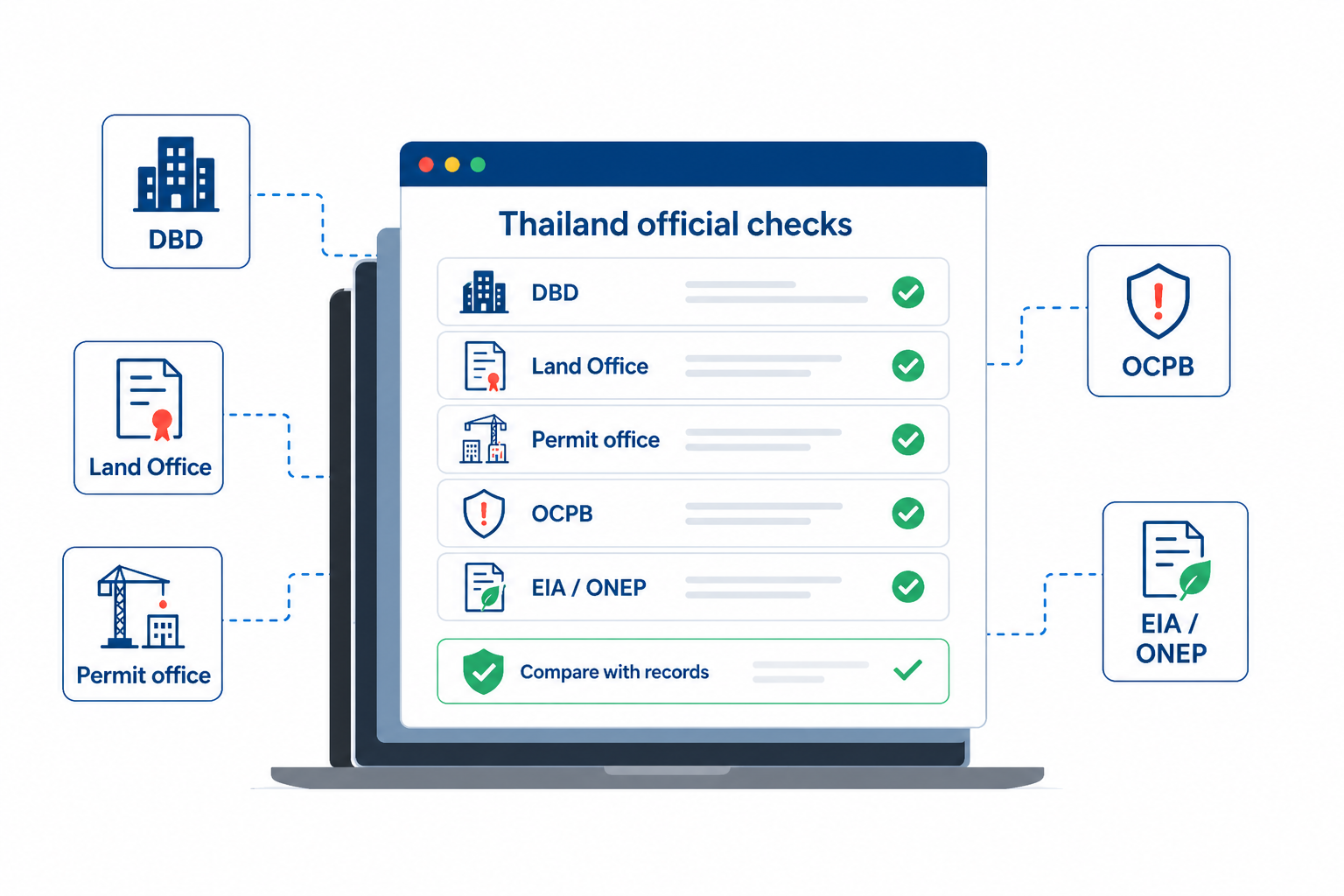
Official checks for Thailand real estate developer research
Before contacting real estate developers in Thailand, users should compare profile details with official or public sources where possible. Thailand checks may depend on the company role, project type, location, and buyer status.
Use the DBD company search when checking the legal business behind a provider. It can help users review registered company information and confirm whether a company name matches public records.
Use Department of Lands or local Land Office sources when checking title transfer, land rights, condominium documents, or ownership-related details.
Use local permit offices when reviewing construction-linked work, building approvals, or project development claims.
Use OCPB consumer resources when reviewing reservation terms, buyer complaints, or contract-controlled condominium sales.
Use EIA or ONEP sources when larger projects may require environmental approval.
These checks help users compare REDH profile information with official records before document requests, payment decisions, or legal review.
Condo and foreign ownership checks users should not skip
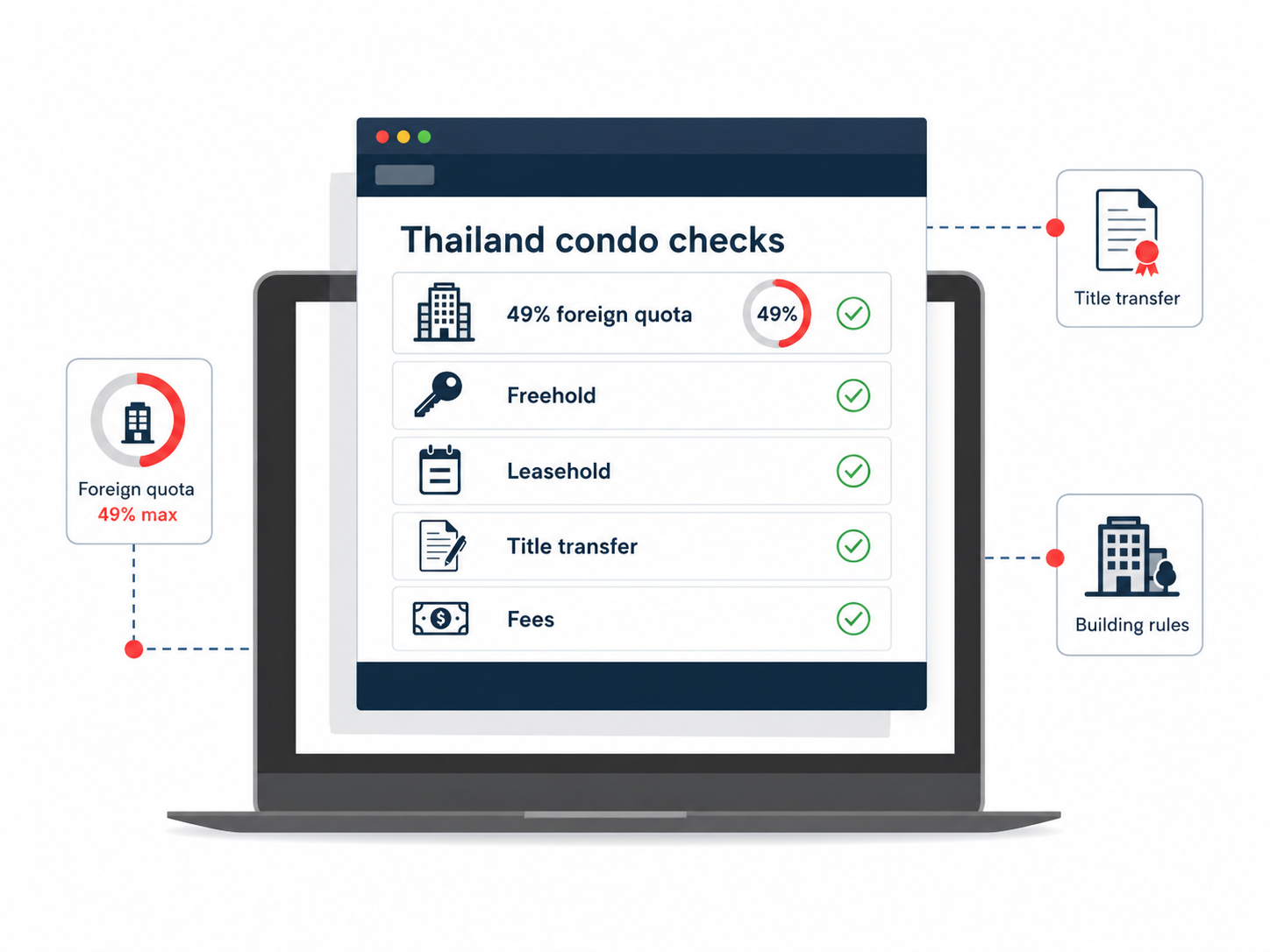
Condo purchases in Thailand need extra care, especially for foreign buyers. The Thai government guidance says foreign ownership in a condominium must not exceed 49% of the total area of condominium units, and a condominium juristic person’s affidavit may be needed for transfer. Users should ask whether the unit is inside the foreign quota before paying a reservation fee.
Buyers should also confirm whether the offer is freehold or leasehold. A freehold condo unit can give direct ownership when legal conditions are met, while leasehold terms give use rights for a set period. These two options create different risks, costs, and exit paths, especially when buyers plan to resell, rent, or hold the unit long term.
Useful resources include Thailand.go.th guidance on condominium ownership, Department of Lands or local Land Office checks, and the condominium juristic person for quota confirmation. Users should also ask for title details, transfer process, common area fee, sinking fund, building rules, expected handover documents, and building management contacts.
REDH profiles help users review the company first. Final ownership and transfer decisions should depend on current documents, direct confirmation, payment records, and qualified legal advice before signing, sending money, or accepting a final agreement.
When foreign quota is not available
If the foreign quota is already full, the offer may move toward leasehold or another structure. This needs careful review. A lease is not the same as freehold ownership. Thai lease terms for immovable property are commonly limited to 30 years, and leases longer than three years need proper registration to protect longer-term rights.
| Route | What it usually means | Main documents to check | Main risk to understand | Better question to ask before paying |
|---|---|---|---|---|
| Foreign freehold condo | Direct ownership of a condo unit inside the foreign quota | Juristic person quota affidavit, title details, sale agreement, FET or bank remittance proof | The unit may not qualify if quota, title, or fund evidence is unclear | Can you provide current written foreign quota confirmation for this exact unit? |
| Leasehold condo or villa | Long-term use rights, not the same as freehold ownership | Registered lease, title deed, renewal wording, lessor details, transfer limits | Renewal terms may not give the same protection as ownership | Is the lease registered, and what happens if renewal is refused? |
| Thai company structure | A Thai company owns the asset, sometimes suggested for quota or land issues | Company filings, shareholder evidence, capital contribution proof, control rights, legal opinion | Nominee shareholder risk if Thai shareholders are not genuine investors | Can each Thai shareholder prove real capital contribution and control? |
| Foreign-owner resale | A foreign-owned freehold unit is sold to another foreign buyer | Seller title, quota confirmation, Land Office documents, FET or bank evidence | Transfer can fail if buyer documents or title status are not ready | Does the seller’s foreign quota allocation transfer cleanly to me? |
| Developer instalment plan | Buyer pays in stages before transfer or completion | Reservation terms, payment schedule, construction status, cancellation terms, receipts | Money may be paid before transfer, title review, or handover clarity | What happens if the project is delayed or the unit cannot transfer? |
Foreign buyers should also pay attention to the fund evidence. Several property-law resources note that a foreign buyer commonly needs a Foreign Exchange Transaction form or bank confirmation showing foreign currency remittance for Land Office registration of foreign condo ownership. The document usually needs to connect the buyer, the amount, the currency exchange, and the purchase purpose clearly.
When a Thai company structure is suggested
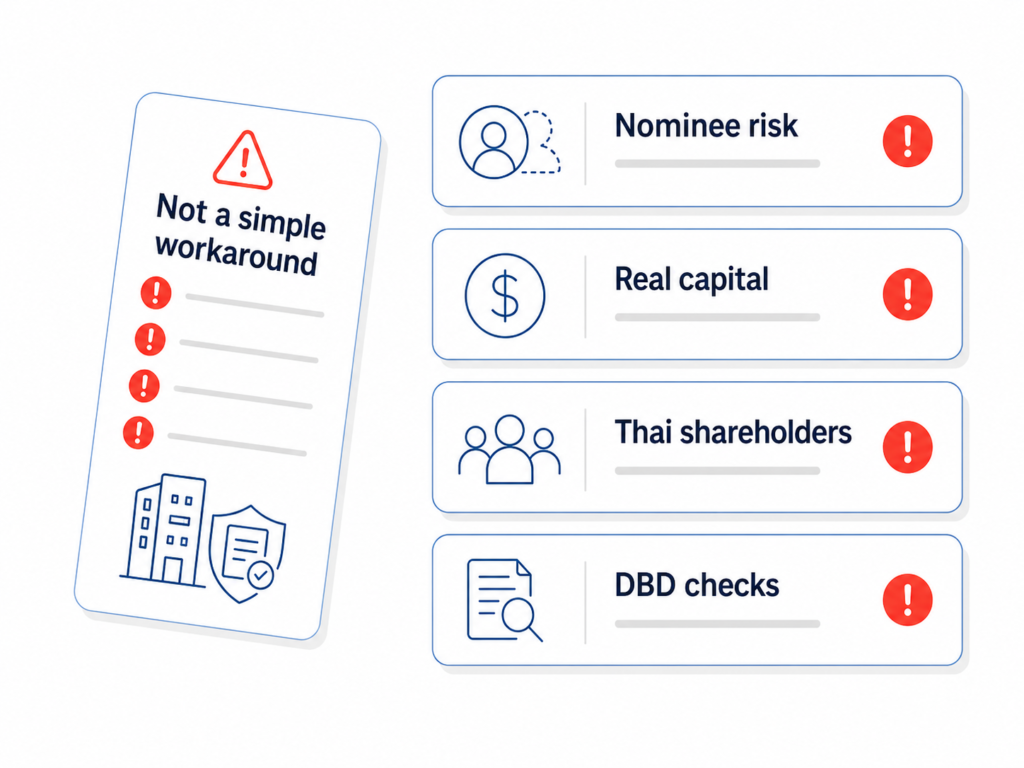
Some buyers are offered a Thai company structure when quota is not available or when land is involved. This should be treated as a legal risk area, not a simple workaround. Recent legal commentary says Thailand’s Department of Business Development has strengthened checks around whether Thai shareholders contributed real capital and are not acting only as nominees.
What users should confirm before paying
Before sending money, users should ask for written quota confirmation, title details, payment instructions, reservation terms, transfer steps, and the exact legal entity behind the sale. REDH profiles help users review the company first, but ownership structure should always be checked with current documents and qualified legal advice.
Off-plan project and handover risk checks
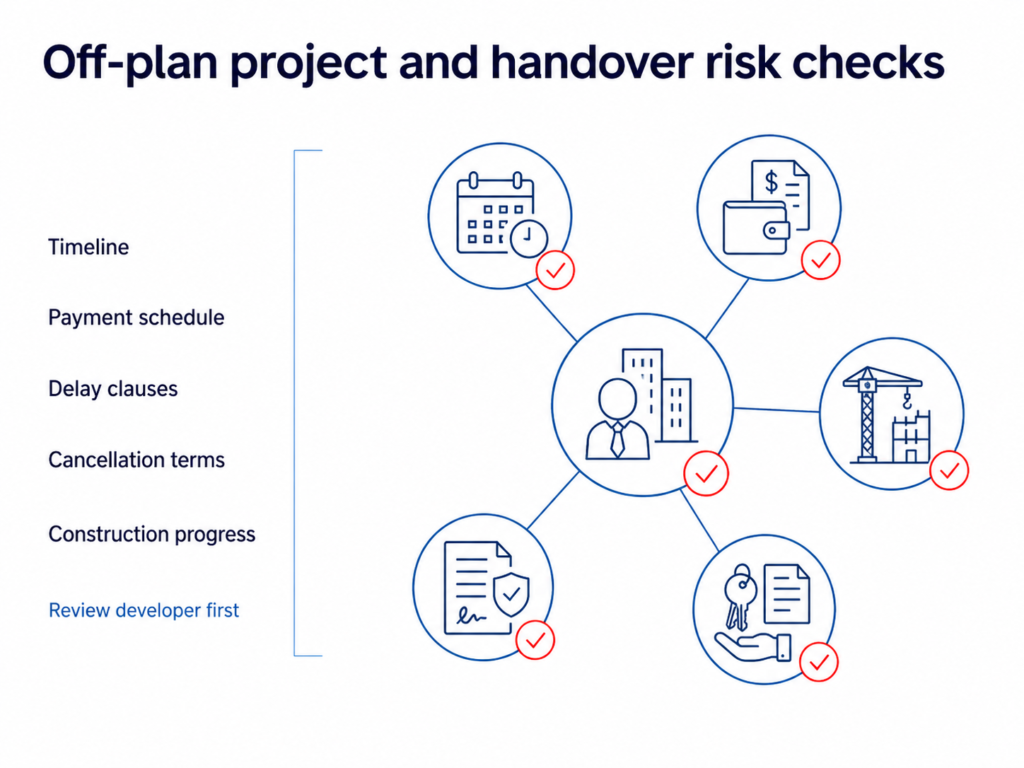
Off-plan projects in Thailand can involve reservation payments, staged instalments, construction delays, handover dates, and changing project conditions. Users should ask for the project timeline, payment schedule, delay clauses, cancellation terms, title details, and evidence of construction progress before paying.
A clear developer should explain what happens if delivery is late, documents change, or the unit is not ready at handover. REDH profiles help users review the company behind the project before direct checks begin.
Broker, agent, and payment warning signs
Real estate companies in Thailand may work through developers, brokers, sales agents, property managers, or marketing partners. Users should check who is responsible for the offer, documents, payment request, and final agreement.
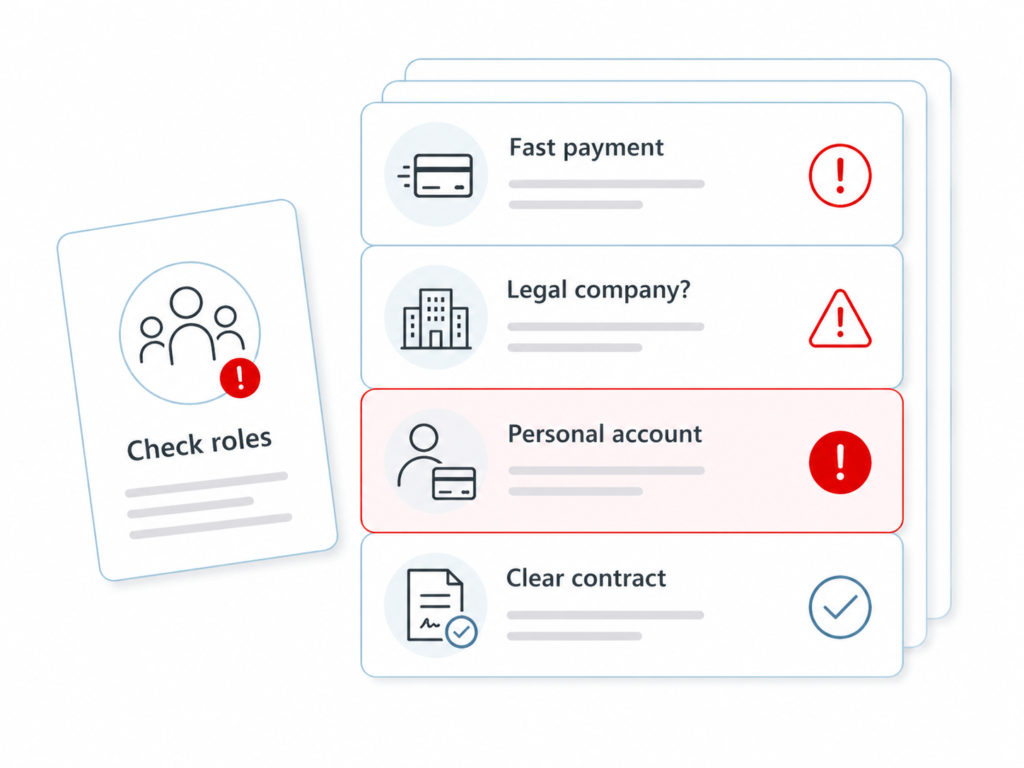
Be careful if a provider pushes for fast payment, avoids naming the legal company, sends unclear contracts, uses personal bank accounts, promises guaranteed returns, or gives vague answers about foreign ownership rules.
A serious provider should explain its role, show official contact points, provide written terms, and issue proper receipts before any payment or reservation decision.
How REDH supports a clearer Thailand shortlist
REDH helps users move from broad search results to a more useful shortlist of real estate companies in Thailand. Instead of comparing providers only by name, users can review city, company role, property focus, service area, website details, public links, and profile status.
This matters because Thailand real estate providers can have very different roles. Some companies develop condo projects. Others sell units, manage villas, advise investors, handle construction work, or support hospitality and commercial assets.
A practical shortlist should help users compare which city the company serves, what type of property work it handles, whether the profile is listed or verified, which public links are available, and what official checks may still be needed.
After building a shortlist, users can contact stronger matches and ask for current documents, title details, ownership structure, payment terms, project timelines, and legal confirmation. REDH supports early research, while final decisions should depend on direct checks and qualified advice.
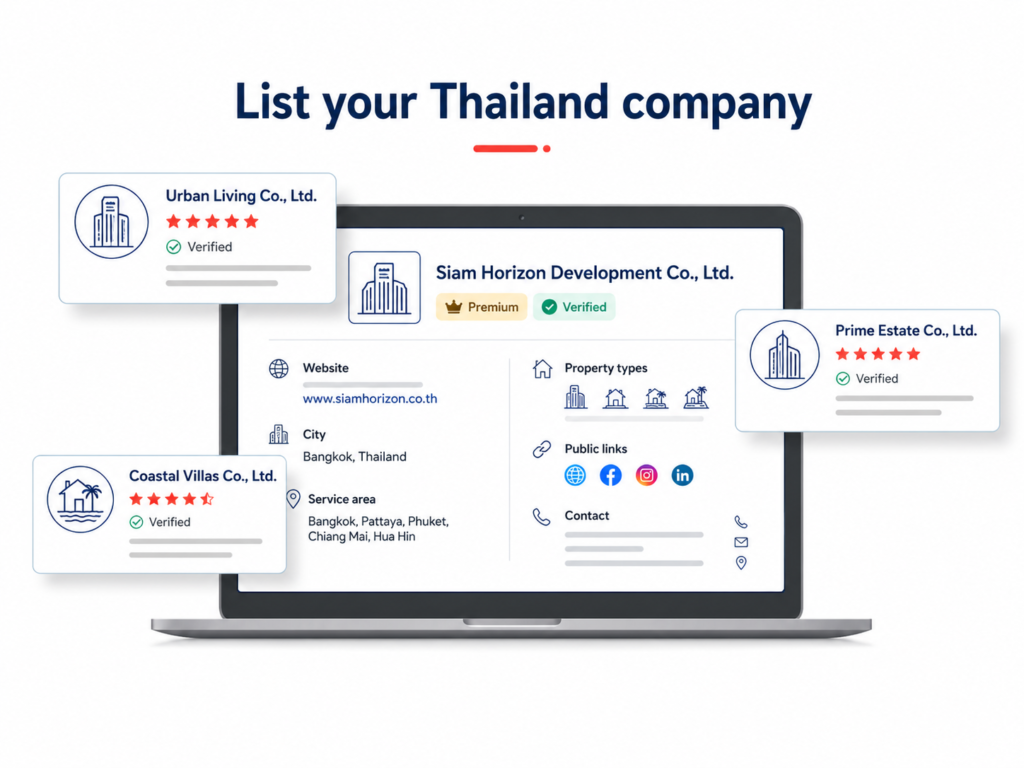
Get your Thailand company profile listed
Real estate and development-related companies in Thailand can create or claim a REDH profile to make their business easier to review. A profile can show your company name, website, city, service areas, property types, project focus, categories, features, public links, and contact details. This helps users understand your company before direct contact begins.
Companies that want a deeper profile can choose a premium option with added business information, legal details, team size, portfolio URLs, and project links. Thailand companies can also apply for verified status and receive a verified badge if approved.
Browse real estate companies in Thailand
Use this page to explore real estate developers, condo firms, brokers, villa companies, property managers, builders, and development-related providers across Thailand.
Each profile can help users compare city, company role, property focus, service area, website details, public links, and profile status. Listed profiles show basic company information. Verified profiles show that an added REDH review has been completed.
Users can open profiles that match their search, then continue with direct questions, official checks, title documents, ownership details, payment terms, and current agreements before making decisions. REDH gives users a clearer place to begin company research.
Frequently asked questions about real estate developers in Thailand
Real estate development in Thailand frequently asked questions and main user concerns and answers can be found in this section.
What types of real estate companies in Thailand can I find?
You can review condo developers, villa companies, brokers, property managers, builders, commercial property firms, hospitality-focused providers, land companies, and development-related service providers. Each profile may show city, service area, property focus, website details, public links, and profile status.
What does listed mean for real estate companies in Thailand?
Listed means the company appears on REDH with basic public or submitted profile information. This may include company name, website, city, category, service area, property focus, and contact details. Listed status does not mean the company has completed REDH verification.
What does verified mean for real estate companies in Thailand?
Verified means the company completed REDH’s added review process based on submitted details, available proof, public information, and company-related evidence reviewed at the time. Verified status can support early research, but users should still check ownership documents, payment terms, contracts, and legal details.
Can real estate companies in Thailand claim their profiles?
Yes. A Thailand real estate or development-related company can request to claim its REDH profile. REDH may ask for proof that the person is authorised to manage the company information before profile changes are approved.
Should foreign buyers check ownership details before working with real estate companies in Thailand?
Yes. Foreign buyers should check the condo quota, freehold or leasehold terms, title details, transfer documents, payment records, and the legal company behind the sale. REDH profiles support early research, but final decisions should depend on current documents and qualified advice.
Build a clearer company profile on REDH
Choose a listed profile for basic visibility, or apply for verification if your company wants stronger proof signals.