Real estate developers in Spain can be searched by city, region, project type, service area, and profile status. Review developers, estate agencies, builders, property managers, brokers, and development-related providers before contact. Use REDH profiles to compare available company details before document requests, property checks, or serious project discussions begin.

  • List Date
  • Listing Title
  • Last Update
  • Comments
  • Author
  • Rank
  • Rate
Sort By

Remove from compare list Add to compare list Go to Compare Page
Off

Valnera Homes is a residential project manager in Spain focused on the creation, management, and marketing of housing developments, with a visible concentration in Cantabria ...

Calle Isabel II, 8, Oficina 3, 39002 Santander, Cantabria, Spain

Remove from compare list Add to compare list Go to Compare Page
9 AM to 1:30 PM, 4 to 8 PM

Real de Piasca is a residential developer based in Santander that focuses on building homes designed around long-term comfort, energy efficiency, and everyday livability. Rather ...

Parque Empresarial Piasca, C. Josefina de la Maza, 4, 1ÂŞ Planta, 39012 Santander, Cantabria, Spain

Remove from compare list Add to compare list Go to Compare Page

Grupo Toba is a family-owned business group in Las Palmas that works across several sectors, including real estate investment and real estate development. In property, ...

C. Antonio Izquierdo Baños, 12, 35002 Las Palmas de Gran Canaria, Las Palmas, Spain

Remove from compare list Add to compare list Go to Compare Page
8 AM to 3 PM

Grupo HD operates in Spain and supports residential and property development projects. Their categories point to real estate developer and construction services. Their work centers ...
Ctra. del RincĂłn, s/n, 35010 Las Palmas de Gran Canaria, Las Palmas, Spain

Remove from compare list Add to compare list Go to Compare Page
9 AM to 5 PM

FSM Real Estate appears to be the real estate division of Grupo FSM, focused on residential promotions and commercial rentals in Gran Canaria, especially around ...
Av Pintor Felo MonzĂłn, 1, local 1, 35019 Las Palmas de Gran Canaria, Las Palmas, Spain

Remove from compare list Add to compare list Go to Compare Page
9 AM to 5 PM

Canary Life Real Estate is best understood as a local Gran Canaria real estate agency and property advisory business, not a traditional property developer. Its ...

C. Harimaguadas, 19, 35120 ArguineguĂ­n, Las Palmas, Spain

Remove from compare list Add to compare list Go to Compare Page
8 AM to 2:30 PM

Arinaga is best understood through AMPIA, the AsociaciĂłn Mixta de CompensaciĂłn del PolĂ­gono Industrial de Arinaga, which is not a typical private developer but a ...
Calle Olmo, 2 Esquina Nogal, 1, 35118 Poligono Industrial de Arinaga, Las Palmas, Spain

Remove from compare list Add to compare list Go to Compare Page
10 AM to 2 PM, 4 to 7:30 PM

AEDAS Homes is a national Spanish residential developer rather than a company focused only on Las Palmas. Founded in 2016, it specializes in new-build housing ...
Av. Rafael Cabrera, 14, 35002 Las Palmas de Gran Canaria, Las Palmas, Spain

How to review real estate developers in Spain

Real estate development companies in Spain can differ by region, company role, property type, and buyer goal. A Madrid developer, Barcelona agency, Costa del Sol broker, or Valencia property manager may each require different checks.

Start with the company profile. Review its location, website, service area, property focus, public links, and profile status. Then compare key details with official sources where needed.

For purchases, users should check ownership records, planning status, community fees, contracts, and payment terms. REDH supports early research, while final decisions should depend on current documents and qualified advice.

Explore Spain development providers by real estate focus

Real estate developers in Spain can work across sales, development, construction, management, investment, and advisory roles. Users should compare each provider by actual focus, not only by brand name or location.

Residential developers may work with apartments, villas, new-build homes, gated communities, or coastal projects. Commercial property companies may focus on offices, retail spaces, logistics buildings, hotels, mixed-use schemes, or income-producing assets.

Some providers support property activity without owning projects directly. These may include estate agencies, brokers, property managers, builders, land advisers, tourist-rental specialists, and investment-focused firms.

REDH categories help users narrow the search before contact. A clearer match between company focus and user need can save time during early research, especially when comparing city apartments, coastal homes, off-plan projects, commercial assets, or rental-focused property services.

Official checks for Spain real estate developer research

Before contacting a real estate developer in Spain, users should compare profile details with official or public sources where possible. This can help confirm the legal company, property status, planning position, and payment risk before contact becomes serious.

Use Registro Mercantil when checking the legal company behind a provider. It can help users review registered company information, company representatives, certificates, and whether the company name matches the business shown on a profile.

  • Use Registro de la Propiedad when checking a specific property, land plot, or development site. A nota simple can help users review ownership, charges, restrictions, mortgages, and other registered details connected to the property.
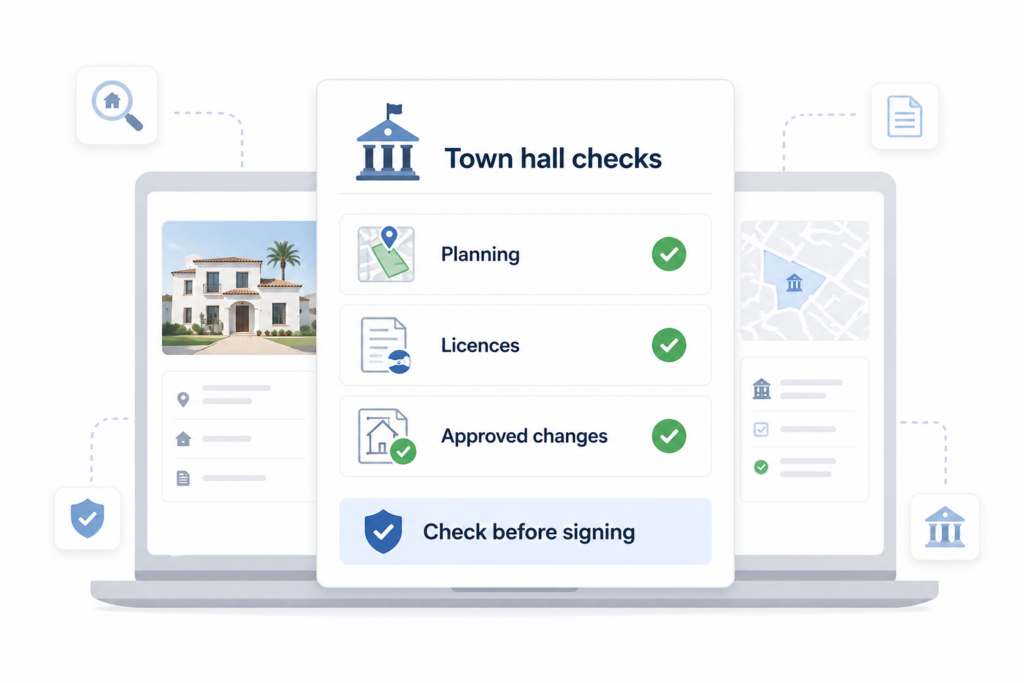
  • Use the local town hall when checking planning status, building licences, urban rules, or whether construction activity has municipal approval. This is important for off-plan projects, rural homes, extensions, and renovated properties.
  • Use Catastro when checking physical property details, location, surface area, and tax-related information. Catastro can be useful, but it should not replace Land Registry checks because registry records usually carry stronger legal value.
  • Use a local bar association when checking whether a lawyer is properly registered. Foreign buyers should avoid using only the seller’s or developer’s recommended adviser without an independent review.
  • Use regional tourist-rental registers when the purchase depends on short-term rental income. Tourist-rental rules can vary by region, city, and building community.

These checks do not replace legal advice. They help users compare REDH profile information with outside records before signing, paying deposits, or entering serious project discussions.

Nota simple and property record checks

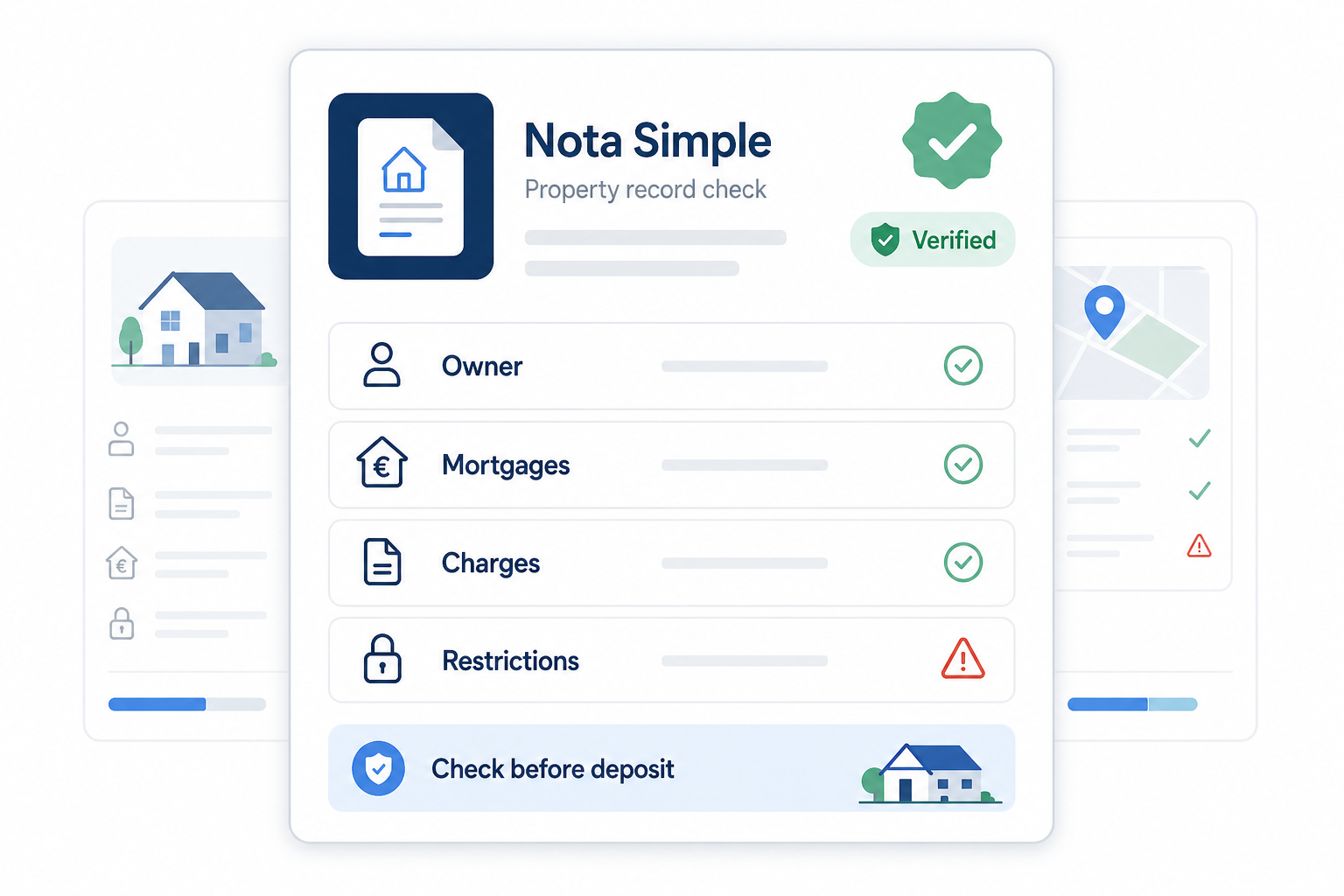
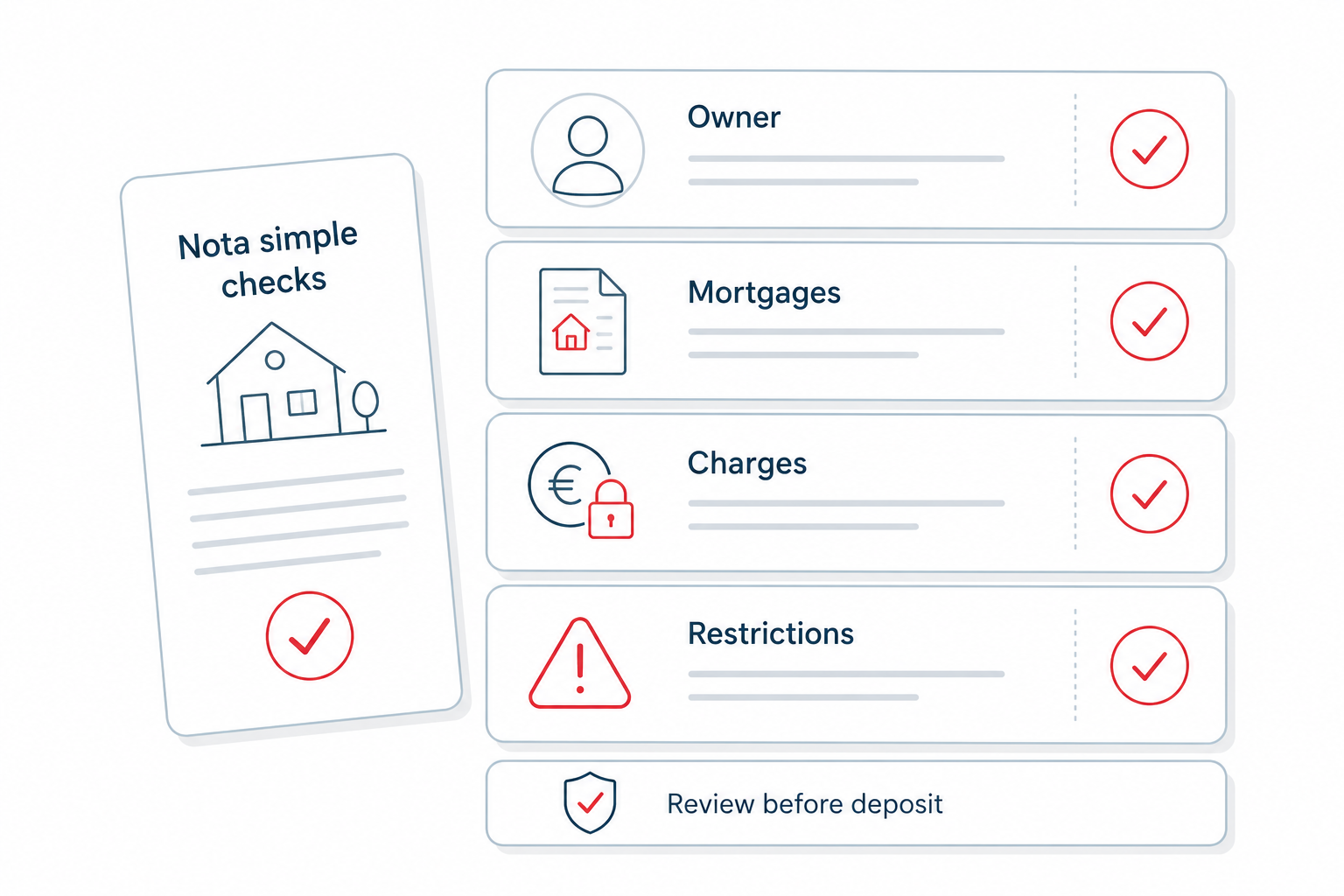
A nota simple is one of the most useful documents when reviewing a property in Spain. It can show who owns the property, whether there are mortgages, charges, restrictions, liens, or other registered details linked to it.

Users should ask for a recent nota simple before paying a deposit or signing a private contract. The company name, seller name, property description, and registered details should make sense next to the offer being presented.

This check is especially important for off-plan homes, resale properties, rural land, and properties marketed through agents or intermediaries. If the property details do not match the sales material, users should slow down and ask for legal review.

REDH profiles help users review the company behind the offer first. Property records help users check whether the asset itself has clear ownership information, registered limits, or financial charges that could affect the purchase.

White property record dashboard shows nota simple checks for owner, mortgages, charges and restrictions before deposit.

Off-plan and developer checks users should not skip

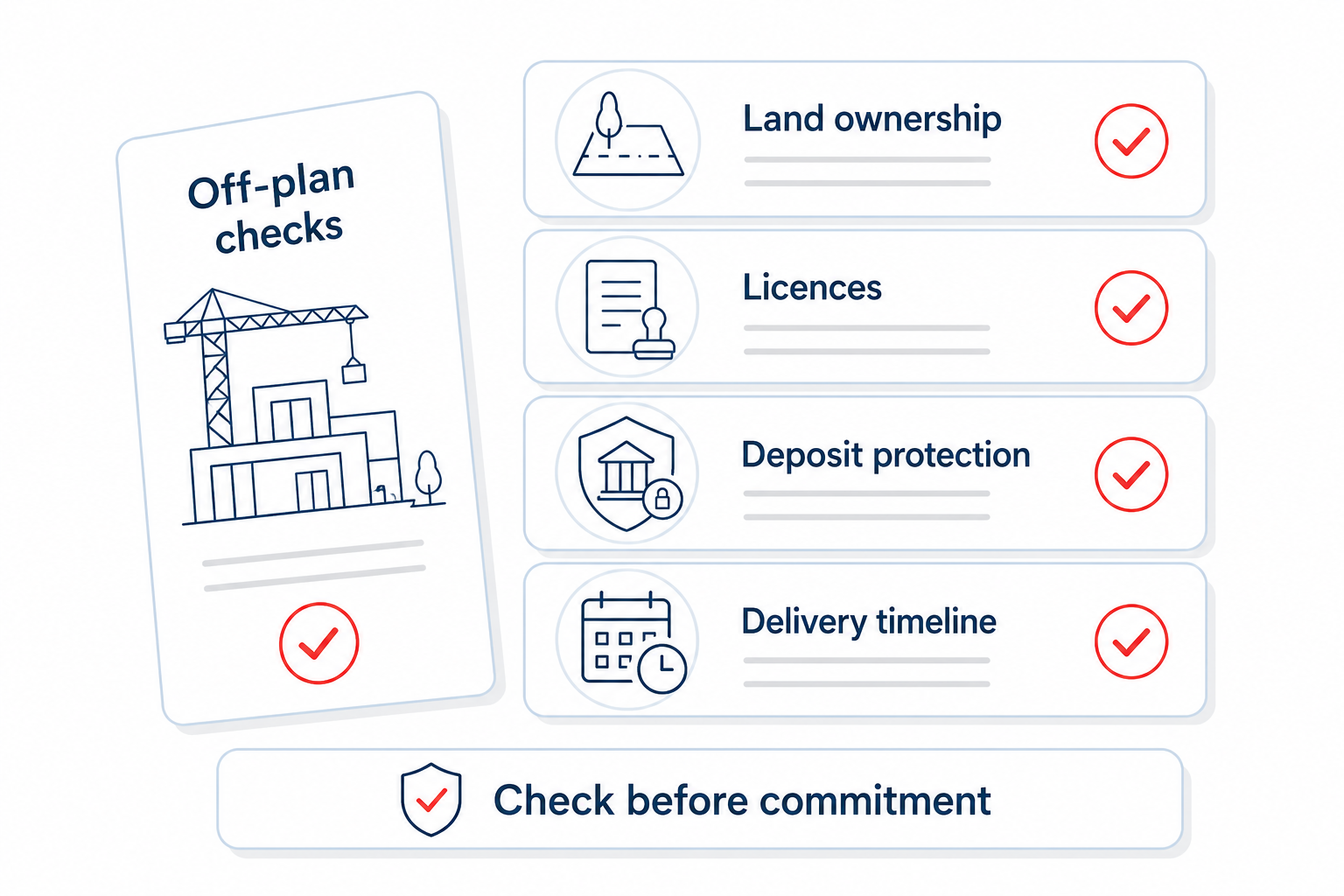
Off-plan property in Spain can involve early deposits, staged payments, building licences, developer promises, and delivery timelines. Users should ask whether the developer owns the land, whether the project has municipal approval, and whether construction licences are in place.

Payment protection also matters. Buyers should ask how deposits are held, what guarantees apply, and what happens if delivery is delayed or the project changes.

A clear developer should explain the legal company behind the project, the construction stage, the expected completion date, the handover process, and the final documents. REDH profiles help users review the provider first, while legal and project documents should be checked separately before commitment.

White infographic shows nota simple checks for owner, mortgages, charges and restrictions before Spanish property deposit

Spanish project price, tax, and document expectations

Property prices in Spain should be reviewed together with taxes, registry checks, and payment documents. The tax position can change depending on whether the property is new-build, resale, off-plan, commercial, or linked to a mortgage.

Cost or document areaWhat users should expectWhy it matters before choosing a provider
New-build taxNew homes from a developer are usually subject to VAT, generally 10% for standard homesHelps users separate developer pricing from full purchase cost
Resale taxUsed homes are usually subject to ITP, paid to the regional tax authorityRates can vary by autonomous community
Nota simpleShows ownership, charges, restrictions, mortgages, and payment status signalsHelps check whether the property matches the offer
Off-plan paymentsBuyers may need proof that money goes to a specific construction accountImportant before paying deposits or staged instalments
Final registrationTaxes should be paid before Land Registry registrationRegistration helps protect ownership after completion

Spain’s Tax Agency says new homes sold by developers are taxed by VAT, while used homes are normally subject to ITP. Spain’s public administration guidance also says buyers should verify legal status, ownership, and charges through a nota simple before buying.

Local and foreign provider expectations in Spain

Some Spanish property projects involve local developers, foreign-owned companies, international investors, or joint teams. This can work well, but users should check who is legally responsible in Spain before relying on project promises.

A local developer may already understand municipal planning steps, town hall communication, supplier networks, and regional buying habits. A foreign provider may bring outside capital, international buyers, or project experience from another market. The key issue is not where the owners come from. It is whether the company has a clear Spanish legal presence, proper representatives, and documents that match the project.

White infographic shows off-plan property checks land ownership, licences, deposit protection, and key timeline checks.

Spain’s business and property registers are managed through official registry systems, including Business Registers and Land Registers. Users can check company information through Registro Mercantil sources before signing or paying.

For larger public or municipal projects, procurement expectations may also include Spanish public-sector rules, documentation, solvency checks, and Spanish-language submissions. Public procurement in Spain follows EU-wide rules and Spain’s Public Sector Procurement Law.

Users should ask which entity signs the agreement, where payments go, who handles permits, and who remains responsible after handover.

Mainland, island, and coastal project differences in Spain

Choosing real estate companies in Spain can depend on where the project is located. A developer working in Madrid, Valencia, Andalusia, Mallorca, Ibiza, Tenerife, or the Costa del Sol may face different planning rules, local permits, tourist-rental limits, coastal restrictions, and community expectations.

Mainland city projects often need stronger checks around planning status, building licences, community rules, and resale demand. Coastal and island projects may need extra attention because land use, tourist activity, environmental limits, and short-term rental rules can be more sensitive. Spain’s town halls are key sources for checking planning and building consent, and the local urban plan can show restrictions for specific areas or properties.

For island or coastal projects, users should also check whether the property sits near protected coastal areas or tourist-rental control zones. Spain’s coastal rules protect maritime-terrestrial public domain and public use of the shoreline, which can affect land and building rights near the coast.

Users comparing providers should ask which region the company knows best, which local authority handles permits, whether tourist-rental use is allowed, and whether the company has completed similar projects in that exact area. Spain’s short-term rental rules also include national registration requirements, while regional and local rules can still apply.

Planning, building licence, and town hall checks

Property checks in Spain often depend on the local town hall. Users should review planning status, building licences, renovation permits, and any urban limits before trusting project claims.

This matters for rural homes, extensions, off-plan projects, converted buildings, and properties with added structures. A home may appear complete, but earlier work may still need proper approval or registration. Users should ask whether the property has the right licences, whether any changes were approved, and whether local records match the sales information before signing or paying.

White infographic shows town hall checks for planning, licences, approved changes and permits before property sign-offs.

Agent, deposit, and payment warning signs

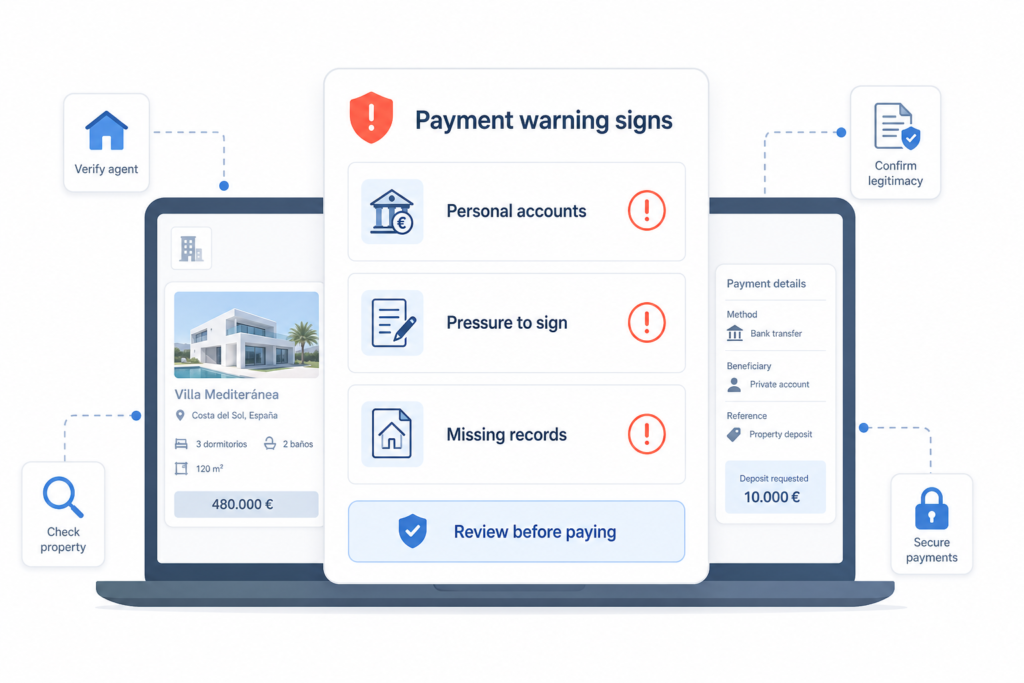
When reviewing real estate companies in Spain, users should be careful if a provider pushes for quick payment before sharing clear documents. Deposits, reservation fees, and private contracts should be reviewed before money is sent.

Warning signs may include unclear legal company names, payment requests to personal accounts, missing property records, pressure to sign fast, vague ownership details, or refusal to allow independent legal review. A serious provider should explain its role, provide written terms, confirm the legal entity, and give users enough time to review documents before commitment.

White infographic shows payment warning alerts personal accounts, pressure to sign, and missing records before payment.

Community fees and tourist-rental rules

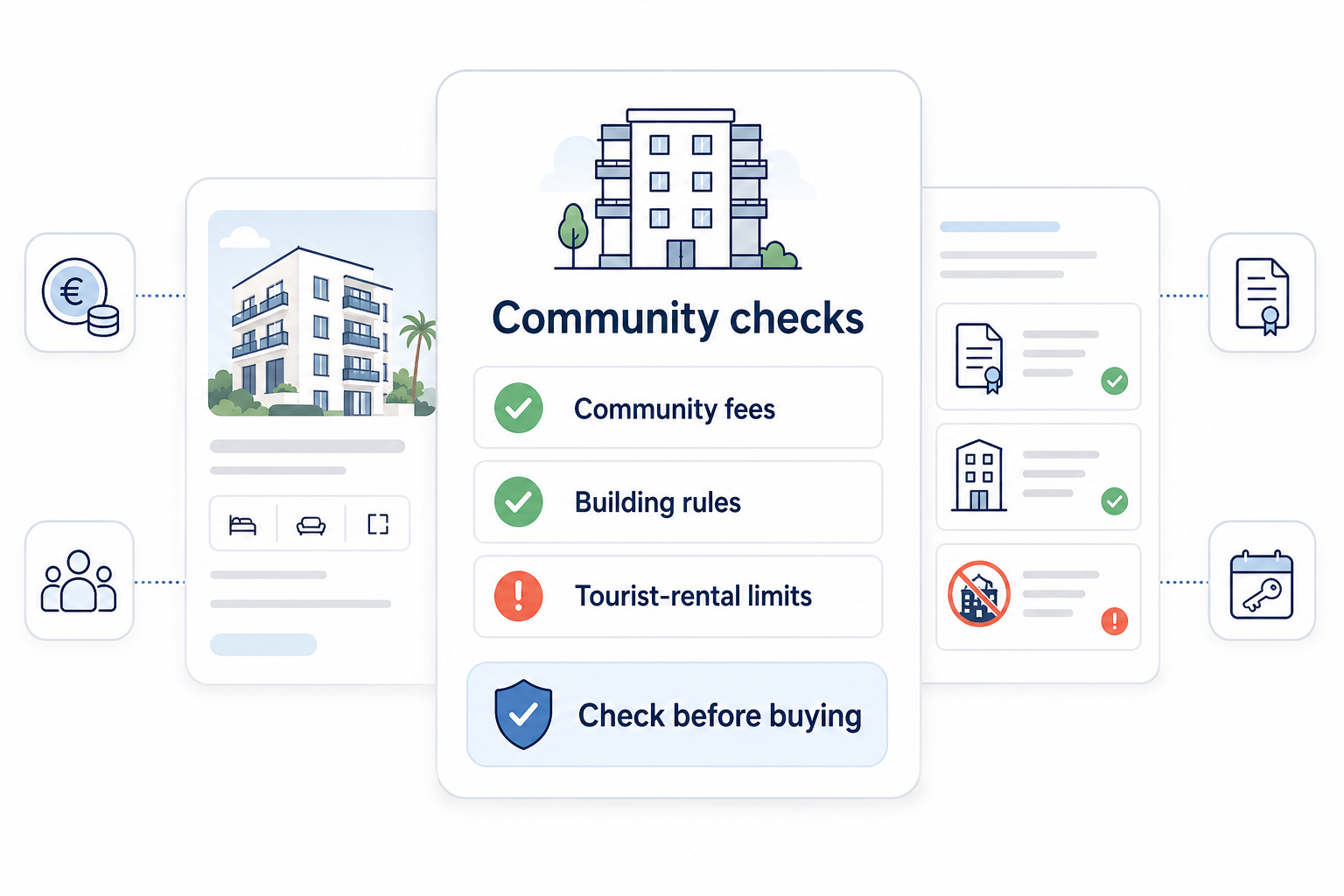
Apartment buyers in Spain should review the community of owners before making a decision. Shared buildings can have monthly fees, repair funds, building rules, voting procedures, and restrictions that affect how the property can be used.

Users should ask whether community fees are paid up to date, whether major works are planned, and whether the building allows short-term rental activity. A property may look suitable for investment, but the community rules, city rules, or regional tourist-rental system may limit what the owner can do.

Tourist-rental rules can vary by region and municipality. Some areas may require a licence or registration before the property can be advertised for short stays. Other places may limit new licences or restrict tourist use in certain buildings.

REDH profiles help users review the company first. Community documents, rental permissions, building rules, and local requirements should still be checked separately before buying, renting, or marketing the property.

White infographic shows community checks for fees, building rules and tourist-rental limits before buying flats in Spain

How REDH supports a clearer Spain shortlist

REDH helps users move from broad search results to a more useful shortlist of real estate companies in Spain. Instead of comparing providers only by name, users can review city, region, company role, property focus, service area, website details, public links, and profile status.

This matters because Spanish real estate providers may have different roles in the same transaction. Some companies develop off-plan homes. Others sell resale properties, manage rentals, support tourist lets, advise investors, build projects, or handle commercial assets.

A practical shortlist should help users compare which market the company serves, what type of property work it handles, whether the profile is listed or verified, and which public links are available.

After building a shortlist, users can contact stronger matches and ask for current documents, property records, planning details, payment terms, community rules, tourist-rental permissions, and legal confirmation.

REDH supports early research before direct contact begins. Final decisions should still depend on official records, written terms, independent legal advice, and documents that match the property, company, and payment request being reviewed.

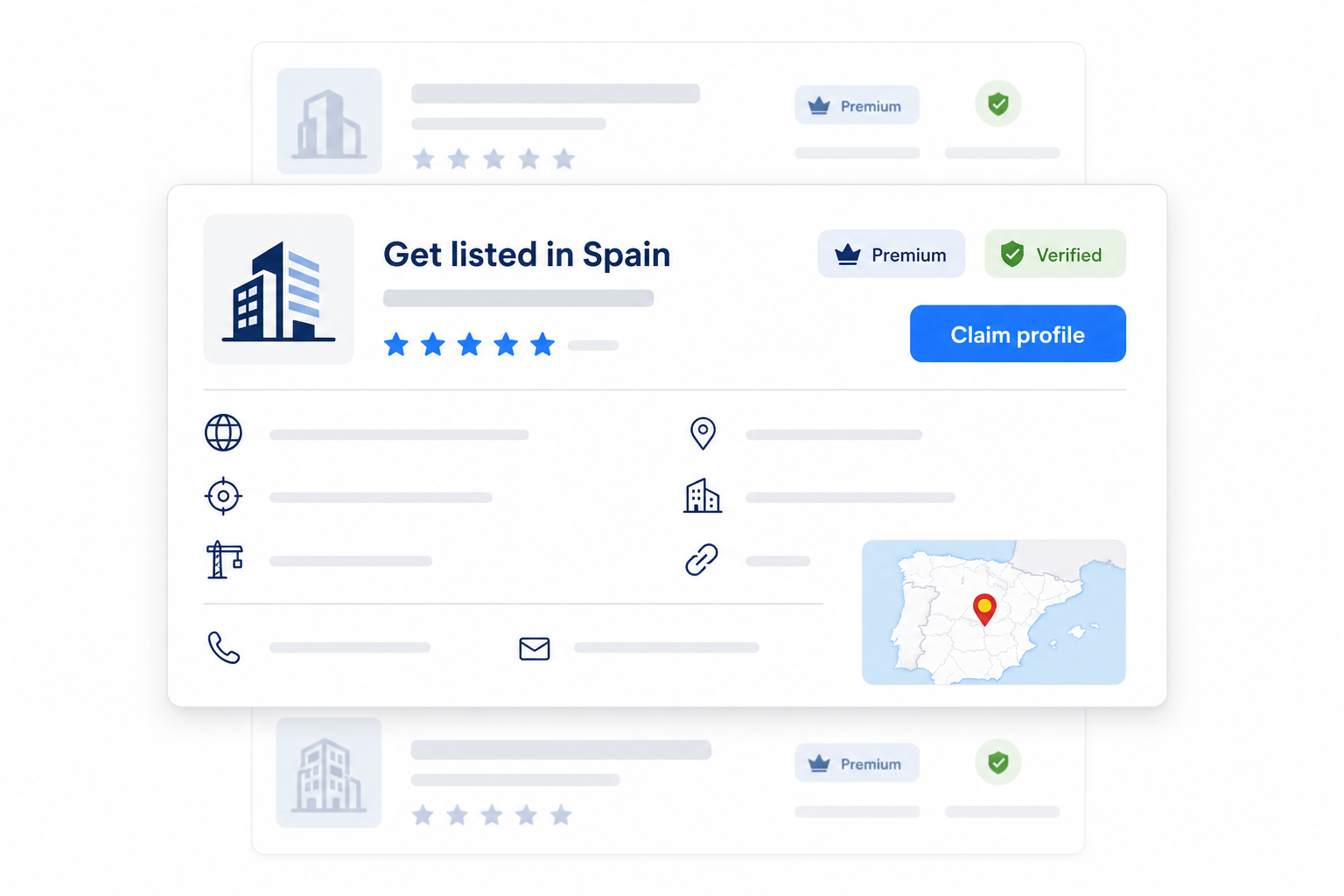
Get your Spain company profile listed

Real estate and development-related companies in Spain can create or claim a REDH profile to make their business easier to review.

A profile can show your company name, website, city, region, service areas, property types, project focus, categories, public links, and contact details.

Companies can also choose a premium profile with added business information, legal details, team size, portfolio URLs, and project links. Spain companies that want stronger proof signals can apply for verified status and receive a verified badge if approved.

White profile card shows Spain real estate company listing with Premium, Verified badge and Claim profile button online.

Browse real estate development company in Spain

Use this page to explore real estate developers, estate agencies, brokers, builders, property managers, commercial property firms, and development-related providers across Spain. Each profile can help users compare city, region, company role, property focus, service area, public links, and profile status. Users can open profiles that match their search, then continue with official records, legal checks, property documents, planning details, payment terms, and direct company questions before making decisions.

Frequently asked questions about real estate developer in Spain

Real estate developers in Spain can be reviewed by city, region, property focus, profile status, and available company information.

What types of real estate companies in Spain can I find?

You can review developers, estate agencies, brokers, builders, property managers, commercial property firms, tourist-rental specialists, investment firms, and development-related providers. Each profile may show city, region, service area, property focus, website details, public links, and profile status.

Listed means the company appears on REDH with basic public or submitted profile information. This may include company name, website, city, region, category, service area, property focus, and contact details. Listed status does not mean the company has completed REDH verification.

Verified means the company completed REDH’s added review process based on submitted details, available proof, public information, and company-related evidence reviewed at the time. Verified status can support early research, but users should still check property records, contracts, payment terms, and legal details.

Yes. A nota simple can help users review ownership, mortgages, charges, restrictions, and other registered property details. REDH profiles support early company research, while property records should be checked separately before deposits, private contracts, or completion.

Yes. A Spain real estate or development-related company can request to claim its REDH profile. REDH may ask for proof that the person is authorised to manage the company information before profile changes are approved.

Build a clearer company profile on REDH

Choose a listed profile for basic visibility, or apply for verification if your company wants stronger proof signals.