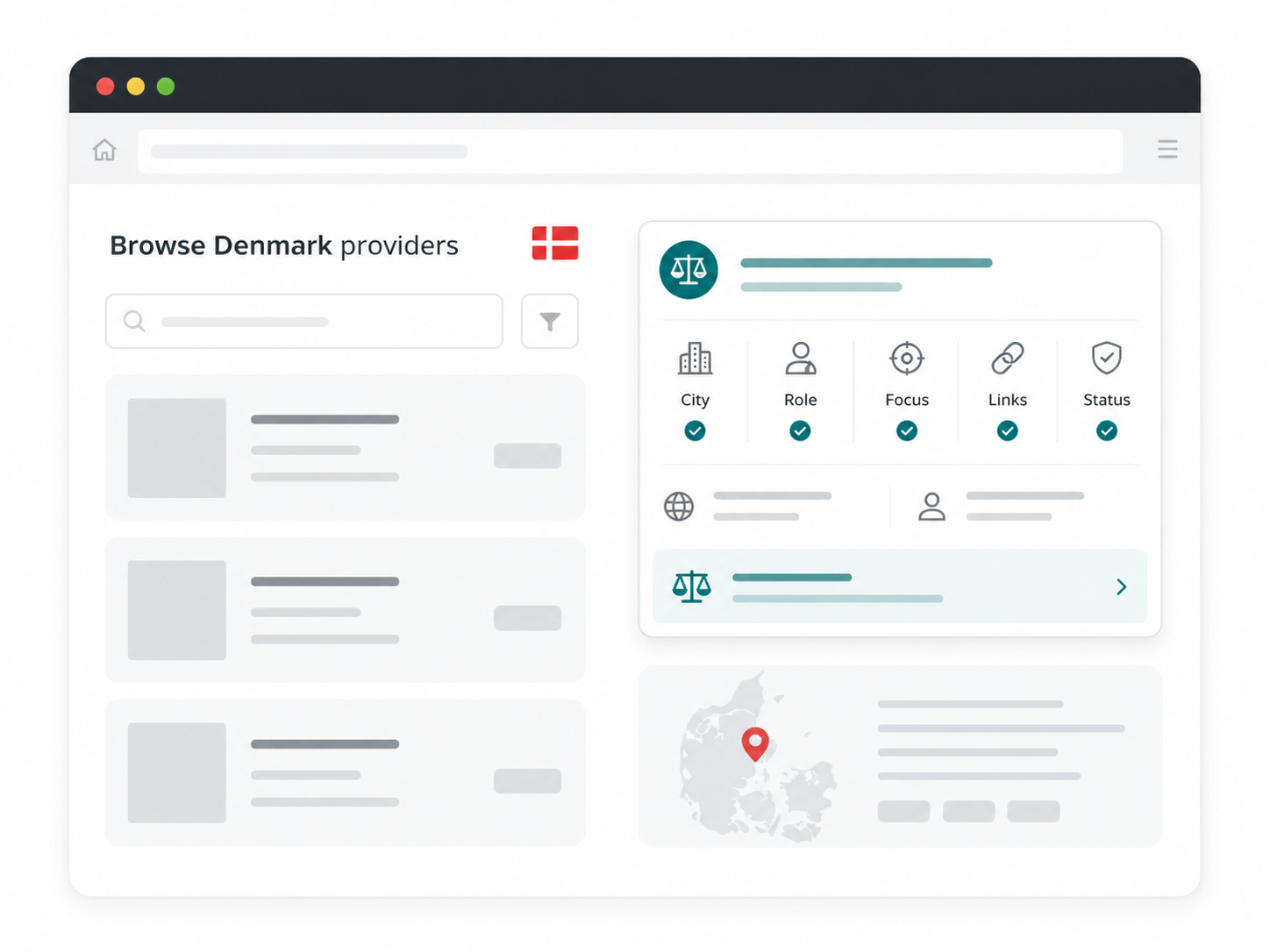
Real estate developers in Denmark can be searched by city, project type, service area, and profile status. Review developers, builders, brokers, property managers, commercial property firms, and construction-linked providers before contact. Use REDH profiles to compare company details before CVR checks, Land Register review, or serious project discussions begin.
- List Date
- Listing Title
- Last Update
- Comments
- Author
- Rank
- Rate
Vestergaard Construction Ltd.
Vestergaard Konstruktion A/S is a Denmark-based turnkey contractor in Midtjylland focused on taking building projects from idea stage through to completion. The company says it ...
Reka Gruppen A/S
REKA Gruppen A/S is a privately owned Danish residential project developer rather than a general contractor-led construction company. On its own site, the company says ...
Pro Developments A/S
PRO Developments A/S is a Denmark-based project development company best known for retail, retail parks, shopping centres, and other commercial property schemes, rather than a ...
Nye
Nye is not a standalone company in the usual sense. It is a master-planned new town and urban development project north of Aarhus, developed by ...

NCC
NCC in Denmark is best understood as the Danish arm of one of the Nordic region’s largest construction groups, not just a local contractor. The ...
DS Gruppen A/S
DS Gruppen A/S is a Denmark-based industrial construction group focused on turnkey commercial buildings, steel structures, concrete elements, and roof/façade systems, rather than a typical ...
DS Flexhal A/S
DS Flexhal A/S is a Denmark-based turnkey contractor focused on industrial and commercial buildings, not a general residential developer. On its official site, the company ...
Bording Erhvervspark ApS
Bording ErhvervsPark ApS is better understood as a commercial leasing and business park operator than as a classic property developer delivering staged lot sales. Official ...
How to review real estate developers in Denmark
Real estate developers in Denmark can differ by city, company role, property type, buyer status, and project stage. A Copenhagen developer, Aarhus builder, Odense broker, or construction-linked provider may each require different checks.
Start with the company profile. Review its location, website, service area, project focus, public links, and profile status. Then compare key details with official sources where needed.
For purchases or projects, users should check CVR company data, Land Register records, building permits, BBR details, energy labels, owners’ association documents, payment terms, and current contracts before making serious decisions.
Explore Denmark companies by real estate focus
Real estate developers in Denmark can work across housing, commercial property, construction, brokerage, management, investment, and advisory roles. Users should compare each provider by actual focus, not only by company name or city.
Developers may work with apartments, row houses, mixed-use schemes, offices, logistics buildings, renovation projects, or urban regeneration. Builders and construction-linked firms may support delivery, extensions, conversions, or technical project work.
Some providers support property activity without owning projects directly. These may include brokers, property managers, land advisers, energy consultants, project managers, and commercial property firms.
REDH categories help users narrow the search before contact. A clearer match between company focus and user need can save time when comparing homes, apartments, land, commercial assets, new-build projects, or construction-linked services before official checks begin.
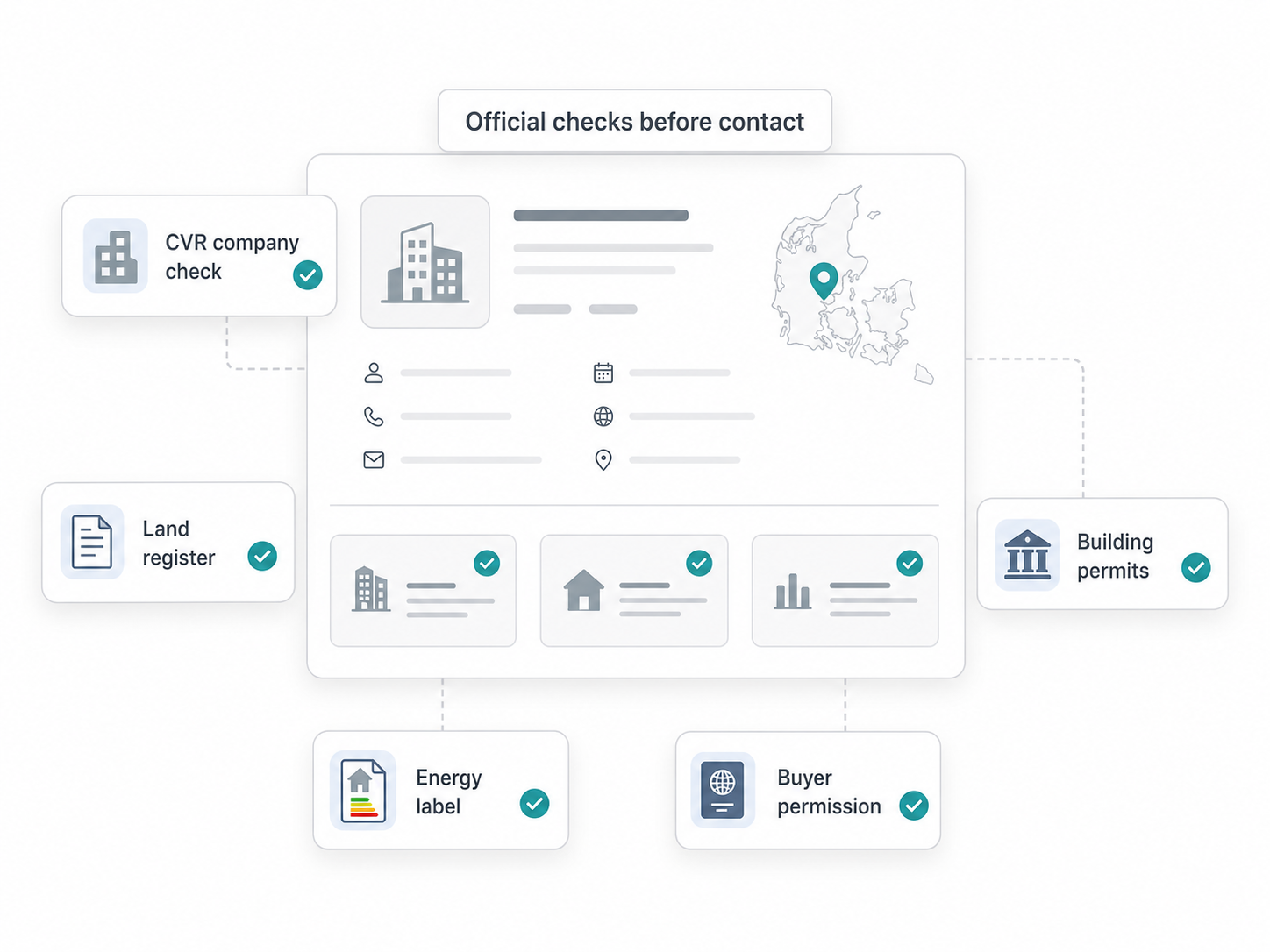
Official checks for Denmark real estate developer research
Before contacting real estate developers in Denmark, users should compare REDH profile details with official sources where possible. These checks can help confirm the legal company, property rights, building data, construction status, and buyer permission needs.
- Use CVR through the Danish Business Authority when checking the legal company behind a provider. CVR is Denmark’s official master register for businesses and can help users compare company details with contracts or invoices.Â
- Use the Digital Land Register when checking registered property rights, ownership interests, mortgages, and legal property details before relying on an offer.
- Use municipal building-permit services when reviewing new construction, extensions, conversions, or changes of use. Danish guidance says municipalities handle building applications.Â
- Use energy-label guidance when checking sale or rental documents, since buildings sold or rented in Denmark need an energy performance certificate.
- Use foreign-buyer permission guidance when the buyer does not live in Denmark or has not lived there for five years.Â
Land Register and property-right checks
The Digital Land Register is one of the key checks when reviewing real estate developers in Denmark. A company may present a home, apartment, land plot, or project, but users should still check whether registered property details support the offer.
Land Register checks can help users review ownership rights, mortgages, easements, purchase agreement registration, and other legal interests connected to the property. This matters when a provider is selling land, managing a new-build project, or presenting a property through a broker or development partner.
Users should compare Land Register information with the REDH profile, company name, sales material, payment request, and contract party. If the property details or ownership path are unclear, users should slow down before signing or sending money.
REDH profiles help users review the company behind the offer first. Property-right checks help users understand whether the asset itself has clear registered information before contract review, financing, or project discussions continue.
New-build, handover, and defect checks
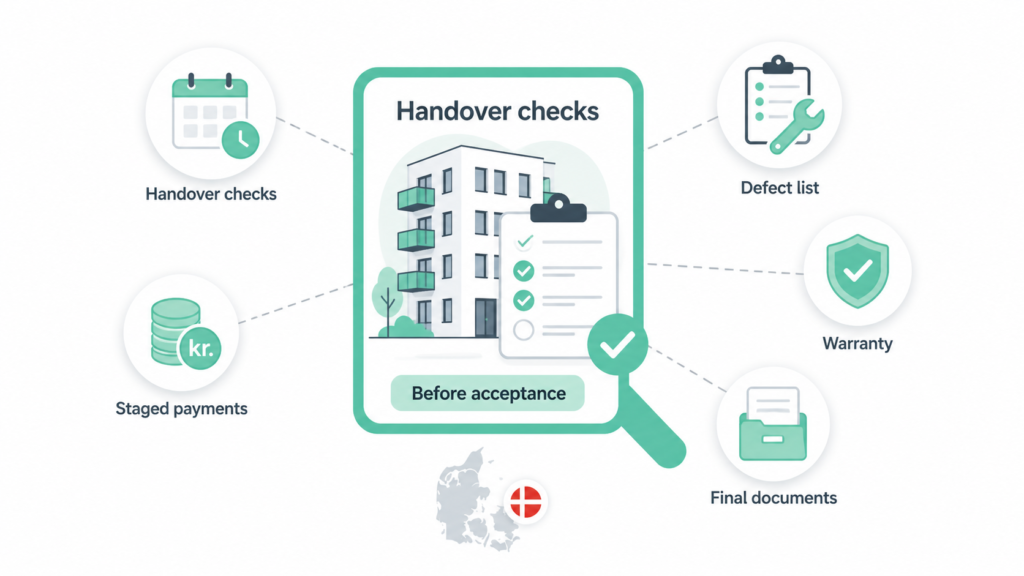
New-build projects in Denmark can involve construction timelines, staged payments, handover dates, defect lists, and final documents. Users should ask how the developer records unfinished work, technical issues, and buyer concerns before accepting delivery.
A clear developer should explain the handover process, defect reporting window, warranty route, and who remains responsible after completion. Users should also review whether installations, shared areas, and building documents are ready.
REDH profiles help users review the company first, while handover and defect checks should happen separately before final acceptance.
Tilstandsrapport, electrical report, and insurance checks
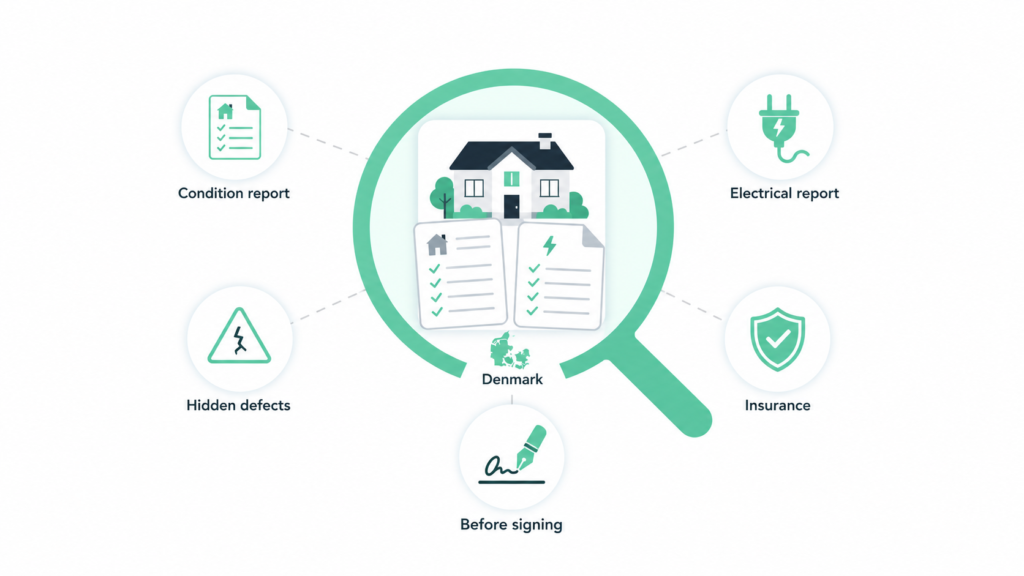
Danish property buyers should understand condition documents before relying on a developer, broker, or seller’s explanation. A tilstandsrapport can describe visible building issues, while an electrical installation report can show electrical risks or defects.
Users should also ask whether change-of-ownership insurance is available, what it excludes, and how hidden defects are handled after purchase.
These checks matter for older homes, renovated properties, self-built work, and developer-renovated projects. REDH profiles help users review the company first, while technical documents should be checked separately before signing.
Ejerforening and apartment-building checks
Apartment projects in Denmark can involve shared building costs, owners’ association rules, repairs, and long-term maintenance plans. Users should review the ejerforening before judging a unit only by price, layout, or location.
| Check area | What users should ask | Why it matters |
|---|---|---|
| Common expenses | What monthly shared costs apply? | Helps estimate real ownership cost |
| Maintenance plan | Are major repairs expected soon? | Future works can raise payments |
| Meeting minutes | What issues were recently discussed? | Shows disputes, repairs, or budget pressure |
| Reserve funds | Does the association have enough savings? | Weak reserves can create extra charges |
| Building rules | Are rental, renovation, or use limits listed? | Rules may affect future plans |
| Shared systems | Who maintains roof, heating, drains, or facade? | Large systems can create major costs |
A clear provider should explain which documents are available and how the building is managed. REDH profiles help users review the company first, while owners’ association documents should be checked separately before signing, budgeting, or accepting final terms.
Building permits, BBR, and energy label checks
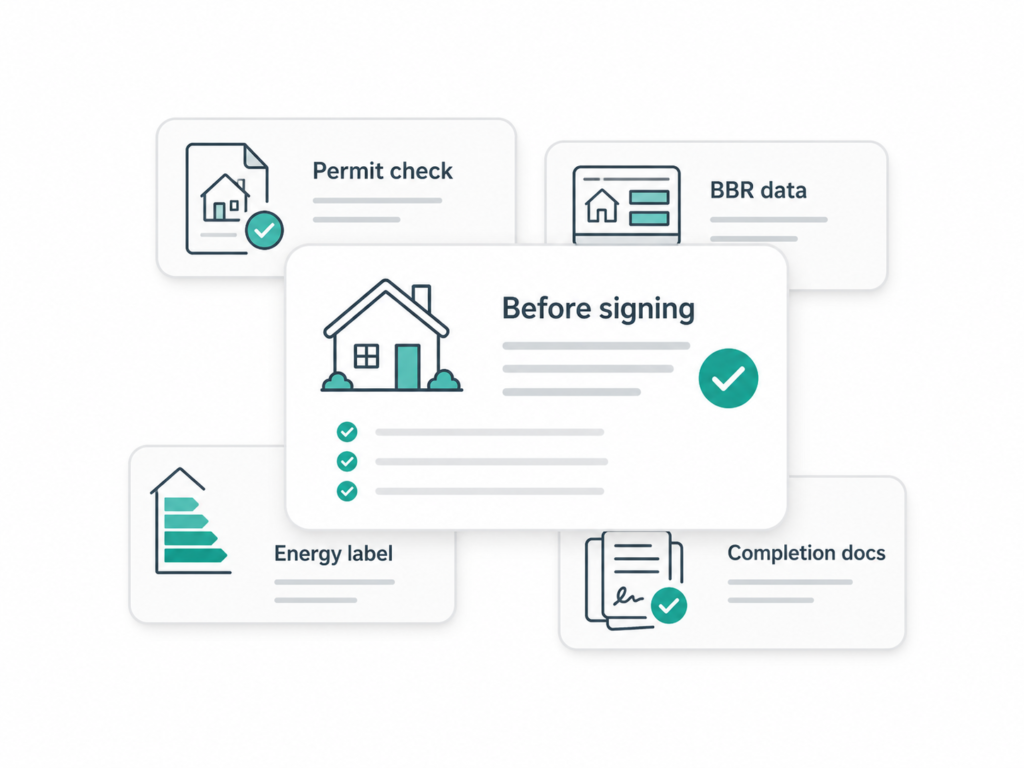
Building permits, BBR data, and energy labels can help users understand whether a Danish property or project matches what is being offered. This matters when reviewing developers, builders, renovation firms, extensions, conversions, or completed homes.
Users should ask whether the project needed a building permit, whether the work was approved, and whether the registered building data matches the sales material. BBR data may include building use, area, installations, water, drainage, heating, and other property details.
Energy labels are also important because they can affect running costs, renovation needs, and buyer expectations after purchase. A low purchase price may look attractive, but weak energy performance, old heating, or missing building data can create higher costs later.
REDH profiles help users review the company first. Building permits, BBR records, energy labels, and completion documents should still be checked separately before signing, paying, or accepting handover.
Foreign buyer and permission checks
Foreign buyers should check whether they need permission before buying property in Denmark. This can depend on domicile, residence history, nationality, property type, and intended use.
Denmark’s official guidance says buyers normally need permission from the Department of Civil Affairs if they do not have domicile in Denmark or have not lived there for at least five years. EU and EEA nationals may have exceptions in some cases, but users should still confirm how the rule applies to their situation.
Before paying or signing, buyers should ask whether permission is needed, how long the process may take, and what happens if approval is delayed or refused. REDH profiles help users review the company first, while buyer-status and permission checks should be confirmed through official guidance and qualified legal advice.
Developer, contract, and payment warning signs
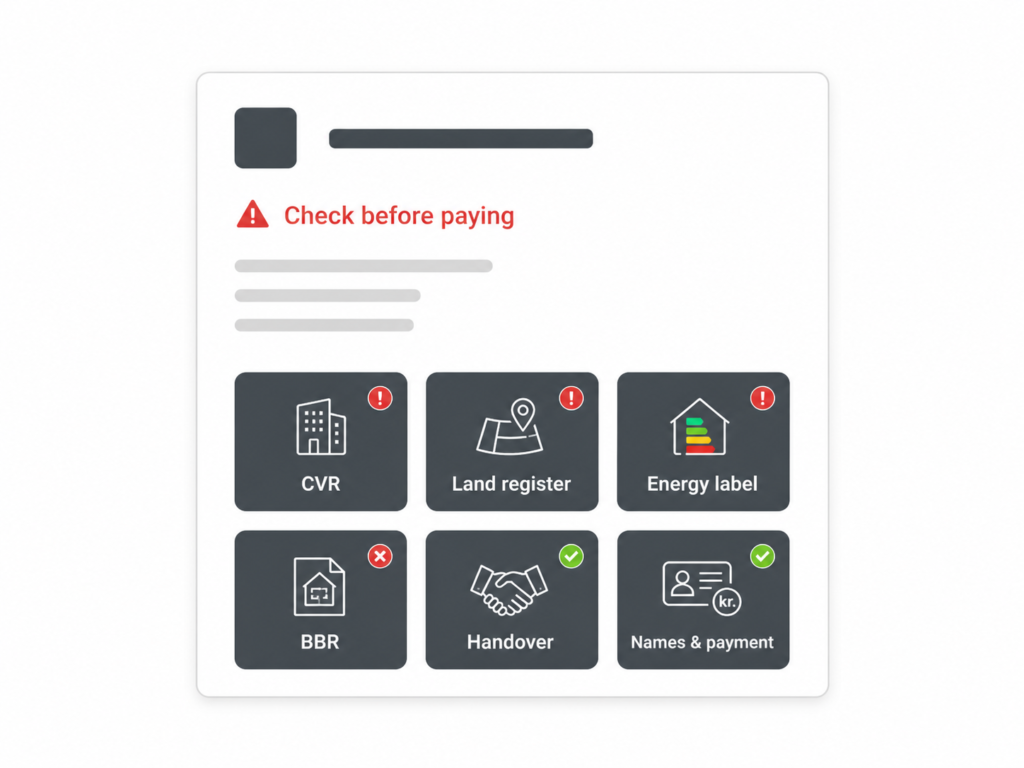
When reviewing real estate developers in Denmark, users should be careful if a provider pushes for payment before key documents are clear. A serious company should explain its legal entity, CVR details, project role, contract process, payment route, and handover responsibilities before asking for commitment.
Warning signs may include:
- unclear CVR or legal company details
- payment requests to personal accounts
- missing Land Register information
- no energy label when one is needed
- unclear building permit or BBR details
- weak handover or defect terms
- pressure to sign before document review
- vague owners’ association costs
- no written explanation of included works
Â
Users should also question offers where the developer, broker, seller, invoice name, and payment recipient do not match. This can make responsibility harder to prove later if delivery is delayed, defects appear, or the buyer needs to cancel.
REDH profiles help users review the company first. Final decisions should depend on official records, written terms, technical review, legal advice, and documents that match the provider and project.
How REDH supports a clearer Denmark shortlist
REDH helps users move from broad search results to a more useful shortlist of real estate developers in Denmark. Instead of comparing providers only by name, users can review city, company role, project focus, service area, website details, public links, and profile status.
This matters because Danish providers may have different roles. Some develop new homes. Others broker properties, manage buildings, handle construction, advise on land, or support commercial assets. After building a shortlist, users can contact stronger matches and ask for CVR details, property records, permits, and legal confirmation.
Get your Denmark company profile listed
Real estate and development-related companies in Denmark can create or claim a REDH profile to make their business easier to review.
A profile can show company name, website, city, service areas, property types, project focus, categories, public links, and contact details. This helps users understand the company before direct contact begins.
Danish companies can also choose a premium profile with added business information, legal details, team size, portfolio URLs, and project links, or apply for verified status if stronger proof signals are needed.
Browse real estate developers in Denmark
Use this page to explore real estate developers, builders, brokers, property managers, commercial property firms, and construction-linked providers across Denmark.
Each profile can help users compare city, company role, project focus, service area, public links, and profile status. Users can open profiles that match their search, then continue with CVR checks, Land Register records, building permits, BBR data, energy labels, owners’ association documents, payment terms, and direct company questions before making decisions.
Questions to ask before contacting a Danish developer
Before contacting a Danish developer, users should prepare questions that connect the company profile with the project documents. Ask which legal company signs the agreement, which CVR number applies, what project stage has been reached, and which permits or BBR details are available.
Users should also ask about handover timing, defect reporting, energy label status, owners’ association costs, and payment terms. These questions help users compare providers with more structure before legal review, financing talks, or contract signing begins. REDH profiles support this first step by keeping company details easier to review.
Frequently asked questions about real estate developers in Denmark
Real estate developers in Denmark can be reviewed by city, project focus, profile status, official records, and company details.
What types of real estate developers in Denmark can I find?
You can review developers, builders, brokers, property managers, commercial property firms, construction-linked providers, land advisers, project managers, and development-related companies. Each profile may show city, service area, project focus, website details, public links, and profile status.
What does listed mean for real estate developers in Denmark?
Listed means the company appears on REDH with basic public or submitted profile information. This may include company name, website, city, category, service area, project focus, and contact details. Listed status does not mean the company has completed REDH verification.
What does verified mean for real estate developers in Denmark?
Verified means the company completed REDH’s added review process based on submitted details, available proof, public information, and company-related evidence reviewed at the time. Verified status can support early research, but users should still check CVR records, contracts, payment terms, and project documents.
Should I check the Land Register before working with real estate developers in Denmark?
Yes. The Digital Land Register can help users review property rights, ownership interests, mortgages, easements, and other legal property details. REDH profiles support early company research, while property records should be checked separately before signing or paying.
Can real estate developers in Denmark claim their REDH profiles?
Yes. A Danish real estate or development-related company can request to claim its REDH profile. REDH may ask for proof that the person is authorised to manage the company information before profile changes are approved.
Build a clearer company profile on REDH
Choose a listed profile for basic visibility, or apply for verification if your company wants stronger proof signals.