
Real estate developers in Australia can be searched by city, state, project type, service area, and profile status. Review developers, builders, brokers, property managers, commercial firms, and construction-linked providers before contact. Use REDH profiles to compare company details before ABN checks, land-title review, or serious project discussions begin.

  • List Date
  • Listing Title
  • Last Update
  • Comments
  • Author
  • Rank
  • Rate
Sort By

Remove from compare list Add to compare list Go to Compare Page

Yanchep Junction is a master-planned residential land estate in Yanchep, Western Australia, developed by Wolfdene. It is focused on land sales and neighbourhood creation rather ...

St Andrews Dr, Yanchep WA 6035, Australia

Remove from compare list Add to compare list Go to Compare Page

Trinity Land Estate Alkimos is a master-planned coastal community in Alkimos developed by Satterley, focused on residential land sales and long-term neighbourhood creation rather than ...
2561 Marmion Ave, Alkimos WA 6038, Australia

Remove from compare list Add to compare list Go to Compare Page

Seneca Property is a boutique residential developer based in Newcastle, New South Wales, rather than a broad commercial and residential developer across Australia. On its ...

Remove from compare list Add to compare list Go to Compare Page
1 to 5 PM

Satterley is an Australian master-planned community and residential land developer, not just the company behind one estate. Established in 1980, it describes itself as Australia’s ...

38 Revolution Ave, Eglinton WA 6034, Australia

Remove from compare list Add to compare list Go to Compare Page
Off

Redmond Realty is a Perth-based real estate agency focused on sales, leasing, and property management, not on property development or construction delivery. Established in 2018, ...

Office 1A/45 Candlewood Blvd, Joondalup WA 6027, Australia

Remove from compare list Add to compare list Go to Compare Page
8 AM to 3:30 PM

Jindowie is a master-planned residential land community in Yanchep brought to market by DevelopmentWA, with Land4Sale acting as the dedicated sales agent. It is not ...

Yanchep Beach Rd, Yanchep WA 6035, Australia

Remove from compare list Add to compare list Go to Compare Page
Off

Flynn Subdivision Experts is a Perth-based subdivision and property development consultancy, not a traditional builder or land developer. The business describes itself as a boutique ...

182/186 Wittenoom St, East Perth WA 6004, Australia

Remove from compare list Add to compare list Go to Compare Page

Eden Beach is a master-planned coastal land community in Jindalee delivered by Satterley, focused on premium residential lots and house-and-land opportunities rather than finished homes ...

32 Reflection Bvd, Jindalee WA 6036, Australia

Remove from compare list Add to compare list Go to Compare Page
Off

Capricorn Beach Estate is a master-planned coastal land community in Yanchep focused on residential lot sales rather than home construction itself. The project is built ...
222a Capricorn Esplanade, Yanchep WA 6035, Australia

How to review real estate developers in Australia

Real estate developers in Australia can differ by state, company role, project stage, and property type. A Sydney developer, Melbourne builder, Brisbane broker, or Perth project manager may each require different checks.

Start with the company profile. Review location, website, service area, project focus, public links, and profile status. Then compare key details with official sources where needed.

For purchases or projects, users should check ABN and ASIC details, land-title records, builder licences, off-the-plan disclosures, strata documents, payment terms, and current contracts.

Explore Australia companies by real estate focus

Real estate developers in Australia can work across housing, apartments, commercial property, land, construction, brokerage, management, and advisory roles. Users should compare each provider by actual focus, not only by company name or city.

Developers may work with off-the-plan apartments, house-and-land packages, townhouses, mixed-use projects, logistics assets, offices, or master-planned communities. Other providers may support sales, construction, strata management, property management, land subdivision, or investment activity.

REDH categories help users narrow the search before contact. A clearer match between company focus and user need can save time when comparing completed homes, off-the-plan projects, land estates, commercial assets, or construction-linked services.

Official checks for Australia real estate developer research

Before contacting real estate developers in Australia, users should compare the REDH profile details with official sources where possible. These checks can help confirm the legal company, land title record, builder role, project status, and buyer obligations.

  • Use ABN Lookup when checking the business behind a provider. It can help users review ABN details, entity type, trading names, and registration status. 
  • Use ASIC registers when checking company names, business names, directors, where available, and company extracts before comparing them with contracts or invoices. 
  • Use state land-title sources when reviewing ownership, lot details, mortgages, caveats, easements, covenants, or settlement records.
  • Use state builder licence registers when reviewing builders, contractors, certifiers, or construction-linked providers.
  • Use the FIRB and ATO foreign investment guidance when the buyer is not an Australian resident or citizen. Foreign-buyer rules can affect what can be purchased and which approvals apply.

These checks support early research before deposits, contracts, settlement steps, or legal review.

Australian ABN, ASIC, and legal company checks

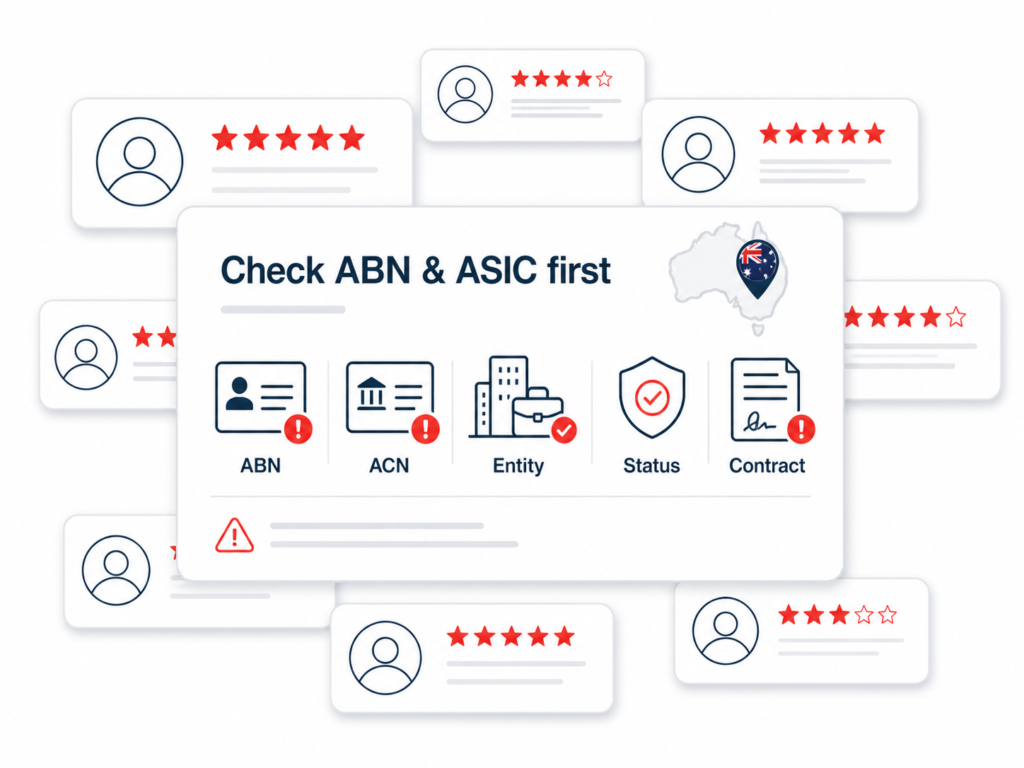
ABN and ASIC checks help users confirm the legal business behind real estate developers in Australia. A project brand, display village, sales office, or marketing name may not be the same as the company signing the contract.

Users should compare the REDH profile, developer website, invoice, sales contract, deposit request, and official company records. Key details may include ABN, ACN, entity type, registered business name, company status, and contract party.

If the legal company, payment route, or project name does not match, users should pause before signing or paying.

Australia ABN and ASIC check graphic with ABN, ACN, entity, status and contract checks beside an Australia map pin UI.

Land title and property-record checks in Australia

Land-title checks are important when reviewing real estate developers in Australia because records are handled by state and territory systems. Users should check whether the property, lot, plan, seller, and contract details match the offer.

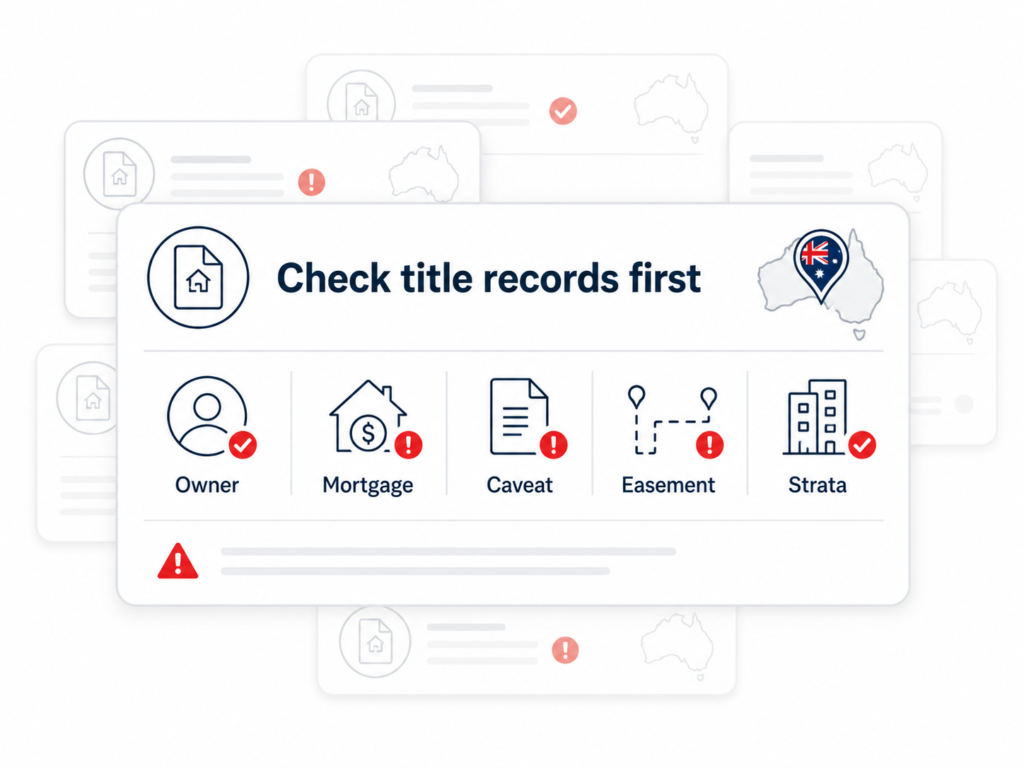
A title search may show ownership, mortgages, caveats, easements, covenants, strata details, or other registered interests. These records can affect transfer, finance, future use, and settlement risk.

REDH profiles help users review the company first, while title records help users check whether the property itself has clear registered information before signing or paying.

Australia title records dashboard showing owner, mortgage, caveat, easement, strata and Australia map pin checks for buyers.

Off-the-plan, disclosure, and sunset clause checks

Off-the-plan property in Australia can involve long timelines, deposits, draft plans, disclosure documents, sunset clauses, valuation risk, and settlement changes. Users should review these details before trusting launch prices or display-suite material.

Check areaWhat users should askWhy it matters
Disclosure statementWhich documents are included before signing?Missing disclosures can affect buyer rights
Draft planWhat may change before registration?Final layout or lot details may differ
Deposit termsWhere is the deposit held?Helps users understand payment protection
Sunset clauseWho can end the contract, and when?Long delays can affect buyer security
Valuation riskWhat happens if finance valuation drops?Buyers may need extra funds at settlement
Defect processHow are defects reported before settlement?Helps avoid accepting unfinished work

A clear developer should explain settlement timing, plan registration, contract changes, defect reporting, and buyer rights in writing. REDH profiles help users review the provider first, while off-the-plan contracts should still be checked with a conveyancer or lawyer.

Builder licence, certifier, and defect checks in Australia

Builder licence checks are important when reviewing real estate developers in Australia, especially when the company also manages construction or works through a connected builder. Licence rules vary by state, so users should check the register for the state where the project is located.

Users should ask who the licensed builder is, which certifier or building surveyor is involved, and how practical completion will be confirmed. They should also review the defect inspection process, warranty or insurance route, handover documents, and responsibility for common-area issues.

This matters for off-the-plan apartments, townhouses, house-and-land packages, renovations, and mixed-use projects. A project may look ready at inspection, but defects, missing certificates, or unfinished shared areas can create problems after settlement.

REDH profiles help users review the developer first. Builder licence, certifier, defect, and warranty checks should still happen separately before signing, settling, or accepting handover.

Australian strata, owners corporation, and levy checks

Strata checks are important when reviewing real estate developers in Australia because many apartments and townhouse projects include shared property, shared costs, and owners’ corporation rules. Users should review these details before judging a project by unit price alone.

Key checks may include:

  • strata plan and lot boundaries
  • owners corporation records
  • by-laws and use restrictions
  • regular levies and special levies
  • capital works fund balance
  • building defects or repair history
  • insurance details
  • meeting minutes and dispute records
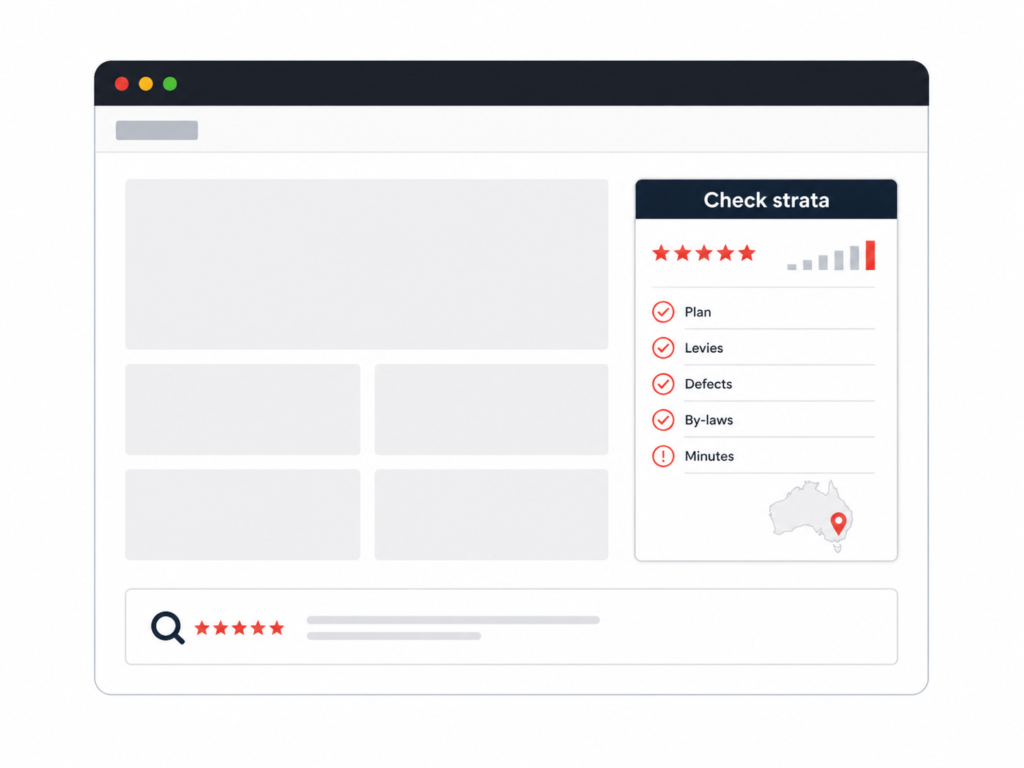
Australia strata checks dashboard with plan, levies, defects, by-laws and minutes checklist beside a map pin and review bar.

These details can affect the real cost of ownership after settlement. A low unit price may become less attractive if the building has weak reserves, unresolved defects, large repairs, or strict use rules. REDH profiles help users review the developer first. Strata records, owners’ corporation documents, levy notices, and defect history should still be checked separately before signing, paying, or settling.

Foreign buyer and FIRB checks

Foreign buyers should check whether FIRB or ATO approval is needed before working with real estate developers in Australia. Rules can depend on buyer status, property type, use, and whether the property is new, established, vacant, or being redeveloped.

Users should ask about application timing, fees, approval conditions, state surcharges, vacancy rules, and payment route before signing.

REDH profiles help users review the company first, while foreign-buyer rules, tax duties, and settlement conditions should be checked with official guidance and qualified advice.

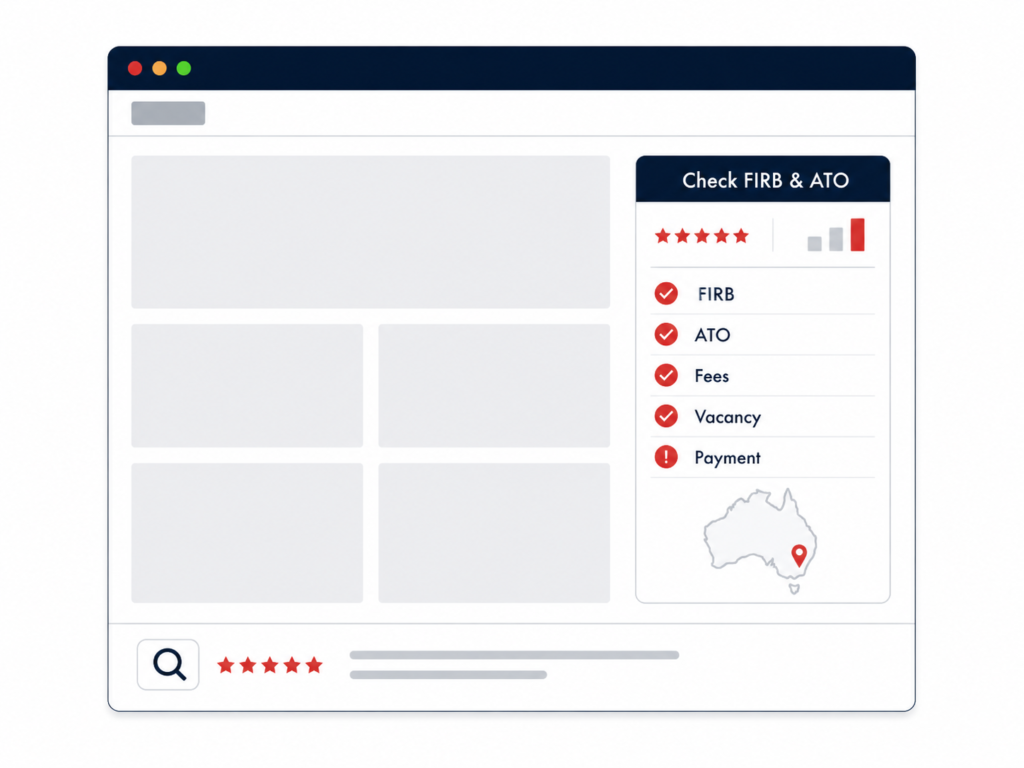
Australia foreign buyer rules dashboard showing FIRB, ATO, fees, vacancy and payment checks with review bar and map pin UI.

Budget, taxes, and settlement cost expectations

Property budgets in Australia should include more than the advertised price. Users should ask for a full cost sheet before comparing developers or off-the-plan projects.

Cost areaWhat users should askWhy it matters
DepositWhere is it held, and when released?Helps review payment protection
Stamp dutyWhich state rate applies?State rules can change total cost
Legal feesWhat conveyancer costs apply?Needed before signing
Strata leviesWhat regular and special levies apply?Shared costs can rise after settlement
InspectionsWhich building, pest, or strata reports are needed?Helps check risk before commitment
Settlement adjustmentsWhich rates, taxes, and utilities are adjusted?Final payment can differ from price

Clear cost details help users compare providers before signing or settling.

Agent, contract, and payment warning signs

When reviewing real estate developers in Australia, users should be careful if a provider pushes for payment before the legal company, project documents, and contract terms are clear. A serious company should explain its role, licence status where relevant, payment route, deposit handling, disclosure documents, and settlement process before asking for commitment.

Warning signs may include pressure to reserve quickly, payment requests to personal accounts, unclear ABN or ACN details, missing off-the-plan disclosure documents, no builder licence information, weak defect process, vague settlement dates, or investment-return claims that are not supported by written terms.

Users should also question offers where the developer, builder, sales agent, invoice name, and payment recipient do not match. This can make responsibility harder to prove later if defects appear, settlement is delayed, or the project changes.

REDH profiles help users review the company first. Payment and contract decisions should still depend on official records, written terms, conveyancer review, and documents that match the provider and project.

How REDH supports a clearer Australia shortlist

When reviewing real estate developers in Australia, users should be careful if a provider pushes for payment before the legal company, project documents, and contract terms are clear. A serious company should explain its role, licence status where relevant, payment route, deposit handling, disclosure documents, and settlement process before asking for commitment.

Warning signs may include pressure to reserve quickly, payment requests to personal accounts, unclear ABN or ACN details, missing off-the-plan disclosure documents, no builder licence information, weak defect process, vague settlement dates, or investment-return claims that are not supported by written terms.

Users should also question offers where the developer, builder, sales agent, invoice name, and payment recipient do not match. This can make responsibility harder to prove later if defects appear, settlement is delayed, or the project changes.

REDH profiles help users review the company first. Payment and contract decisions should still depend on official records, written terms, conveyancer review, and documents that match the provider and project.

Get your Australia company profile listed

Real estate and development-related companies in Australia can create or claim a REDH profile to make their business easier to review.

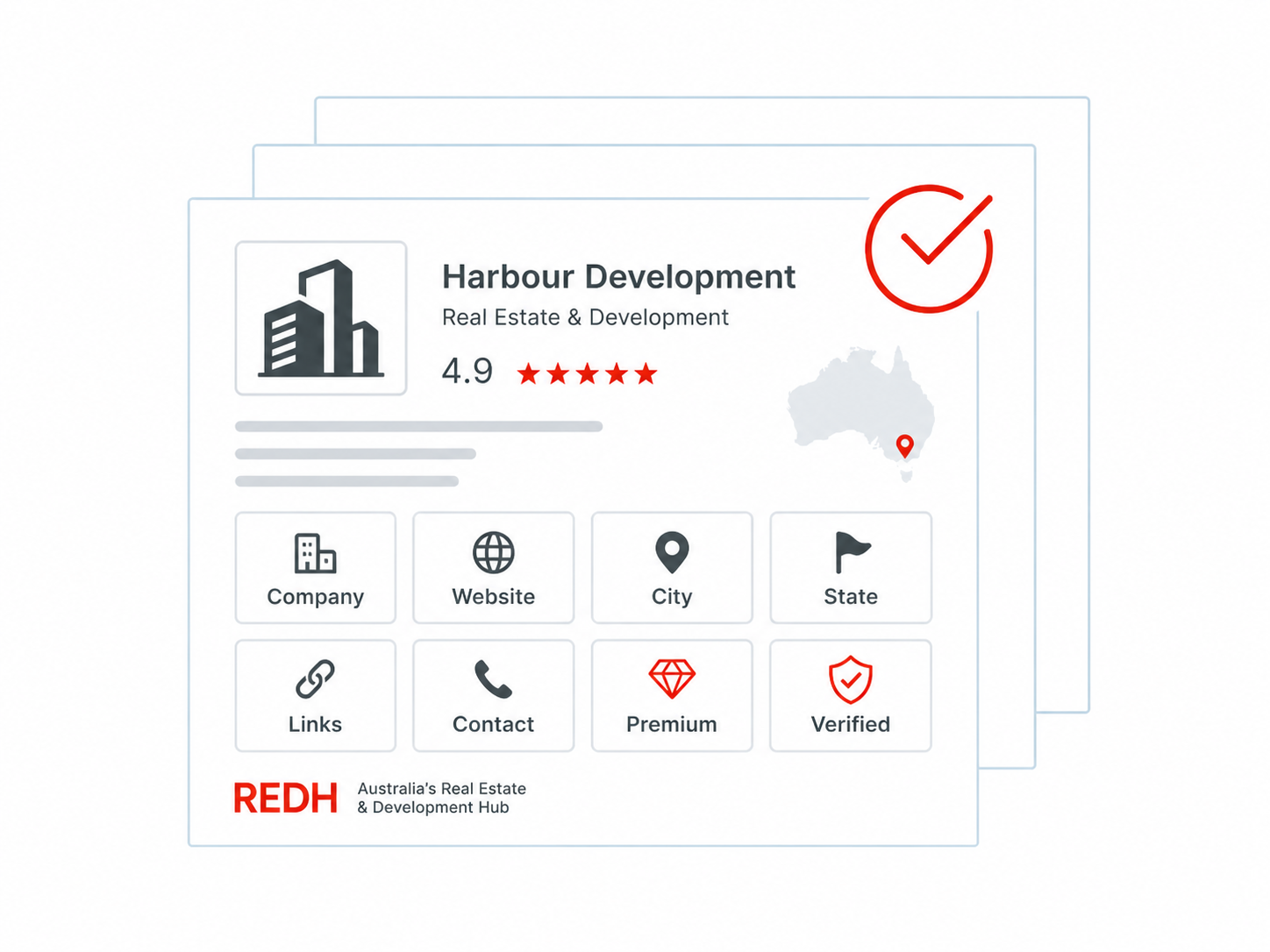
A profile can show company name, website, city, state, service areas, property types, project focus, categories, public links, and contact details. This helps users understand the company before direct contact begins.

Australia companies can also choose a premium profile with added business information, legal details, team size, portfolio URLs, and project links, or apply for verified status if stronger proof signals are needed.

Australia REDH profile card showing company, website, city, state, links, contact, premium and verified profile details page.

Browse real estate developers in Australia

Use this page to explore real estate developers, builders, brokers, property managers, commercial property firms, and construction-linked providers across Australia.

Each profile can help users compare city, state, company role, project focus, service area, public links, and profile status. Users can open profiles that match their search, then continue with ABN checks, ASIC records, land-title searches, builder licences, strata documents, payment terms, and direct company questions.

Frequently asked questions about real estate developers in Australia

Real estate developers in Australia can be reviewed by city, state, project focus, profile status, and official company records.

What types of real estate developers in Australia can I find?

You can review developers, builders, brokers, property managers, commercial property firms, strata-linked providers, land developers, construction-linked companies, and development-related providers. Each profile may show city, state, service area, project focus, website details, public links, and profile status.

Listed means the company appears on REDH with basic public or submitted profile information. This may include company name, website, city, state, category, service area, project focus, and contact details. Listed status does not mean the company has completed REDH verification.


Verified means the company completed REDH’s added review process based on submitted details, available proof, public information, and company-related evidence reviewed at the time. Verified status can support early research, but users should still check ABN records, contracts, title details, and payment terms.

Yes. Off-the-plan buyers should review disclosure documents, draft plans, deposit terms, sunset clauses, settlement timing, and defect processes. REDH profiles support early company research, while contracts should be checked separately.

Yes. An Australian real estate or development-related company can request to claim its REDH profile. REDH may ask for proof that the person is authorised to manage the company information before profile changes are approved.

Build a clearer company profile on REDH

Choose a listed profile for basic visibility, or apply for verification if your company wants stronger proof signals.