Real estate developers in Germany can be searched by city, project type, service area, and profile status. Review developers, brokers, property managers, builders, commercial property firms, and construction-linked providers before contact. Use REDH profiles to compare company details before register checks, Grundbuch review, or serious project discussions begin.

  • List Date
  • Listing Title
  • Last Update
  • Comments
  • Author
  • Rank
  • Rate
Sort By

Remove from compare list Add to compare list Go to Compare Page
Off

TIMA Immobilien GmbH & Co. KG is a regional residential property developer in Springe, south of Hanover, rather than a broad national commercial-residential developer. On ...
Nordwall 18/A-C, 31832 Springe, Germany

Remove from compare list Add to compare list Go to Compare Page
Off

Profilia GmbH & Co. KG is a Porta Westfalica-based project developer, builder, and investor rather than a classic contractor-led construction company. On its official site, ...
Kiekenbrink 1, 32457 Porta Westfalica, Germany

Remove from compare list Add to compare list Go to Compare Page
Off

Immobiliengesellschaft - Place4Life GmbH & Co. KG - Enger is best described as a self-investing regional developer-builder and real estate company in East Westphalia, not ...
Lindenweg 9, 32130 Enger, Germany

Remove from compare list Add to compare list Go to Compare Page
Off

Immobilien Nagel GmbH is not primarily a property developer or property manager. It is best described as a full-service real estate brokerage and valuation firm ...
Herforder Str. 53, 32545 Bad Oeynhausen, Germany

Remove from compare list Add to compare list Go to Compare Page
Off

This one needs a correction: Fair Ground GmbH is not a residential property developer at all. It is a German specialist in equestrian riding surfaces ...
Hannoversche Str. 23, 31547 Rehburg-Loccum, Germany

Remove from compare list Add to compare list Go to Compare Page
Off

Brand & Co. Bauträgergesellschaft mbH is best described as the developer arm of a regional real estate group in Bad Oeynhausen, not as a standalone ...
Morsbachallee 8-10, 32545 Bad Oeynhausen, Germany

Remove from compare list Add to compare list Go to Compare Page
Off

böSteinhaus Baubetreuungs-GmbH is a regional turnkey builder and development partner in the Nienburg–Hanover area, not just a supervision-only service company. On its own site, the ...
Bremer Str. 64, 30826 Garbsen, Germany

Remove from compare list Add to compare list Go to Compare Page
8 AM to 2 PM

BOB Projektbau operates in Germany and focuses on refurbishment, conversion, and project delivery in existing buildings, especially in commercial and industrial contexts. Its categories point ...
Friedrich-Wilhelm-StraĂźe 84, 32423 Minden, Germany

Remove from compare list Add to compare list Go to Compare Page
Off

Bautec-Minden GmbH & Co. Wohnungs- und Industriebau KG is a regional builder and developer in Hille near Minden, focused on residential construction, commercial construction, renovation, ...
Osterfeld 55, 32479 Hille, Germany

How to review real estate developers in Germany

Real estate developers in Germany can differ by city, company role, property type, and project stage. A Berlin developer, Munich broker, Hamburg property manager, or construction-linked provider may each require different checks.

Start with the company profile. Review its location, website, service area, property focus, public links, and profile status. Then compare key details with official sources where needed.

For purchases or projects, users should check company-register data, Grundbuch records, §34c permissions, WEG documents, energy certificates, building permits, payment terms, and current contracts.

Explore Germany real estate development companies by their real estate focus

Real estate deelopers in Germany can work across development, brokerage, property management, construction, investment, and advisory roles. Users should compare each provider by actual focus, not only by company name or city.

Developers may work with apartments, new-build housing, mixed-use projects, commercial buildings, logistics assets, or urban regeneration projects. Brokers may focus on residential sales, rentals, investment properties, or commercial transactions.

Some providers support property activity without owning projects directly. These may include property managers, construction supervisors, builders, land advisers, technical consultants, and financing-linked service providers.

REDH categories help users narrow the search before contact. A clearer match between company focus and user need can save time when comparing apartments, houses, land, commercial assets, new-build projects, or construction-linked services before official checks begin.

Official checks for Germany real estate developer research

Before contacting a real estate developer in Germany, users should compare the REDH profile details with official sources where possible. These checks can help confirm the legal company, property record, provider role, construction status, and contract party.

  • Use Unternehmensregister or Handelsregister when checking the legal company behind a provider. Germany’s Company Register gives access to register entries and submitted documents from trade, cooperative, corporation, and partnership registers. 
  • Use Grundbuch records when checking property ownership, third-party rights, easements, land charges, or other legal relationships connected to real estate. 
  • Use §34c GewO checks when reviewing brokers, residential property managers, developers, or construction supervisors. These activities may require trade permission. 
  • Use local building authority sources when checking permits, change-of-use approvals, or construction permissions.
  • Use energy certificate guidance when reviewing sale or rental documents. An energy performance certificate may need to be presented during sale or rental situations. 

These checks support early research before deposits, contracts, or legal review.

Grundbuch and property-record checks

Grundbuch checks are important when reviewing real estate companies in Germany because the property record can show legal details that marketing material may not explain. Users should check whether the offer, seller, developer, broker, and contract party match the available property information.

A Grundbuch record can help users review ownership, land charges, easements, priority notices, third-party rights, and other registered legal relationships. This is useful for apartments, houses, land, commercial property, and development projects.

Users should also remember that access to the Grundbuch usually requires a legitimate interest and is often handled through a notary, lawyer, or authorised party. If property details, ownership records, or payment requests do not match, users should pause before signing.

REDH profiles help users review the company behind the offer first. Grundbuch records help users check whether the asset itself has clear legal information before payment, contract signing, or project discussions begin.

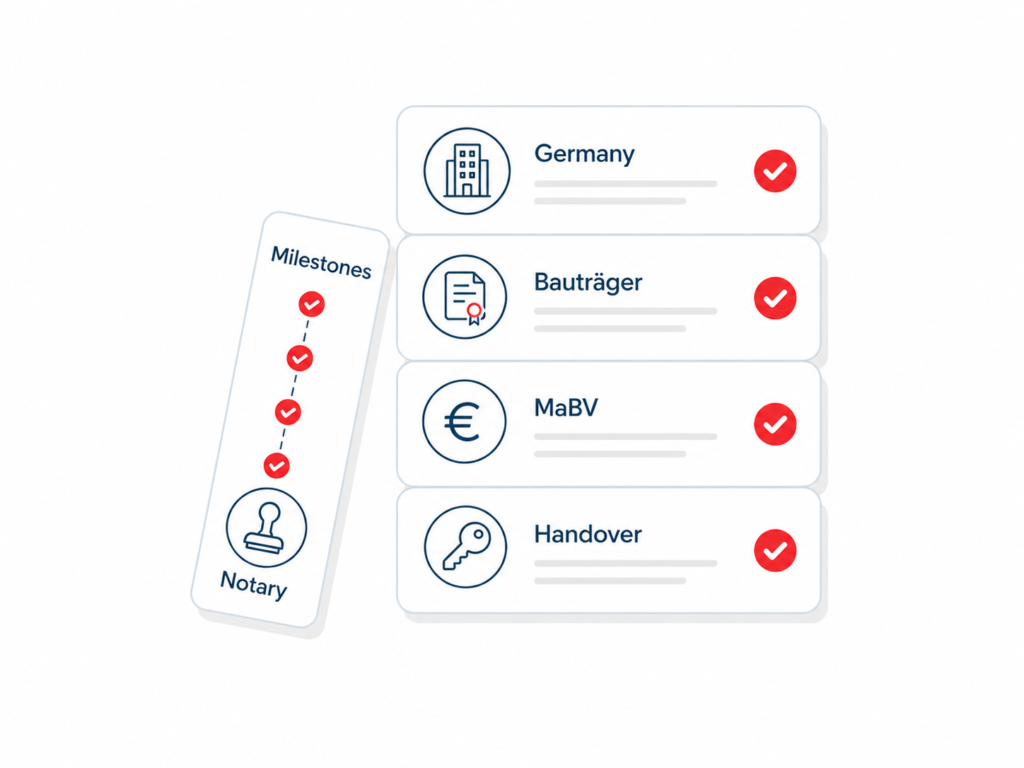
New-build, Bauträger, and MaBV payment checks

New-build purchases in Germany can involve a Bauträger contract, staged payments, construction progress, handover dates, and defect lists. Users should ask how the payment plan follows project progress before paying.

MaBV rules can shape how developers and brokers handle buyer money and staged payments. Users should review which milestones trigger payment, what happens if work is delayed, and how defects are recorded at handover.

REDH profiles help users review the company first, while the contract, payment schedule, notary documents, and handover terms should be checked separately before commitment.

Germany new-build payment check infographic showing Bauträger contract, MaBV stages, notary, handover, and payment flow map.

WEG, Hausgeld, and apartment-building checks

Apartment purchases in Germany often involve a WEG, or owners’ association. Users should review shared-building documents before relying on the unit price alone.

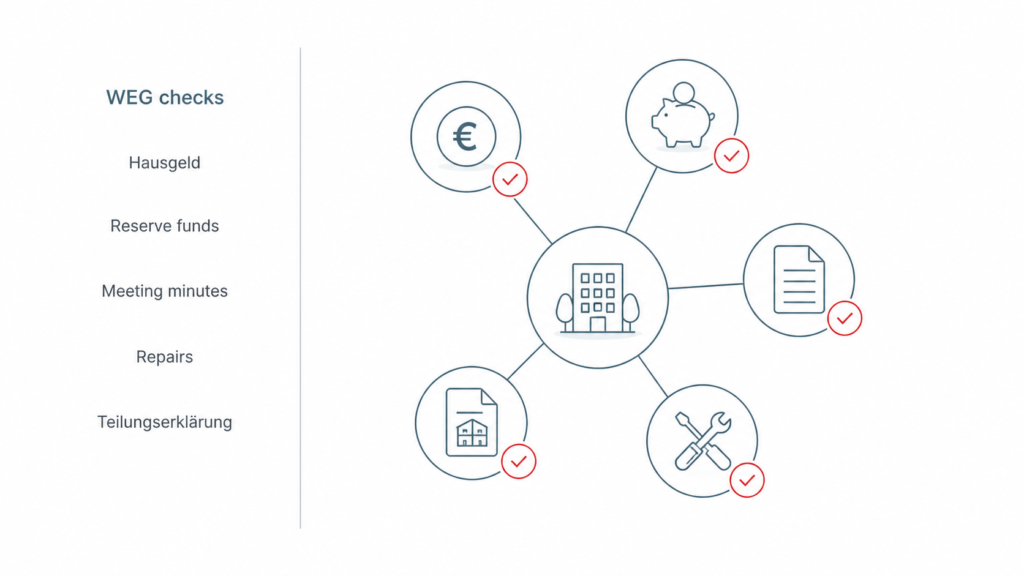
Important checks include Hausgeld, reserve funds, meeting minutes, planned repairs, old arrears, property-management quality, and the Teilungserklärung. These details can affect future costs and daily ownership.

A low purchase price may look attractive, but weak reserves or major repairs can create higher payments later. REDH profiles help users review the provider first, while WEG documents should be checked separately before signing.

Germany WEG checks infographic showing Hausgeld, reserve funds, meeting minutes, repairs, and Teilungserklärung review map.

Building permits, renovation records, and energy certificates

Building permits, renovation records, and energy documents can help users understand whether a German property or project has the right approvals. This matters when reviewing developers, builders, renovation firms, converted buildings, older houses, or commercial spaces.

Check areaWhat users should reviewWhy it matters
Building permitApproved construction, extension, or change of useShows whether planned work was formally allowed
Renovation recordsRoof, heating, windows, insulation, structure, or wiring updatesHelps users understand future repair risk
Energy certificateEnergieausweis for sale or rental situationsShows energy performance and expected efficiency level
Heating systemFuel type, age, maintenance, and replacement riskCan affect future costs and legal duties
Completion recordsFinal approval, handover documents, or inspection notesHelps confirm whether work was properly finished

Users should compare these records with the provider’s claims, property description, contract terms, and handover documents. REDH profiles help users review the company first, while permits, renovation proof, and energy details should be checked separately before signing, paying, or accepting handover.

Agent, contract, and payment warning signs in Germany

When reviewing real estate companies in Germany, users should be careful if a provider pushes for payment before key documents are available. A serious company should explain its role, legal entity, commission terms, contract process, and payment route clearly.

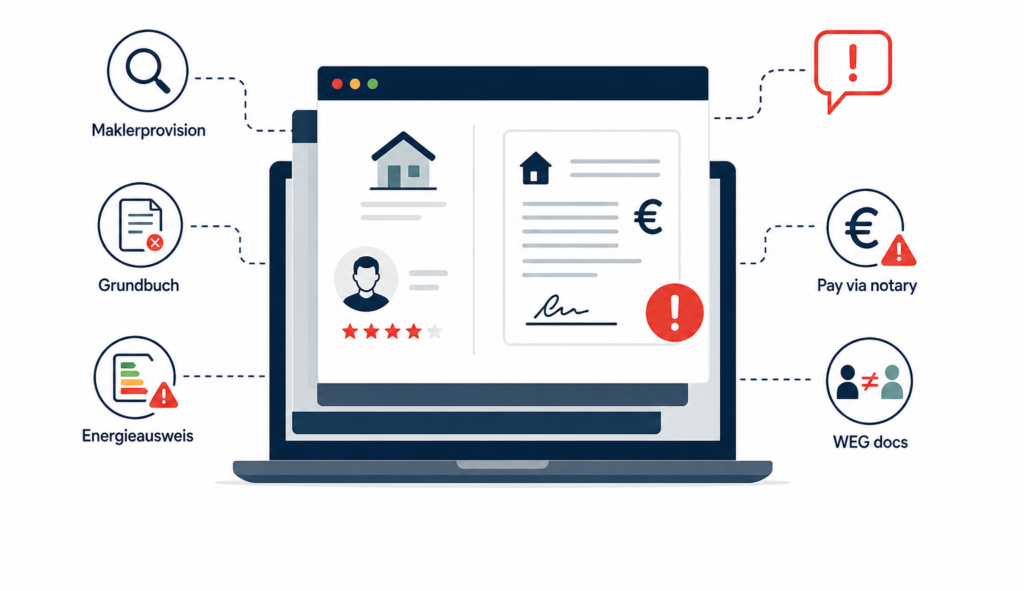
Warning signs may include unclear Maklerprovision, missing Grundbuch details, no Energieausweis, weak WEG documents, pressure to sign quickly, payment requests outside the notary process, or reservation fees without clear written terms.

Users should also question offers where the broker, seller, developer, and payment recipient do not match. REDH profiles help users review the company before contact, but contract and payment decisions should depend on current records, notary review, written terms, and qualified legal advice.

Germany property warning signs infographic with laptop, contract, euro, Grundbuch, Energieausweis, WEG docs, and risk alerts.

Germand energy, net-zero, and sustainability checks

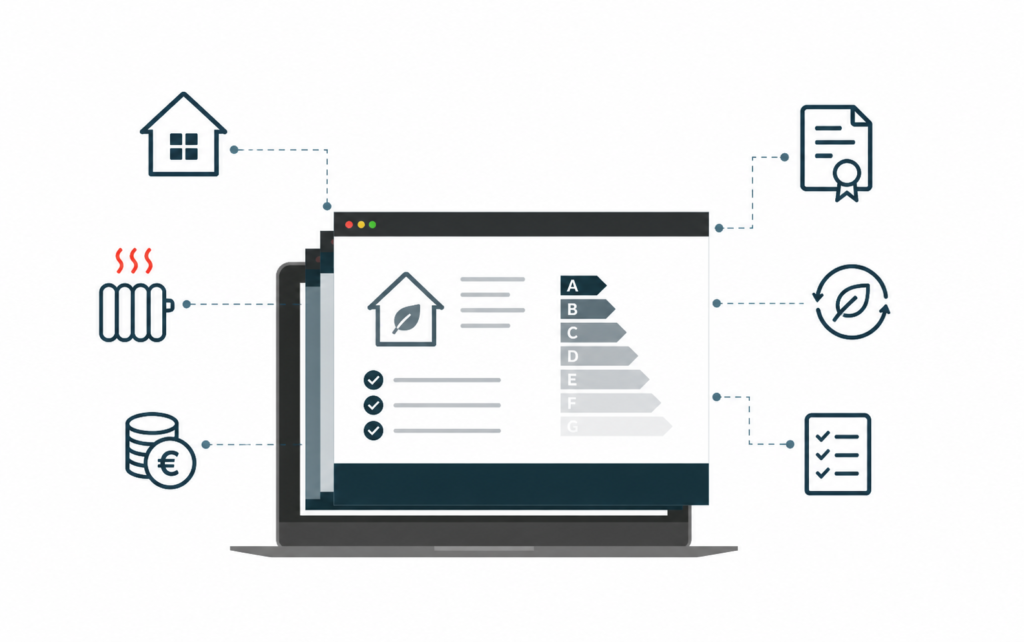
Energy and climate rules can affect real estate projects in Germany, especially new builds, major renovations, heating systems, and subsidised developments. Users should ask how a provider handles energy performance, renewable heating, insulation, building automation, and long-term operating costs before choosing a developer or construction partner.

Germany energy checks infographic with laptop, energy rating, heating, costs, certification, and sustainability review icons.

Germany’s Building Energy Act is one key reference point. The Federal Ministry for Economic Affairs notes that buildings account for almost 35% of Germany’s final energy consumption, with most energy used for heating and hot water. This makes energy planning a practical cost issue, not only a sustainability topic.

For projects seeking public funding or stronger sustainability proof, users can also review the QNG sustainable building certification. QNG is connected to Germany’s federal building ministry and supports minimum standards for sustainable building quality.

Before contact becomes serious, users should ask for the energy concept, the expected energy certificate, the heating system plan, the renovation standard, the subsidy assumptions, and any sustainability certification claims. REDH profiles help users review the provider first, while project-level energy and funding details should be checked separately.

Project cost and scope expectations in Germany

Project costs in Germany can change sharply by city, property type, building standard, energy requirements, and permit complexity. Users should ask for a written cost breakdown before comparing developers, builders, or renovation firms.

Project areaCost factors to checkWhy it matters
New-build housingLand, planning, construction, energy standard, taxes, notary feesThe headline build price may exclude major purchase costs
Apartment purchasePurchase price, Maklerprovision, notary, Grundbuch, transfer taxBuyer costs can add a large amount above the listed price
RenovationStructure, heating, insulation, windows, permits, specialist reportsOlder buildings may need deeper technical checks
Commercial projectFit-out, fire safety, accessibility, permits, lease termsUse requirements can change total project cost
Energy upgradesHeat pump, insulation, solar, ventilation, subsidy assumptionsEnergy rules and operating costs affect long-term budget
Delays and changesDesign changes, material costs, approval delays, defectsExtra works should be priced before approval

A serious provider should explain what is included, what is estimated, and what may change. REDH profiles help users shortlist companies, while final budgets should depend on written quotes, technical review, tax checks, and legal advice.

Common issues when working with developers in Germany

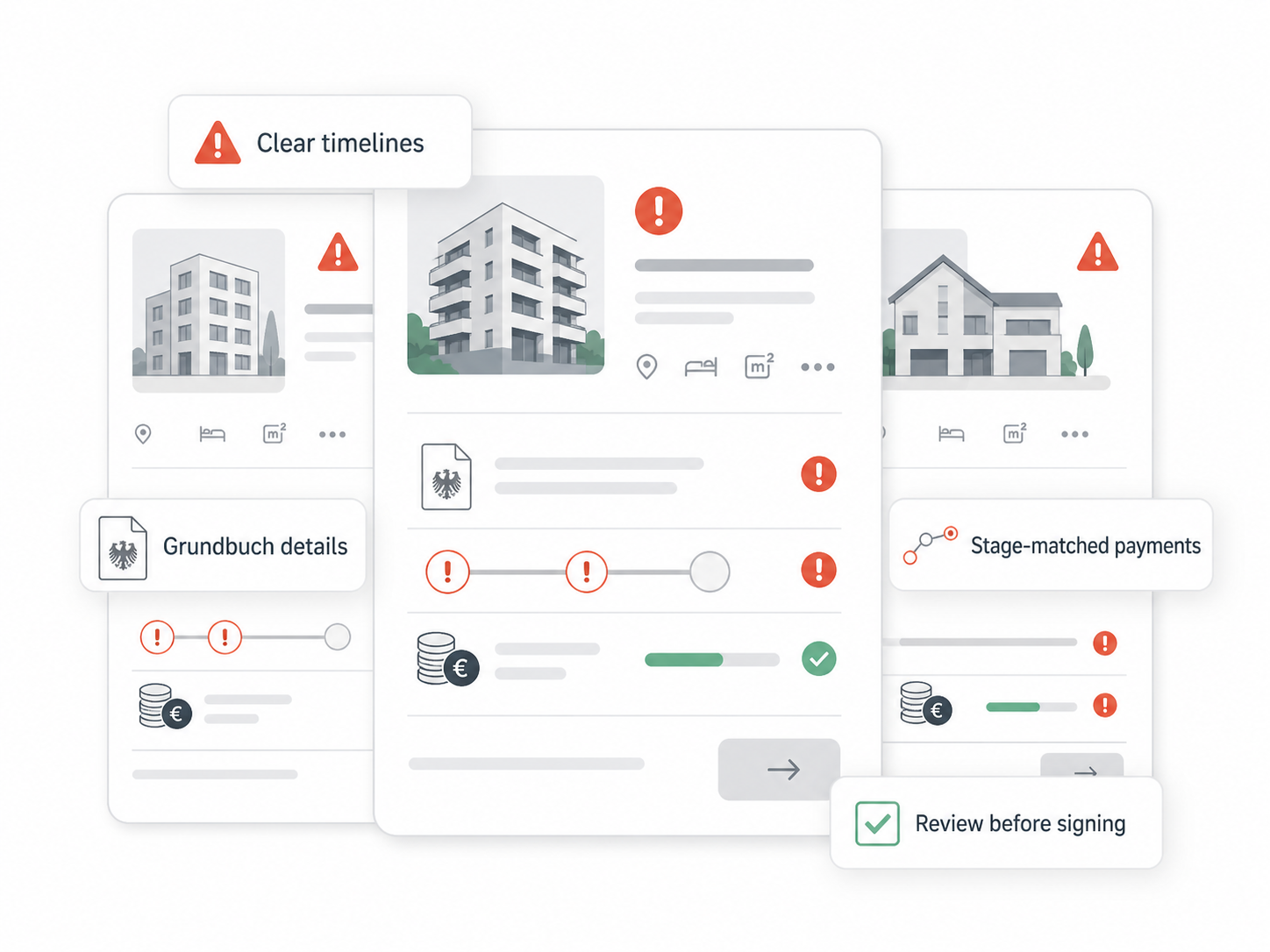
When working with developers in Germany, users should watch for unclear timelines, missing documents, weak defect handling, and payment requests that do not match the agreed construction stage. New-build projects can also face delays from permits, materials, subcontractors, or financing changes.

Common risks include fake or unclear listings, pressure to pay reservation fees, missing Grundbuch details, vague company names, unrealistic return promises, and contracts that hide extra costs.

A serious developer should explain the legal company, project status, payment plan, handover process, and defect repair route clearly. Users should review documents through a notary, legal adviser, or technical expert before signing.

Germany developer due diligence graphic with timelines, Grundbuch checks, staged payments, and signing review cues for buyers

How REDH supports a clearer Germany shortlist

REDH helps users move from broad search results to a more useful shortlist of real estate companies in Germany. Instead of comparing providers only by name, users can review city, company role, property focus, service area, website details, public links, and profile status.

A practical shortlist should help users compare:

  • which city or region the company serves
  • what type of real estate work it handles
  • whether the profile is listed or verified
  • which public links are available
  • what official records may still need checking
  • whether the provider fits the project type

This matters because German providers may have different roles. Some companies develop new apartments. Others broker resale homes, manage WEG buildings, supervise construction, renovate older houses, or handle commercial assets.

After building a shortlist, users can contact stronger matches and request current documents, company register details, Grundbuch information, §34c permissions, WEG records, energy certificates, payment terms, and legal confirmation. REDH supports early research before direct contact begins. Final decisions should still depend on direct checks, notary review, current records, and qualified advice.

Get your Germany real estate developer company profile listed

Real estate and development-related companies in Germany can create or claim a REDH profile to make their business easier to review.

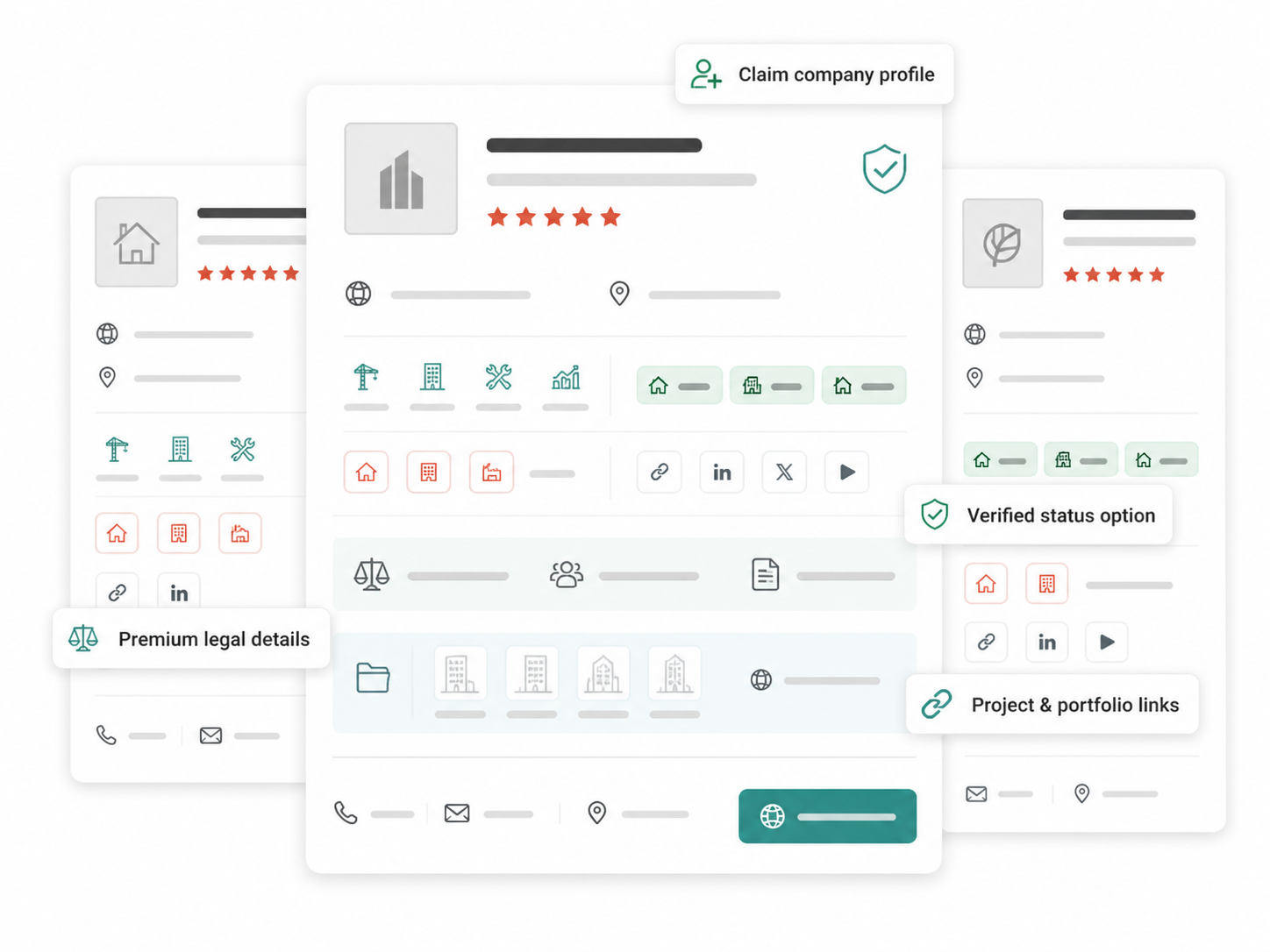
A profile can show company name, website, city, service areas, property types, project focus, categories, public links, and contact details. This helps users understand the company before direct contact begins.

German companies can also choose a premium profile with added business information, legal details, team size, portfolio URLs, and project links, or apply for verified status if stronger proof signals are needed.

Germany REDH profile graphic with company claim, legal details, project links, verified status and review-ready business info

Browse real estate developers in Germany

Use this page to explore real estate developers, brokers, property managers, builders, renovation firms, commercial property companies, and construction-linked providers across Germany.

Each profile can help users compare city, company role, property focus, service area, public links, and profile status. Users can open profiles that match their search, then continue with company-register checks, Grundbuch records, WEG documents, energy certificates, payment terms, and direct company questions before making decisions.

Frequently asked questions about real estate developers in Germany

Real estate developers in Germany can be reviewed by city, property focus, profile status, official records, and company details.

What types of real estate companies in Germany can I find?

You can review developers, brokers, property managers, builders, commercial property firms, construction supervisors, renovation companies, land advisers, and development-related providers. Each profile may show city, service area, property focus, website details, public links, and profile status.

Listed means the company appears on REDH with basic public or submitted profile information. This may include company name, website, city, category, service area, property focus, and contact details. Listed status does not mean the company has completed REDH verification

Verified means the company completed REDH’s added review process based on submitted details, available proof, public information, and company-related evidence reviewed at the time. Verified status can support early research, but users should still check company records, contracts, payment terms, and legal documents.

Yes. Grundbuch records can help users review ownership, land charges, easements, third-party rights, and other legal property details. REDH profiles support early company research, while property records should be checked separately before signing or paying.

Yes. A German real estate or development-related company can request to claim its REDH profile. REDH may ask for proof that the person is authorised to manage the company information before profile changes are approved.

Build a clearer company profile on REDH

Choose a listed profile for basic visibility, or apply for verification if your company wants stronger proof signals.